Creamy Roasted Red Pepper Pasta


Creamy roasted red pepper pasta gets its orange-red sauce from jarred peppers blended with garlic, olive oil and Italian seasoning. Heavy cream softens the peppers’ tang without covering up their roasted flavor, and the sauce coats chewy bucatini without weighing it down. Fresh basil, tender spinach and a shower of parmesan finish each bowl.
Dinner serves four and takes 30 minutes, with 10 minutes of prep. Start the pasta water first and use the time it takes to boil to make the pepper purée and chop the onion. It’s quick enough for a weeknight but also a good choice when friends are coming over and you want something you can bring straight from the skillet to the table.
Why This Creamy Roasted Red Pepper Pasta Recipe Works
The sauce gets body from the peppers themselves, so you don’t need flour, a long simmer or a pile of cheese to thicken it.
- Blending gives the sauce body. Puréeing the roasted peppers breaks up their soft flesh and distributes it evenly through the cream. That’s what gives the sauce its smooth texture and lets it coat the pasta more evenly than chopped peppers would.
- The onion cooks separately. Sautéing the onion in butter before adding any liquid lets it soften and brown lightly. If it went straight into the sauce, it would soften as the sauce simmered but miss out on that round, lightly toasted flavor.
- Dijon balances the cream. A little mustard adds a sharp note that keeps the sauce from tasting flat or overly sweet. You shouldn’t pick it out as a separate flavor.
- The greens go in last. Baby spinach needs only the heat of the sauce and pasta to wilt. Adding basil at the same time keeps its fragrance fresher than simmering it with the cream.
Ingredients You’ll Need
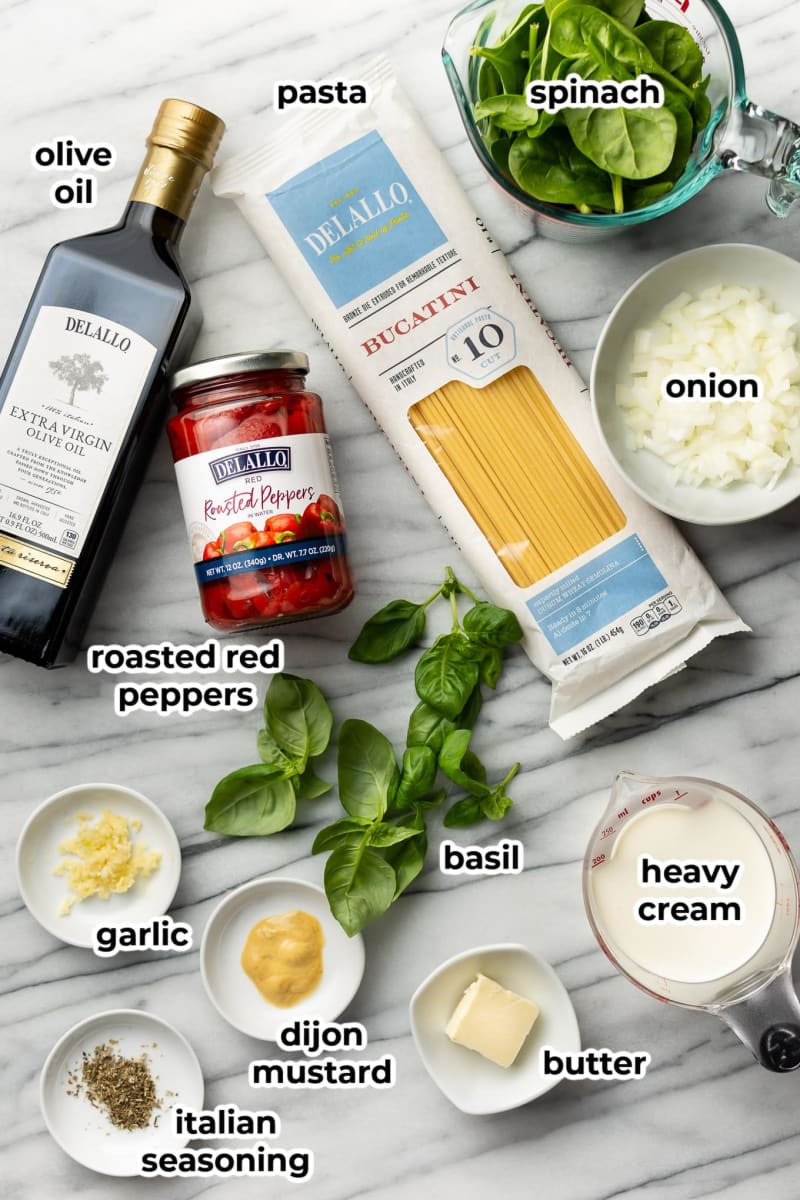
Look for plain roasted red peppers rather than a seasoned antipasto mix so the pepper flavor stays distinct. The other ingredients build around that base.
- Bucatini: Use 8 ounces of this thick, hollow pasta. It has a firm bite that holds up to tossing in the skillet.
- Roasted red peppers: Start with one 12-ounce jar and drain off the packing liquid before blending. The jar size refers to the package, not the weight of the drained peppers.
- Garlic: Mince 2 to 3 cloves so they blend evenly. Use the upper end if you want the garlic to stand out against the cream.
- Italian seasoning: Add 1/4 teaspoon of the dried herb blend to season the purée without overpowering the fresh basil.
- Extra-virgin olive oil: Use 1 tablespoon in the food processor to help the peppers blend smoothly.
- Butter: Use 1 tablespoon to sauté the onion and give the sauce a savory base.
- Onion: Chop half a medium onion into small, even pieces so they soften at the same rate.
- Heavy cream: Use 3/4 cup of heavy cream or heavy whipping cream for a sauce that coats without feeling pasty.
- Dijon mustard: Use 1/2 teaspoon of smooth Dijon for a little acidity and bite.
- Baby spinach: Measure 2 packed cups of fresh leaves. What looks like a lot raw wilts down markedly.
- Fresh basil: Use a small handful of leaves for a fragrant finish; discard any tough stems.
- Salt and pepper: Season to taste after simmering, since the peppers and Dijon can already bring some salt.
- Parmesan: Grate it fresh and add to taste at the table for a salty, nutty finish.
Equipment You’ll Need
- Pasta pot: Use a pot roomy enough to let the bucatini move freely once the strands soften and slip under the water.
- Food processor: A food processor turns the peppers into a smooth base and distributes the minced garlic throughout.
- Deep skillet: Choose a skillet with enough room to toss the noodles and spinach in the sauce without spilling.
- Colander: Set a colander in the sink so the pasta can drain quickly when it’s ready.
How to Make Creamy Roasted Red Pepper Pasta
1. Cook the bucatini
Bring a pot of salted water to a boil, then cook the bucatini to al dente using the package directions as your guide. While it cooks, get the pepper purée and skillet sauce going.
Give the bucatini a stir as the strands become flexible, and bite into one near the end of cooking to check that it’s tender with some resistance.
2. Blend the pepper base
Put the drained roasted peppers, minced garlic, Italian seasoning and olive oil in the food processor. Process until the mixture is smooth, stopping to scrape the bowl if pieces collect near the top.
The purée should look evenly orange-red, without obvious pieces of pepper or garlic; flecks of dried herbs are fine.
3. Soften the onion
Melt the butter in a skillet over medium heat and stir in the chopped onion. Cook for 4 to 5 minutes, until the pieces are soft and lightly browned.
The onion should sizzle gently, not fry aggressively. Look for pale golden edges rather than dark, crisp bits.
4. Simmer the cream sauce
Stir the pepper purée, cream and Dijon into the onion. Cook for about 7 to 8 minutes, stirring occasionally, until the sauce thickens slightly, then taste and season with salt and pepper.
Look for a gentle bubble and a sauce that still pours easily off a spoon. If it tastes flat, add a little more seasoning before the pasta goes in.
5. Toss in the greens
Stir the spinach and basil into the skillet. If you’d like to loosen the sauce, save a splash of hot pasta water before draining the bucatini. Add the drained pasta and toss until the spinach wilts, using the reserved water if needed.
Lift and turn the strands from the bottom of the pan so the leaves don’t stay in one clump.
6. Finish with parmesan
Divide the pasta among bowls and serve right away with freshly grated parmesan.
Spoon any sauce left in the skillet over the portions so every bowl gets some of the softened onion.
How to Tell When It’s Done
Check the sauce before adding the pasta: it should leave a thin film on the back of a spoon, not run off like broth or sit there like a dip. If it’s watery, let it bubble gently a little longer before adding the greens. If a trail across the skillet stays open instead of flowing back together, loosen the sauce with reserved pasta water.
The finished bucatini should still have a little chew, and the spinach should be soft and bright green. As soon as the last stiff leaves collapse and the strands are coated, take the skillet off the heat rather than letting everything keep cooking.
Tips and Common Mistakes
The easiest way to keep the sauce smooth and the pasta springy is to pay attention to moisture and timing.
- Drain the peppers thoroughly. Tip them into a strainer and let the excess liquid run off. Packing liquid can make the sauce both thinner and tangier than intended.
- Dry the spinach after washing. Shake it well or run it through a salad spinner. Water clinging to the leaves can undo some of the simmering you just did.
- Don’t rinse the bucatini. The starch left on the hot strands helps the sauce cling, and rinsing cools the pasta just when you need its heat to wilt the greens.
- Set out the bowls early. Once the pasta is tossed, the sauce starts settling into the noodles. Have the bowls and grater ready so you can serve while the sauce is still loose.
- Turn down a hard boil. If the cream sauce starts bubbling furiously across the skillet, lower the heat so it reduces evenly instead of scorching around the edges.
Substitutions and Variations
Keep the pepper base and change the pasta, greens or finishing touches to suit what you have.
- Other pasta shapes: Spaghetti gives you a similar twirl, while rigatoni catches bits of onion inside its tubes. Follow the timing on the package for whichever you use.
- Shallot: Use chopped shallot in place of the onion for a milder, slightly sweeter base.
- Baby arugula: Trade the spinach for baby arugula if you like a peppery finish. It wilts quickly in the hot pasta.
- Pecorino Romano: Grate it over the bowls instead of parmesan for a sharper, saltier finish. Start with a light sprinkle.
- Red pepper flakes: Stir a pinch into the sauce as it simmers for gentle heat throughout, or offer them at the table if not everyone wants spice.
What to Serve with Creamy Roasted Red Pepper Pasta
A crisp salad with lemon vinaigrette cuts through the cream, especially if you use assertive greens like arugula or radicchio. Look through these fresh salad recipes for more ideas, or put out roasted broccolini with lemon and let everyone help themselves.
For a heartier meal, pair a smaller portion of pasta with sliced grilled chicken. A simply seasoned option from these easy chicken recipes works better here than a main with another rich sauce.
Make-Ahead, Storage and Reheating
Make ahead: Blend the pepper mixture up to a day ahead and refrigerate it promptly in a covered container. You can chop the onion ahead and refrigerate it separately. Cook the pasta and wilt the greens just before serving.
Storage: Refrigerate leftover pasta in an airtight container within 2 hours and eat it within 3 to 4 days. If there’s a lot left, portion it into shallow containers so it cools faster.
Freezing: Skip freezing the finished pasta. The cream sauce can separate after thawing, and the spinach and bucatini tend to lose their texture.
Reheating: Warm leftovers in a skillet over low heat with a splash of water to loosen the sauce. Gently turn the strands as they heat, then finish with fresh parmesan once the pasta is steaming throughout.
Creamy Roasted Red Pepper Pasta FAQs
Can I blend the peppers without a food processor?
Yes. A countertop blender works; use a narrow jar if you have one so the blades can catch the peppers. Stop and scrape down the sides as needed rather than adding water.
Can I use peppers I roasted myself?
Yes. Peel away the charred skin, remove the seeds and stems, and let the flesh drain before blending. Use approximately the amount of drained pepper you’d get from the jar rather than matching its full labeled weight.
Can I use frozen spinach?
Yes. Thaw it, squeeze it very dry, and break up the clumps before stirring it into the hot sauce. Use less by volume than fresh spinach, since it’s already wilted.
Can I double the recipe?
Yes. Use a wide skillet or toss the pasta and sauce together in the empty pasta pot. A deeper pool of sauce can take longer to reduce, so judge it by how it coats a spoon.
Can I make this pasta vegetarian?
Yes. Finish it with a vegetarian parmesan-style hard cheese made with microbial or vegetable rennet. Traditional Parmigiano Reggiano uses animal rennet.
Can I leave out the Dijon mustard?
Yes. The sauce will still come together, but it will taste a little sweeter and less sharp. If it needs brightness, stir in a tiny squeeze of lemon off the heat.
Printable Recipe
Recipe adapted from Salt & Lavender. Photos courtesy of Salt & Lavender, used with permission.

Creamy Roasted Red Pepper Pasta
Ingredients
- 8 ounces DeLallo Bucatini Pasta
- 1 (12 ounce) jar DeLallo Roasted Red Peppers drained
- 2-3 cloves garlic minced
- 1/4 teaspoon Italian seasoning
- 1 tablespoon DeLallo Extra Virgin Olive Oil
- 1 tablespoon butter
- 1/2 medium onion chopped
- 3/4 cup heavy/whipping cream
- 1/2 teaspoon Dijon mustard
- 2 cups (packed) fresh baby spinach
- 1 small handful fresh basil
- Salt & pepper to taste
- Freshly grated parmesan cheese to taste
Instructions
- Boil a salted pot of water for the pasta and cook it al dente according to package directions.
- Meanwhile, add the drained roasted red peppers, garlic, Italian seasoning, and olive oil to a food processor and blend until smooth.
- To a skillet, melt the butter over medium heat and cook the onion for 4-5 minutes or until softened and lightly browned.
- Add the roasted red pepper mixture, cream, and Dijon mustard to the skillet and cook until it's thickened up a bit (about 7-8 minutes), stirring occasionally. This is not meant to be a super thick sauce. Give it a taste and season with salt & pepper (I am generous with both).
- Stir in the spinach and basil, then add in the drained pasta and toss until the spinach has wilted (add a splash of the hot pasta water prior to draining the pasta if desired, especially if you want to thin the sauce more).
- Serve immediately with freshly grated parmesan cheese.


