Creamy White Wine Pork Chops


Creamy white wine pork chops have golden edges and a silky garlic sauce with just enough tang to balance the cream. The chops get a quick sear, then finish in the sauce while it thickens. The browned bits left in the skillet give the sauce its savory backbone.
Dinner takes 30 minutes and serves four, so it fits a weeknight but feels right for company, too. Have a side ready to catch the sauce: a pile of mashed potatoes works just as well as a chunk of crusty bread.
Why This Creamy White Wine Pork Chops Recipe Works
The order matters in this skillet dinner. Browning the pork, reducing the wine, and thickening the cream happen separately so you can control each one.
- The sear does double duty. Direct contact with the hot skillet gives the chops a browned crust and leaves small, flavorful deposits behind. Those bits dissolve into the sauce instead of going to waste.
- The wine reduces before the cream goes in. Reducing the wine and broth first concentrates their flavor without forcing you to boil the dairy hard to get rid of excess liquid.
- A little starch goes a long way. Cornstarch gives the sauce enough body to cling to the meat without turning it into a heavy gravy.
- The pork finishes at a gentler heat. The chops come off the high heat after browning. Finishing them in the simmering sauce gives you more control over the center, especially with lean boneless chops.
Ingredients You’ll Need
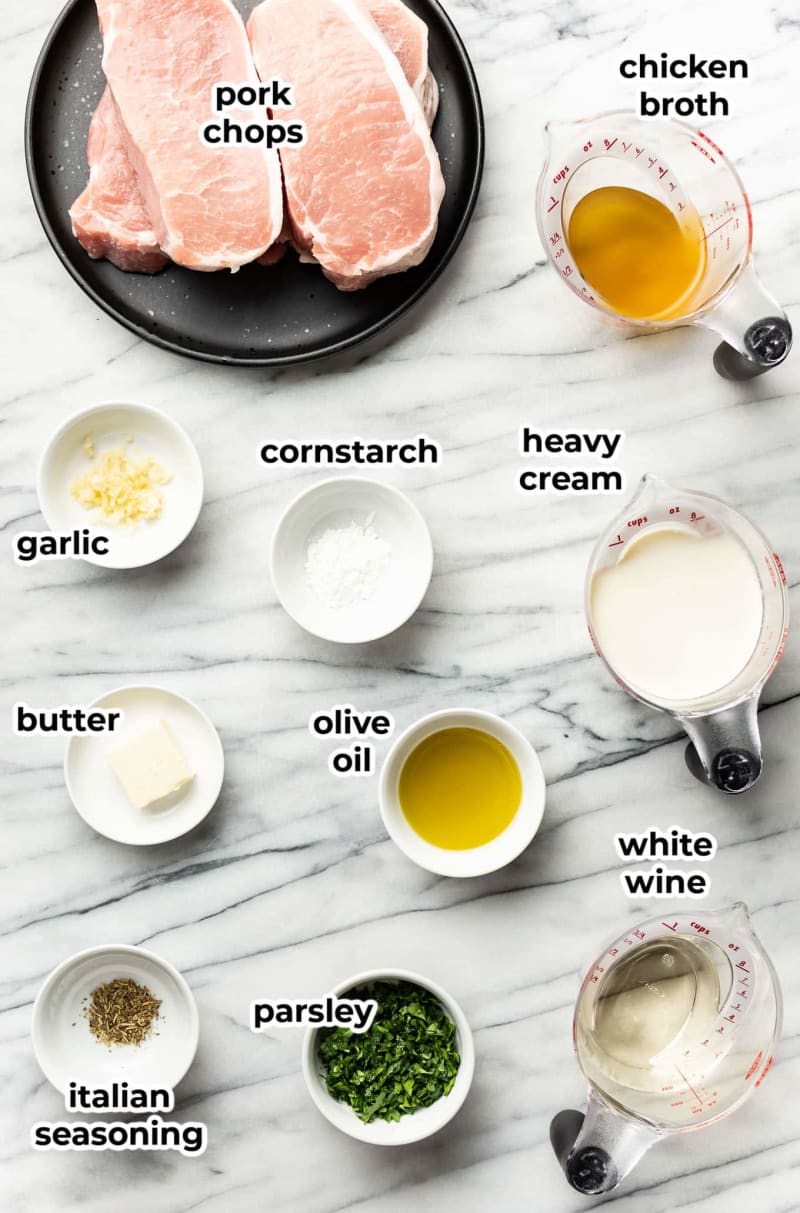
Choose the chops by thickness rather than weight, and use a dry wine so the reduced sauce stays savory.
- Pork chops: Four chops, bone-in or boneless. Look for pieces of similar thickness, ideally ¾ to 1 inch, so they finish close together.
- Salt and pepper: Use both to taste, seasoning the pork before searing and adjusting the finished sauce separately.
- Olive oil: One tablespoon helps coat the skillet so the chops make even contact with the hot surface.
- Butter: One tablespoon adds a nutty flavor as the pork browns and rounds out the pan sauce.
- Garlic: Mince two cloves so their flavor disperses evenly in the liquid.
- Italian seasoning: A quarter teaspoon seasons the sauce without overpowering the wine. Herbes de Provence also works.
- Dry white wine: Half a cup adds acidity to balance the cream. Pinot grigio or sauvignon blanc is a good choice.
- Chicken broth: A quarter cup adds savory depth. Low-sodium broth gives you more control over the salt as the liquid reduces.
- Heavy cream: Three-quarters of a cup of heavy cream or whipping cream makes a smooth, rich sauce.
- Cornstarch: One teaspoon gives the sauce a light, spoon-coating consistency.
- Fresh parsley: Chop one to two tablespoons for a fresh finish against the rich sauce.
Equipment You’ll Need
- Wide skillet: Choose one that holds the chops in a single layer with room between them.
- Instant-read thermometer: Use it to check each chop without cutting into the meat.
How to Make Creamy White Wine Pork Chops
1. Dry and season the chops
Blot the pork thoroughly with paper towels, including around the edges. Season both sides generously with salt and pepper.
The surface should look matte rather than wet. Any moisture left on the chops has to cook off before the meat can brown.
2. Sear both sides
Heat the olive oil and butter in a skillet over medium-high heat. When the skillet is hot, sear the chops for 3 to 5 minutes per side until golden, using 3 minutes for thinner chops and 5 minutes for chops up to 1 inch thick, then move them to a plate.
Look for a steady sizzle as the pork hits the pan. If a chop clings when you try to turn it, give the crust a chance to release.
3. Reduce the wine and broth
Put the garlic, Italian seasoning, white wine, and chicken broth into the skillet. Scrape up the browned bits and let the liquid bubble for about 3 to 5 minutes, until more than half has evaporated.
Tilt the pan to check the amount left. You want a shallow pool, not the volume you started with.
4. Mix the slurry
In a small bowl, stir the cornstarch into 2 teaspoons of cold water until dissolved.
Press out any lumps against the side of the bowl.
5. Stir in the cream
Lower the heat to medium, then stir in the cream and cornstarch mixture.
Stir across the bottom of the skillet so the slurry disperses before it thickens.
6. Finish the pork in sauce
Once the sauce bubbles again, return the chops to the skillet. Simmer for another 3 to 5 minutes or so, until the pork is cooked through and the sauce thickens slightly, then adjust the salt and pepper and scatter the parsley over the top.
The sauce should leave a light coating on a spoon rather than sit on it like gravy.
How to Tell When It’s Done
Check for 145°F in the thickest part and let the pork rest for at least 3 minutes before serving. Insert the probe from the side if the chop is thin, and avoid touching the bone. If one chop is ready before the others, take it out while the rest finish.
Tips and Common Mistakes
These small adjustments help you get a good crust without overcooking the pork or pushing the sauce too far.
- Adjust for thickness. Chops much thinner than the suggested range need less time; substantially thicker chops may need a longer finish. Start checking thin pieces early.
- Leave space between chops. If they touch in the skillet, sear them in batches so trapped steam doesn’t soften the crust.
- Watch the browned bits. Deep brown bits are useful; black, scorched patches can make the whole sauce bitter. Wipe out burnt residue before adding the wine.
- Restir the slurry. Cornstarch settles quickly, so give it another stir right before pouring if the bowl has been sitting.
- Correct a tight sauce off heat. If it thickens more than you want, stir in a small splash of broth to loosen it before serving.
Substitutions and Variations
Keep the sear and the gentle finish, and you can change the flavor with a few straightforward swaps.
- No wine: Use more chicken broth in place of the wine and add a small squeeze of lemon to the finished sauce. The flavor will be milder.
- Fresh thyme: Replace the Italian seasoning with chopped thyme leaves for a woodsy note without the other dried herbs.
- Fresh chives: Scatter snipped chives over the finished chops instead of parsley for a mild onion bite.
- Shallot: Use finely minced shallot in place of garlic for a sweeter, softer flavor. Let it soften in the skillet before pouring in the liquids.
- Dijon finish: Stir a little Dijon mustard into the finished sauce for a sharper edge. Taste before adding more salt.
What to Serve with Creamy White Wine Pork Chops
Spoon the sauce over mashed potatoes, buttered egg noodles, or rice. Roasted green beans or steamed broccoli work well on the side, especially if you let a little of the sauce run onto the vegetables.
For something crisp and tart, serve a simple vinaigrette-dressed green salad or this berry salad with lemon dressing. If you’re planning the rest of the week, browse our weeknight dinner ideas.
Make-Ahead, Storage and Reheating
Make ahead: Measure the wine, broth, and cream and chop the parsley up to a day ahead. Refrigerate the broth, cream, and parsley separately, and wait until cooking to mix the slurry and sear the pork.
Storage: Refrigerate the chops with their sauce in an airtight container within 2 hours of cooking and use within 3 to 4 days.
Freezing: Freeze the cooked chops separately from the sauce if possible. The cream sauce can turn grainy after thawing, so plan on making it fresh while the pork thaws in the refrigerator.
Reheating: Warm the chops and sauce together in a covered skillet over low heat until the leftovers reach 165°F. Add a splash of broth if needed and avoid a hard boil.
Creamy White Wine Pork Chops FAQs
Can I use cooking wine instead of regular white wine?
Regular dry white wine is a better choice. Bottled cooking wine often contains added salt, which becomes more noticeable as the liquid reduces.
Can I use half-and-half instead of heavy cream?
It isn’t a reliable swap. Half-and-half makes a thinner sauce and is more likely to curdle when heated with the acidic wine reduction.
What if the sauce is still thin when the pork is done?
Take the chops out first. Simmer the sauce on its own, stirring, until it lightly coats a spoon so the pork doesn’t overcook while you wait.
Can I double this recipe?
Yes, but use two skillets if you want to finish all the chops at once. A deeper pool of liquid in one pan can take longer to reduce.
Is the sauce alcohol-free after it simmers?
No. The short simmer doesn’t remove all the alcohol, so use the broth variation if you need the dish to be alcohol-free.
Printable Recipe
Recipe adapted from Salt & Lavender. Photos courtesy of Salt & Lavender, used with permission.

Creamy White Wine Pork Chops
Ingredients
- 4 pork chops see note
- Salt & pepper to taste
- 1 tablespoon olive oil
- 1 tablespoon butter
- 2 cloves garlic minced
- 1/4 teaspoon Italian seasoning or Herbs de Provence
- 1/2 cup dry white wine
- 1/4 cup chicken broth
- 3/4 cup heavy/whipping cream
- 1 teaspoon cornstarch
- 1-2 tablespoons chopped fresh parsley
Instructions
- Pat your pork chops dry and season them generously with salt & pepper.
- Add the oil and butter to a skillet over medium-high heat. Once the pan is nice and hot, add the pork chops to the pan and cook for 3-5 minutes/side until golden (3 minutes for thinner chops and 5 minutes for pork chops that are up to 1" thick). Transfer the pork chops to a plate.
- Add the garlic, Italian seasoning, white wine, and chicken broth to the skillet. Let it bubble until the liquid is reduced significantly (by more than half, about 3-5 minutes).
- In a small bowl, mix the cornstarch with 2 teaspoons of cold water and stir until dissolved.
- Reduce the heat to medium. Add the cream and cornstarch slurry to the pan and give it a good stir.
- Add the pork back to the skillet once the sauce starts bubbling again. Simmer for another 3-5 minutes or so until the pork is cooked through and the sauce has thickened a bit. Season with extra salt & pepper as needed (I'm generous with both) and sprinkle with the parsley.
Notes
- You can use boneless pork chops or bone-in. I suggest using pork chops that are 0.75-1″ thick. Anything much thicker or thinner is likely to end up under or overcooked so you will need to tweak recipe timing.


