Easy Blackened Salmon

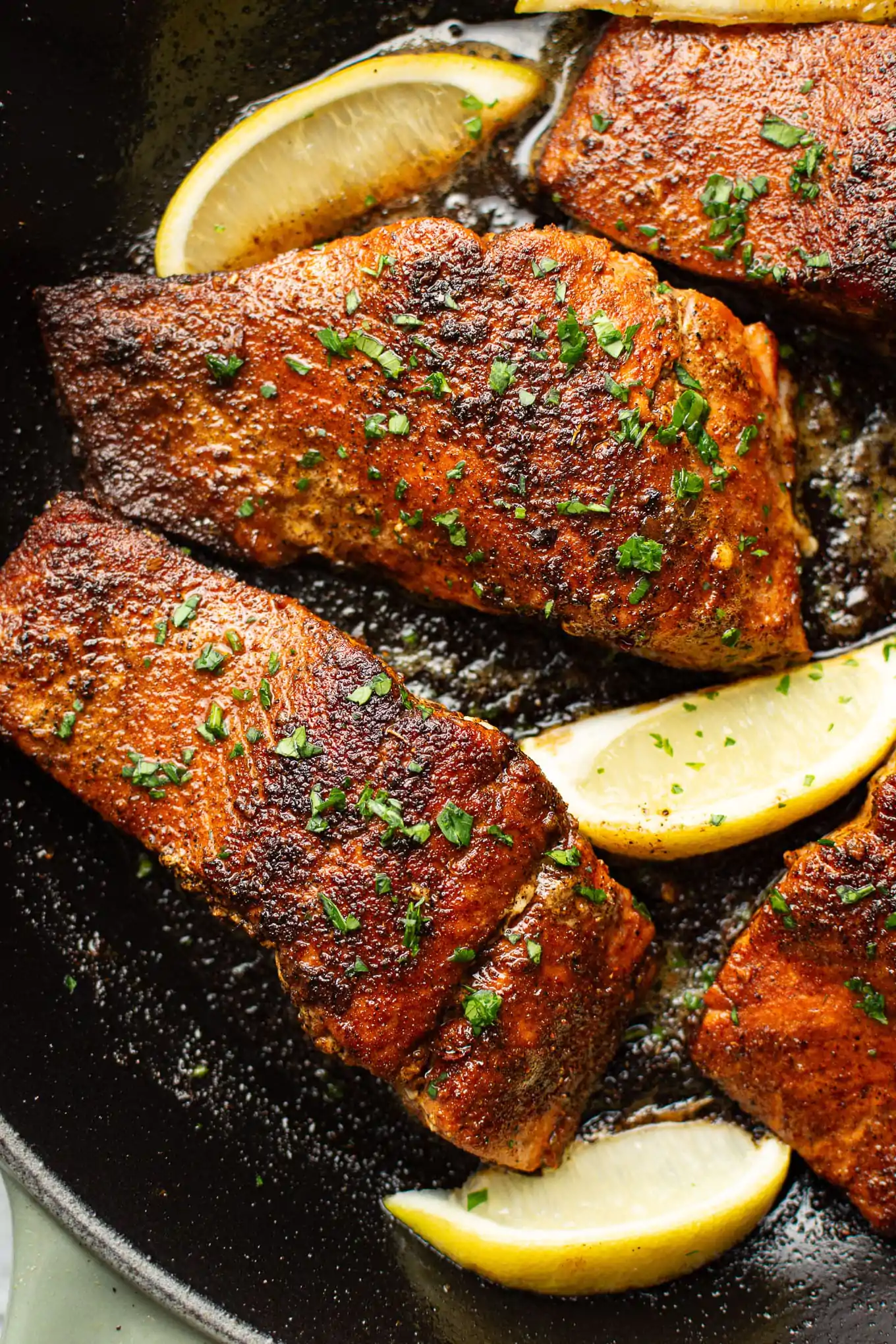
Blackened salmon gets a deeply seasoned, crisp-edged crust in a hot skillet while the center stays moist and flaky. Butter and olive oil help the spice coating toast quickly, giving each piece bold flavor without a complicated cooking method.
This version takes 5 minutes to prep and 15 minutes to cook, and serves four. It is a quick weeknight dinner that also works well for a small gathering when you want something flavorful without turning on the oven.
Why This Blackened Salmon Recipe Works
A short ingredient list and a hot skillet make this a fast dinner, but a few technique choices are what keep the fish flavorful and tender.
- Dry fish sears better. Blotting the salmon removes surface moisture that would otherwise steam in the pan. A dry surface also helps the seasoning adhere.
- The spice blend coats every bite. Seasoning all sides creates a more even layer of bold flavor than coating only the top. Use enough to cover the fish without leaving bare patches.
- Butter and oil work together. Butter adds rich flavor, while olive oil helps the fat heat in the skillet. Together they give the seasoning a chance to toast as the salmon cooks.
- The cooking time follows thickness. Salmon pieces are ready at different times depending on how thick they are. Checking closely after flipping helps prevent the thinner pieces from drying out.
Ingredients You’ll Need
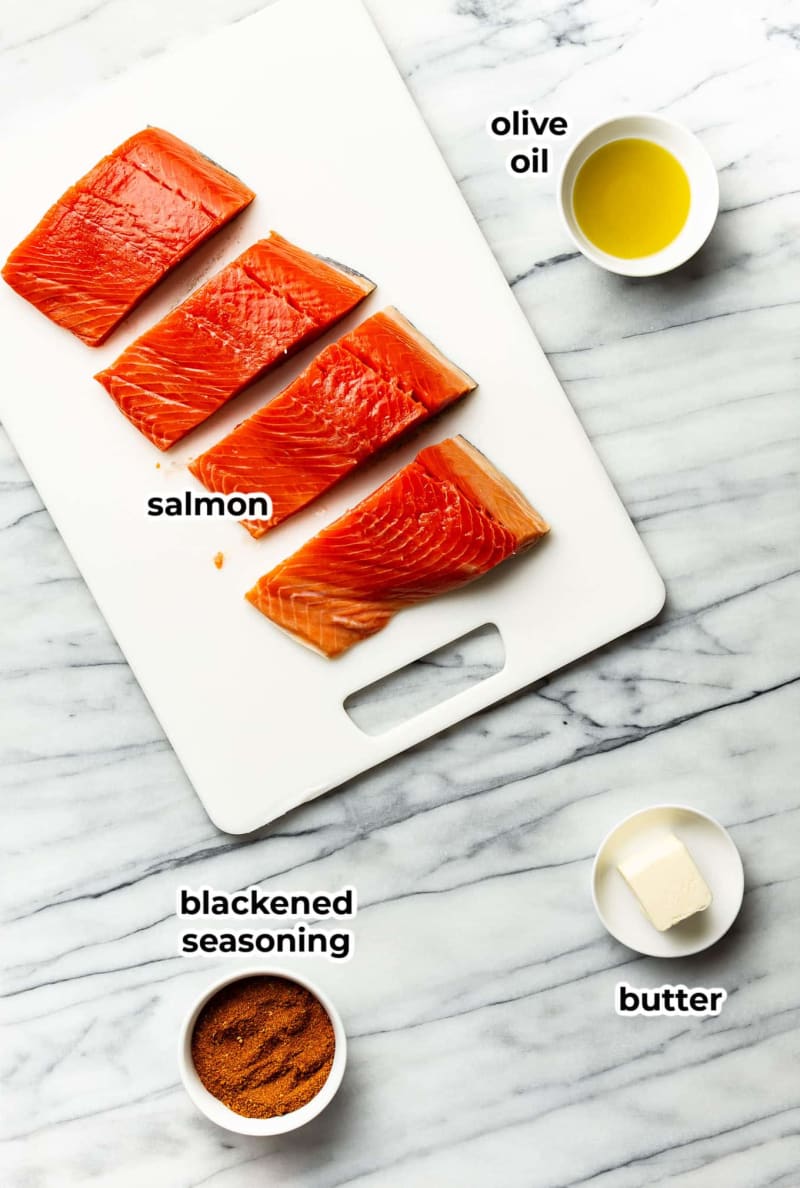
You need only a few ingredients for this skillet dinner. Fresh, evenly cut salmon makes the pieces easier to cook at the same pace.
- Fresh salmon: One pound, cut into four equal pieces. Choose pieces of similar thickness so they finish cooking together; Atlantic salmon about 1 inch thick is a useful guide.
- Blackened seasoning: Three tablespoons, either homemade or store-bought. This is the main source of the dish’s bold, savory spice; adjust the coating to suit your preference.
- Butter: Two tablespoons add richness and help the seasoning toast in the pan.
- Olive oil: One tablespoon combines with the butter to coat the skillet and cook the salmon.
- Lemon or lime wedges: Optional, to taste, for serving. A squeeze of citrus gives the rich, spiced fish a fresh finish.
How to Make Blackened Salmon
1. Prepare the salmon
If possible, take the salmon out of the fridge 15-20 minutes before you begin. Cut it into 4 equal pieces, pat each piece dry with paper towels, then coat all sides with blackened seasoning.
The surfaces should feel dry before seasoning, and the pieces should have an even coating.
2. Heat the skillet
Put the butter and olive oil in a skillet over medium-high heat. Let the pan warm for a few minutes.
The fats should be melted and the skillet hot before the fish goes in; avoid letting the butter burn.
3. Cook the first side
Place the salmon in the skillet skin-side down and cook for 5 minutes.
Keep the pieces in place while the skin-side sears. If the fish sticks, give it a little more time before trying to turn it.
4. Flip and finish cooking
Lower the heat to medium, carefully turn the salmon, and cook the other side for another 2-4 minutes, or until cooked through. Allow a little longer for pieces more than 1″ thick and less for thinner pieces.
The fish should flake easily and look opaque through the center. Check the thickest piece first, since it will take the longest.
5. Serve with citrus
Transfer the salmon to plates and serve with lemon or lime wedges if you like.
Serve promptly for the crispest skin and freshest texture.
Tips and Common Mistakes
A few small adjustments help the spice crust brown while keeping the salmon from overcooking.
- Pat the fish dry. Moisture on the surface can interfere with browning and make the seasoning slide off. Blot gently so the salmon stays intact.
- Cut pieces evenly. Similar-sized portions cook more consistently, which is especially helpful when some parts of the fillet taper.
- Watch the thickness. The stated cooking time is a guide for pieces around 1 inch thick. Thinner portions cook faster, so check them early after flipping.
- Use care with skinless or wild salmon. Both can cook more quickly than thicker, skin-on Atlantic salmon. Keep an especially close eye on the fish as it finishes.
- Eat the skin soon after cooking. Salmon skin is crispiest right away. If you prefer not to eat it, it peels off easily once the fish is cooked.
Substitutions and Variations
The seasoning and citrus are easy to tailor, but keep an eye on cook time when changing the fish.
- Store-bought seasoning: A prepared blackened seasoning blend works in place of homemade. Check its salt level before adding any extra seasoning.
- Homemade seasoning: Use a homemade blackened blend if you prefer to control the spice and salt. Keep the coating even across all sides of the salmon.
- Lime for lemon: Either citrus works as a finishing squeeze. Lime gives a slightly sharper flavor, while lemon is brighter and familiar.
- Skinless salmon: Skinless pieces cook well in the skillet, but they may finish sooner. Turn them gently and check for doneness early.
- Wild salmon: Wild salmon can be leaner and cook faster than Atlantic salmon. Watch closely after flipping to keep it from drying out.
What to Serve with Blackened Salmon
Pair blackened salmon with rice, roasted potatoes, or a simple green salad. Steamed vegetables such as asparagus or green beans add a fresh contrast to the rich butter and spices.
For a lighter plate, serve it over greens with citrus on the side. Browse our salad recipes for fresh accompaniments, or find more ideas in our dinner recipes.
Make-Ahead, Storage and Reheating
Make ahead: For the freshest texture, season the salmon just before cooking. You can cut the fish into portions ahead and keep it covered in the refrigerator; wait to cook it until close to serving.
Storage: Refrigerate leftover salmon in a covered airtight container within 2 hours of cooking and use it within 1-2 days.
Freezing: Cooked salmon can be frozen in an airtight, freezer-safe container, though its texture may be softer after thawing. Thaw it in the refrigerator and use it in a salad or flake it into another dish.
Reheating: Warm leftovers gently in a covered skillet over low heat until heated through, adding a small splash of water if needed to reduce drying. You can also serve the salmon cold, flaked over a salad.
Blackened Salmon FAQs
Can I make blackened salmon without the skin?
Yes. Skinless salmon works well, but it may cook faster and is more delicate to turn, so check it closely and use a thin spatula.
How can I tell when salmon is cooked through?
The flesh should be opaque and flake easily when gently pressed with a fork. Check the thickest piece first, since thinner portions may finish earlier.
Can I use frozen salmon?
Yes, but thaw it completely in the refrigerator first and pat it very dry. Ice or excess water on the surface can keep the seasoning from adhering and prevent a good sear.
What can I do if my salmon is sticking to the pan?
Give it more time to sear before turning; fish often releases more easily once its first side has browned. Use a thin spatula and work gently under the piece.
Printable Recipe
Recipe adapted from Salt & Lavender. Photos courtesy of Salt & Lavender, used with permission.

Easy Blackened Salmon
Ingredients
- 1 pound fresh salmon
- 3 tablespoons blackened seasoning my version is linked, or use store bought
- 2 tablespoons butter
- 1 tablespoon olive oil
- For serving: lemon or lime wedges optional, to taste
Instructions
- Take the salmon out of the fridge 15-20 minutes before starting the recipe if you can. Cut the salmon into 4 equal pieces and pat it dry with paper towels. Season each piece all over with the blackened seasoning.
- Add the butter and olive oil to a skillet over medium-high heat. Let the skillet heat up for a few minutes.
- Cook the salmon (skin-side down) for 5 minutes, then reduce the heat to medium and flip it over and cook for another 2-4 minutes or until it's cooked through (it'll take a little longer if your salmon is more than 1" thick, and less if thinner than 1").
Notes
- I typically buy Atlantic salmon that’s about 1″ thick. If using skinless salmon or wild salmon, reduce the cooking time and keep a close eye on it. If you’re not a fan of the skin (it’s crispy and delicious if you eat it right away), it’s easy to peel off once it’s cooked.


