Easy Chicken Cacciatore


Easy chicken cacciatore is a rustic Italian chicken stew with tender thighs tucked into a thick tomato sauce. Searing the chicken first gives the sauce a savory backbone, while fire-roasted tomatoes bring a little smokiness. Sweet bits of carrot and red pepper soften into the sauce, and briny Kalamata olives are an optional contrast.
Dinner takes 55 minutes, including 15 minutes of prep, and serves 4 to 6 depending on what you put alongside it. The first stretch is hands-on, but once the chicken settles into the sauce, you can let it simmer while you cook pasta or set the table.
Why This Chicken Cacciatore Recipe Works
The flavor builds in one pot, from the first sear to the fresh herbs stirred in just before serving.
- Thighs suit a slow simmer. Dark meat stays juicy during the time it takes the carrots to soften. Boneless thighs also make it easy to cut each bite right in the bowl.
- Flour does two jobs. A light dusting helps give the chicken an even golden surface. Some of that flour comes off in the pot and gives the tomato sauce a little more body.
- The browned bits season the sauce. Wine or broth loosens the savory residue left by the chicken. Scraping it up before the simmer puts that flavor in the sauce, where you can taste it.
- The lid leaves room for evaporation. Keeping it slightly open lets steam escape so the tomatoes concentrate without reducing as quickly as they would in an uncovered pot.
- The herbs go in at different times. Thyme and oregano mellow into the tomatoes as they simmer. Basil and parsley keep their fresher flavor when you stir them in at the end.
Ingredients You’ll Need
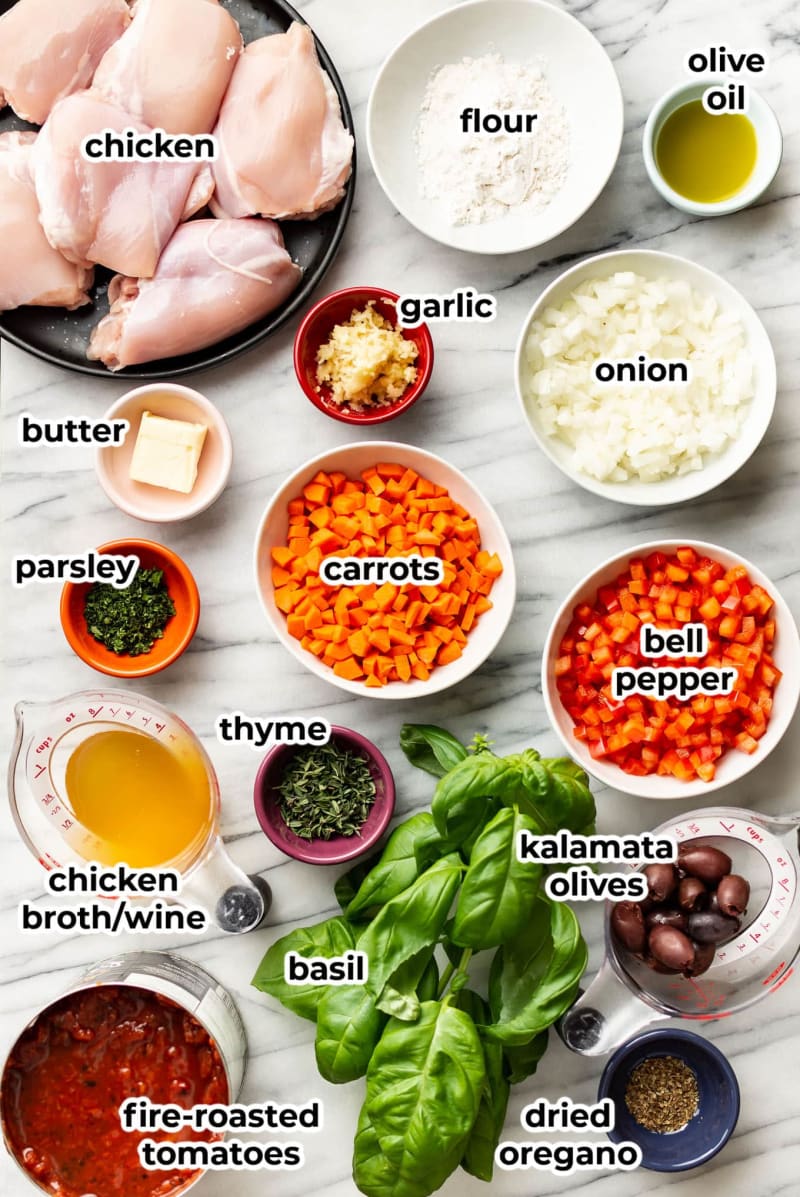
Chop the vegetables before heating the pot so you can move straight from searing the chicken to cooking the sauce.
- Chicken thighs: Six boneless, skinless thighs, totaling 1 to 2 pounds. Look for pieces of similar thickness.
- Salt and pepper: Use both to taste, starting with a generous seasoning on the chicken.
- Flour: Use just enough all-purpose flour to dust the thighs on all sides.
- Olive oil: One tablespoon helps coat the pot for searing.
- Butter: One tablespoon adds richness to the sear.
- Onion: Finely chop half a medium onion so it blends into the sauce.
- Carrot: Peel one medium-to-large carrot and dice it small so it softens evenly.
- Red bell pepper: Chop one medium pepper into small pieces for sweetness throughout the sauce.
- Garlic: Mince six cloves so they disperse without leaving large bites of garlic.
- Dry white wine or chicken broth: Use half a cup of either to loosen the browned bits.
- Fire-roasted crushed tomatoes: One 28-ounce can gives the sauce its thick texture and mild roasted flavor.
- Fresh thyme: Strip enough sprigs for one tablespoon of leaves; discard the woody stems.
- Dried oregano: Half a teaspoon adds an earthy note to the tomatoes.
- Kalamata olives: Use a quarter cup of pitted olives, or adjust to taste. They’re optional.
- Fresh basil: Chop one tablespoon for a sweet, fragrant finish.
- Fresh parsley: Chop one tablespoon for a clean, grassy note.
Equipment You’ll Need
- Dutch oven, soup pot or braiser with lid: Choose a wide, heavy pot that gives the thighs room to brown and holds the sauce comfortably.
- Tongs: Tongs make it easier to turn and transfer the thighs without tearing the flour coating.
- Wooden spoon: Use the flat edge to lift browned bits from the bottom.
- Instant-read thermometer: Use it to check the center of the thickest thighs.
How to Make Chicken Cacciatore
1. Season and flour
Season both sides of the thighs generously with salt and pepper. Turn each piece in flour, then give it a shake to knock off any excess.
The coating should look like a light dusting, not a white blanket, even where the meat folds over.
2. Sear the thighs
Heat the olive oil and butter in the pot over medium-high heat for a few minutes. Sear the chicken for 3 to 4 minutes on each side, or until golden, then move it to a plate.
Look for an even sizzle when the chicken hits the pot. The meat doesn’t have to be cooked through yet.
3. Soften the vegetables
Cook the onion in the same pot for 3 minutes. Add the carrot and red bell pepper and cook for 5 to 7 minutes, stirring occasionally.
The onion should start to turn translucent and the pepper should lose some of its stiffness. The carrots can still be firm in the center.
4. Add the garlic
Stir in the minced garlic and cook it for 30 seconds.
As soon as the garlic smells fragrant, have the liquid ready to pour in so the garlic doesn’t darken.
5. Build the tomato sauce
Pour in the wine or broth and the crushed tomatoes, then work the spoon across the bottom to release the browned bits. Stir in the thyme and oregano.
Run the spoon around the edges of the pot, too, where little patches of browned flour can hide.
6. Simmer the chicken gently
Nestle the thighs in the sauce and spoon some over them. Set the lid slightly ajar, turn the heat way down and simmer gently for at least 20 minutes, until the carrots are soft and the chicken is tender; stir halfway through if you like.
Look for occasional bubbles and a sauce that thickens slightly. If it gets too thick, stir in a splash of wine or chicken broth.
7. Finish and season
Adjust the salt and pepper as needed, then stir in the olives if using, along with the basil and parsley.
Taste once more before serving, since the olives add their own saltiness.
How to Tell When It’s Done
The edge of a spoon should cut through a carrot piece without much pressure, and a fork should slide easily into a thigh. The sauce should cling to the spoon but still flow readily around the chicken.
Check the thickest part of the largest thigh for at least 165°F. If the chicken is safe but still feels springy and tough, keep it at a low simmer until it gives more easily under a fork. If only the carrots need more time, lift out the chicken and return it when the vegetables are soft.
Tips and Common Mistakes
A few small adjustments at the stove can head off a pale sear, scorched sauce or unevenly cooked vegetables.
- Blot the thighs dry. Pat away surface moisture before seasoning so the flour doesn’t gather in gummy patches.
- Leave space between pieces. Sear in batches if the thighs touch. A crowded pot traps steam and leaves less color on the meat.
- Wait before turning. If the chicken clings when you tug gently with the tongs, give the surface a little longer to brown so it releases more cleanly.
- Match the vegetable cuts. Keep the carrot pieces at least as small as the pepper pieces. The carrot takes longer to soften.
- Watch the drippings. Deep brown bits are useful, but blackened flour tastes bitter. Wipe out any scorched patches before cooking the onion.
- Shift the pot if needed. If your lowest setting still makes the sauce bubble hard, move the pot to a smaller burner rather than letting it boil.
Substitutions and Variations
You can change the cut of chicken, the liquid or the seasoning without losing the character of the stew.
- Bone-in, skin-on thighs: Sear skin side down first and pour off excess rendered fat before adding the onion. Expect a longer simmer and soft, not crisp, skin.
- No wine: Use chicken broth for a more savory sauce without the wine’s brightness. Low-sodium broth gives you more control over the final seasoning.
- Plain crushed tomatoes: They’re a direct swap for fire-roasted tomatoes and make a milder sauce without the smoky note.
- Green olives: Use pitted green olives in place of Kalamatas for a sharper, more briny bite.
- Dairy-free: Replace the butter with more olive oil. The chicken will still brown, though the sauce will taste a little less rich.
- A little heat: Add a pinch of crushed red pepper with the oregano for gentle warmth throughout the sauce.
What to Serve with Chicken Cacciatore
Spoon the chicken and tomatoes over wide egg noodles, soft polenta or mashed potatoes. If you serve it with crusty bread instead, toast thick slices so they hold up when you drag them through the sauce.
For something fresh on the side, try peppery arugula with lemon or browse our simple salad ideas. If you’re rounding out an Italian-style dinner for guests, start with marinated vegetables or pick another small bite from our appetizer recipes.
Make-Ahead, Storage and Reheating
Make ahead: Chop the onion, carrot and pepper up to a day ahead and refrigerate them in a covered container, with the onion separate since it goes in first. Wait to flour the chicken until the pot is ready, and chop the basil and parsley just before finishing.
Storage: Refrigerate the chicken in its sauce in shallow airtight containers within 2 hours of cooking. Use leftovers within 3 to 4 days.
Freezing: Freeze cooled portions with enough sauce to cover the chicken for up to 3 months. Thaw overnight in the refrigerator and add fresh herbs after reheating if you have them.
Reheating: Warm the chicken and sauce in a covered saucepan over low heat until the chicken reaches 165°F. Add a splash of broth or water if the sauce has thickened in the fridge.
Chicken Cacciatore FAQs
Can you make chicken cacciatore in a slow cooker?
Yes. Dredge and sear the chicken, sauté the vegetables and garlic, and deglaze with the wine or broth and tomatoes before transferring everything to the slow cooker with the thyme and oregano. Cook for 3 to 4 hours on high or 6 to 8 hours on low, then add the olives and fresh herbs.
Can you skip the flour in chicken cacciatore?
Yes. Sear the seasoned thighs without flour and expect a sauce with slightly less body. If it needs thickening, remove the cooked thighs and simmer the sauce uncovered until it coats a spoon.
Can you use fresh tomatoes instead of canned?
Yes, but use ripe plum tomatoes and crush them before adding them. Fresh tomatoes can give off more water, so expect a looser sauce that may need extra reduction.
Can you add mushrooms to chicken cacciatore?
Yes. Brown sliced mushrooms in the pot after searing the chicken, then set them aside and return them with the thighs. Browning them separately keeps the water they release from slowing down the vegetable sauté.
What if the tomato sauce tastes too tart?
Taste for salt first, especially if you skipped the olives. If it still tastes sharply acidic, stir in a small pinch of sugar and taste again rather than adding enough to make the sauce sweet.
Can you double chicken cacciatore in a slow cooker?
Yes, if the doubled batch fits below your slow cooker’s maximum fill line. Brown the thighs in batches before transferring them so the extra pieces don’t crowd the pot.
Printable Recipe
Recipe adapted from Salt & Lavender. Photos courtesy of Salt & Lavender, used with permission.

Easy Chicken Cacciatore
Ingredients
- 6 chicken thighs (boneless, skinless) see note
- Salt & pepper to taste
- Flour for dredging
- 1 tablespoon olive oil
- 1 tablespoon butter
- 1/2 medium onion chopped finely
- 1 medium-to-large carrot peeled and chopped small
- 1 medium red bell pepper chopped small
- 6 cloves garlic minced
- 1/2 cup dry white wine or chicken broth
- 1 (28 ounce) can fire-roasted crushed tomatoes
- 1 tablespoon fresh thyme leaves
- 1/2 teaspoon dried oregano
- 1/4 cup pitted Kalamata olives or to taste (optional)
- 1 tablespoon chopped fresh basil
- 1 tablespoon chopped fresh parsley
Instructions
- Generously season the chicken with salt & pepper and then coat it in flour (and shake off any excess).
- Add the oil and butter to a Dutch oven/soup pot/braiser over medium-high heat for a few minutes, then add the chicken and sear for 3-4 minutes/side or until golden. Transfer the chicken to a plate.
- Add in the onions and cook for 3 minutes.
- Add in the carrots and red bell pepper and cook for 5-7 minutes, stirring occasionally.
- Stir in the garlic and cook for 30 seconds.
- Add in the white wine and crushed tomatoes and scrape up any browned bits from the bottom of the pot.
- Stir in the thyme and oregano.
- Add the chicken back in and spoon some sauce over top. Cover the pot with the lid slightly ajar, reduce the heat, and gently simmer (turn the heat way down) for at least 20 minutes or until the carrots have softened and the chicken is tender (you can stir halfway through if you wish). The sauce will thicken up a bit. If it becomes too thick, add a splash more wine or chicken broth.
- Season with salt & pepper as needed, and stir in the Kalamata olives, basil, and parsley.
Notes
- Serves 4-6 depending how much people eat/what it’s served with.
- For this recipe, use 1-2 pounds of chicken thighs. See blog post for tips if you want to use bone-in skin-on chicken thighs.
- Other methods: See Instant Pot version. For Crockpot, follow steps 1-6 as written, then add everything except for olives/basil/parsley to slow cooker (add them in at the end), and do 3-4 hours on high or 6-8 on low. Recipe is easily doubled in a Crockpot.


