Easy Chicken Noodle Soup


This easy chicken noodle soup has tender pieces of chicken, slippery egg noodles, and sweet carrots in a savory broth that tastes like it simmered longer than it did. The chicken poaches right in the pot, picking up the flavor of the garlic and herbs while giving the broth more depth.
Prep takes 10 minutes, and the soup is ready in 45 minutes total. It serves 4 to 6, depending on how full you ladle the bowls and what you serve alongside. Make it on a chilly weeknight when you want a full dinner without juggling several pans.
Why This Chicken Noodle Soup Recipe Works
The order matters more than the ingredient list here. Each addition gets the time it needs without making the earlier ingredients cook too long.
- The vegetables get a head start. Sautéing the onion, carrots, and celery before adding liquid softens their edges and brings out their sweetness, so the finished broth doesn’t taste like boiled vegetables.
- The chicken flavors the broth. As the whole breasts poach, their juices mingle with the broth and water. Keeping the pieces whole makes it easier to check their temperature before cutting.
- The noodles cook in the soup. They soak up seasoned broth instead of plain water, and the starch they release gives the liquid a little body without making it creamy.
- Parsley goes in last. Fresh parsley stays green and tastes brighter when it doesn’t spend the whole cooking time in the pot.
Ingredients You’ll Need
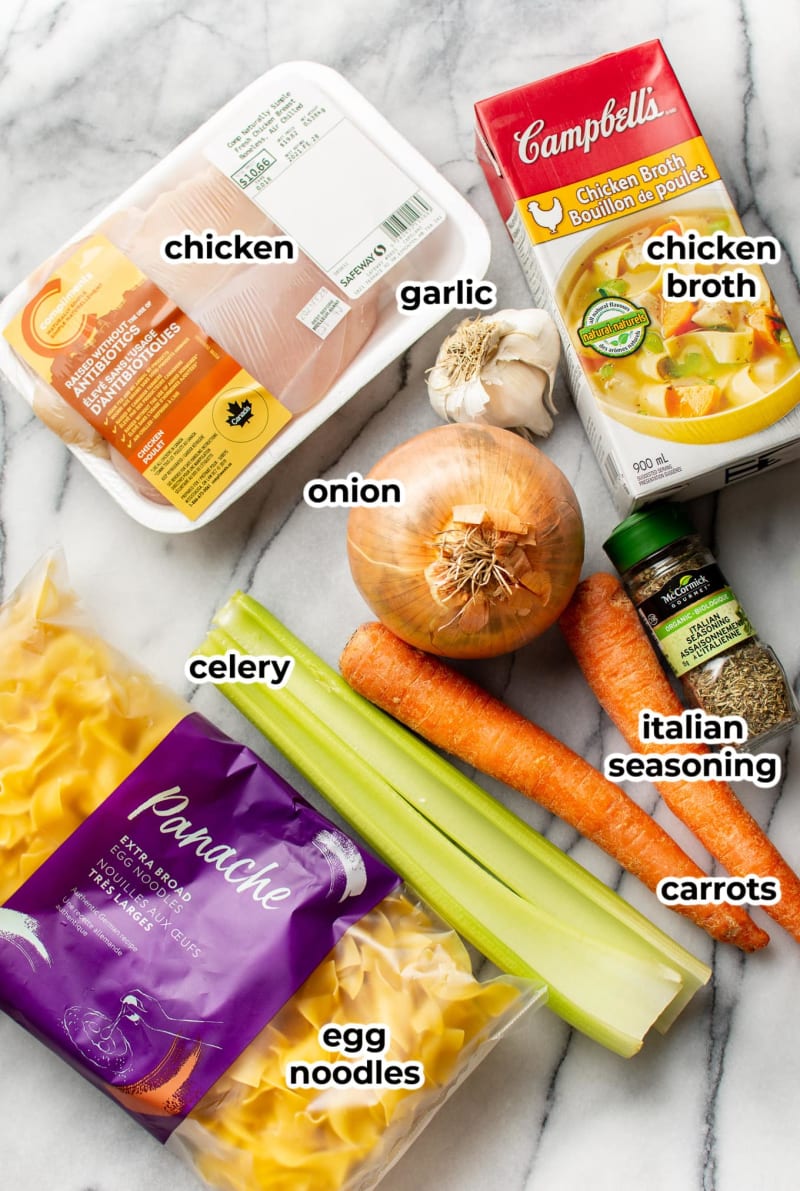
The broth and vegetables do most of the flavor work, so choose a broth you’d be happy to sip on its own.
- Olive oil: One tablespoon helps coat the vegetables evenly as they sauté.
- Butter: One tablespoon adds a round, buttery flavor to the vegetable base.
- Onion: Chop one medium onion so the pieces soften quickly and fit easily on a spoon.
- Carrots: Peel and slice two medium carrots. Keep the slices even so they soften at the same rate.
- Celery: Chop two ribs for a savory backbone that balances the sweetness of the carrots.
- Garlic: Mince two cloves so the garlic disperses through the broth without leaving large bites.
- Chicken broth: Use four cups. Low-sodium broth gives you more control over the final seasoning.
- Water: Two cups give the noodles room to cook without making the broth too salty.
- Chicken breasts: Start with one and a half pounds of raw boneless, skinless breasts, about two medium-to-large pieces.
- Italian seasoning: Half a teaspoon of the dried blend gives the broth a gentle herbal flavor.
- Egg noodles: Measure two cups dry. Choose a spoon-friendly width that won’t crowd out the chicken and vegetables in each bite.
- Salt and pepper: Add both to taste once the broth and noodles have cooked together.
- Fresh parsley: Chop enough for one tablespoon to finish the soup.
Equipment You’ll Need
- Soup pot with a lid: Choose a pot deep enough to hold the chicken under the broth, with room to stir the noodles without sloshing.
- Tongs: Use them to lift the hot chicken out without having to tip the pot or fish around with a spoon.
- Instant-read thermometer: A quick reading at the center of each breast takes the guesswork out of poaching.
How to Make Chicken Noodle Soup
1. Soften the vegetables
Put the olive oil, butter, onion, carrots, and celery in a soup pot over medium-high heat. Sauté for 5 to 7 minutes, stirring as the vegetables soften.
The onion should look translucent around the edges, but the carrots can still be firm in the middle.
2. Add the garlic
Stir the minced garlic through the vegetables and cook it for about 30 seconds.
As soon as you smell the garlic, move on to the liquids. There’s no need to wait for it to change color.
3. Build the broth
Pour in the chicken broth and water, then add the raw chicken breasts and Italian seasoning.
Run a spoon across the bottom to loosen any bits from the sauté, and settle the breasts into the liquid rather than stacking them.
4. Poach the chicken
Turn the burner to high to bring the soup to a boil. Once it boils, lower the heat, set the lid slightly ajar, and simmer for 15 minutes.
Look for small bubbles breaking the surface regularly, not a rolling boil that rattles the lid.
5. Cook the noodles
Stir in the egg noodles and cook uncovered for another 8 minutes. Raise the heat a little if necessary to keep the soup at a gentle boil, and stir occasionally to keep noodles from sticking to the bottom.
Sweep the spoon along the base of the pot each time you stir, especially just after the noodles go in.
6. Cut up the chicken
Lift out the breasts and check that they have reached 165°F. If needed, put them back in the soup for a few more minutes and check again before chopping or shredding them and returning the meat to the pot.
Aim for pieces small enough to fit on a spoon with a noodle and a slice of carrot.
7. Season and finish
Taste the broth, season with salt and pepper as needed, and stir in the fresh parsley.
Taste a spoonful with a noodle in it, not just the broth, to see how the seasoning comes across in a full bite.
How to Tell When It’s Done
Check each breast in its thickest part with an instant-read thermometer. If the breast is awkward to probe from above, insert the tip from the side so it reaches the center without passing all the way through. The reading should be 165°F; color alone isn’t a reliable check.
A noodle should bend easily and be tender when you bite it, with no stiff center. If the noodles are ready but the chicken needs longer, you can scoop the noodles out with a slotted spoon and return them once the chicken is done.
Tips and Common Mistakes
A few small choices keep the broth balanced and the soup easy to eat.
- Match the breasts by thickness. Two breasts can weigh about the same and still cook at different rates if one is much thicker in the middle.
- Cut the celery across the ribs. Crosswise cuts shorten the fibers so you don’t end up with long, stringy pieces in the bowl.
- Keep the noodle measure level. A heaping measure can leave you with more noodles than broth once the pasta swells.
- Use the chicken you have. Anything from 1 to 1½ pounds works. At the lower end, each bowl will be a little more broth-forward.
- Cut across the grain. If you’re chopping rather than shredding, slice across the visible lines in the breast first so the pieces are easier to bite through.
- Taste before adding salt. Some broths are salty enough on their own, especially after simmering. Add pepper separately if the soup needs more bite but not more salt.
Substitutions and Variations
You can change the chicken, noodles, or seasonings without losing the character of the soup.
- Chicken thighs: Substitute boneless, skinless thighs for darker, richer meat. Check their temperature rather than counting on the breasts’ timing.
- Rotisserie chicken: Skip poaching raw breasts and stir in shredded cooked chicken toward the end, giving it just enough time to heat through.
- Short pasta: Use small shells or elbows in place of egg noodles. Go by the package timing and start tasting before they’re fully tender.
- Dairy-free: Replace the butter with additional olive oil. The broth will taste a little lighter but still get plenty of flavor from the sautéed vegetables.
- Single dried herb: Use dried thyme in place of the Italian seasoning for a simpler, earthier broth without the oregano notes of the blend.
- Chicken stock: Swap in stock for the broth if you’d like a fuller mouthfeel, especially if the stock gels when chilled.
What to Serve with Chicken Noodle Soup
Serve big bowls with buttered sourdough toast or warm biscuits for dipping. If you’d like something fresh alongside, pick a crunchy side from these salad recipes or toss chopped romaine and radishes with a sharp vinaigrette.
For a soup-and-sandwich dinner, pair smaller bowls with sharp cheddar grilled cheese. For a family lunch with a few dishes on the table, serve the soup in mugs alongside wedges of potato and spinach frittata.
Make-Ahead, Storage and Reheating
Make ahead: Chop the onion, carrots, and celery up to 2 days ahead and keep them covered in the fridge. If you’re making the whole batch ahead, cook the chicken and broth without noodles, then cook the noodles in the reheated soup and add parsley just before serving.
Storage: Divide leftovers among shallow airtight containers and refrigerate within 2 hours. Use within 3 to 4 days.
Freezing: Freeze the broth, vegetables, and chicken without the noodles for up to 3 months, leaving room for expansion. Thaw in the refrigerator before reheating.
Reheating: Warm leftovers on the stovetop until they reach 165°F. Add a splash of chicken broth if the noodles have absorbed too much liquid, and avoid a prolonged boil so they don’t fall apart.
Chicken Noodle Soup FAQs
Can I use frozen chicken breasts?
Thaw them in the refrigerator first for this method. Frozen breasts can cool the broth enough to interrupt the simmer, and the centers may still be underdone by the time the noodles are ready.
Why is there foam on top of my chicken soup?
It’s usually protein released by the chicken as it cooks. You can skim it off with a shallow spoon if you want a clearer-looking broth, but leaving it in doesn’t hurt the soup.
Can I add frozen peas to chicken noodle soup?
Yes. Stir them in near the end so they heat through without losing their bright color. There’s no need to thaw them first; let the broth return to a gentle bubble before serving.
Can I cook the egg noodles separately?
Yes. Cook them in a separate pot, drain them well, and portion them directly into bowls before adding the soup. That approach is especially handy if some people at the table prefer more noodles than others.
Can I double the batch in one pot?
Yes, if the pot can hold everything with room to stir and the breasts aren’t wedged together. Expect the larger volume to take longer to come to a boil before you start timing the simmer.
How can I brighten the broth without adding more salt?
Try a little lemon juice in your bowl. Add it a few drops at a time so it lifts the flavor without making the whole serving taste lemony.
Printable Recipe
Recipe adapted from Salt & Lavender. Photos courtesy of Salt & Lavender, used with permission.

Easy Chicken Noodle Soup
Ingredients
- 1 tablespoon olive oil
- 1 tablespoon butter
- 1 medium onion chopped
- 2 medium carrots peeled & sliced
- 2 sticks celery chopped
- 2 cloves garlic minced
- 4 cups chicken broth
- 2 cups water
- 1.5 pounds uncooked chicken breasts boneless skinless
- 1/2 teaspoon Italian seasoning
- 2 cups uncooked egg noodles
- Salt & pepper to taste
- 1 tablespoon fresh parsley chopped
Instructions
- Add the oil, butter, onion, carrots, and celery to a soup pot. Sauté over medium-high heat for 5-7 minutes.
- Stir in the garlic and cook for 30 seconds or so.
- Add in the chicken broth, water, chicken breasts, and Italian seasoning.
- Turn the heat up to high and bring the soup to a boil, and once it's boiling, reduce the heat, cover the pot (with the lid slightly ajar), and simmer for 15 minutes.
- Stir in the noodles and cook for another 8 minutes, with the lid off, stirring occasionally so the noodles don't stick to the bottom of the pot. You may need to turn the heat up a bit again so it's boiling gently.
- Take the chicken out of the pot and cut it up/shred it, then add it back in. It should be cooked through, but you can always give it a few more minutes if it's not (chicken is safe to eat at 165F).
- Season the soup with salt & pepper as needed (I am generous with both) and add in the fresh parsley.
Notes
- Serves 4-6 depending on how much people eat.
- Feel free to swap the chicken breasts for thighs. If you want to use already cooked/rotisserie chicken, add it in towards the end so it doesn’t overcook.
- Anything from 1-1.5 pounds of chicken will work (this is about 2 medium-to-large chicken breasts).
- Chicken can go from undercooked to overcooked quickly, so I recommend using an instant read meat thermometer whenever cooking chicken so you’re not guessing.
- The noodles will soak up the broth the longer they sit, so you may need to add more chicken broth to leftovers.
- Try the Crockpot version or the Instant Pot version.
- Nutritional information is provided as a courtesy only and should be construed as an estimate rather than a guarantee. Ingredients can vary and Salt & Lavender makes no guarantees to the accuracy of this information.


