Easy Pasta Puttanesca

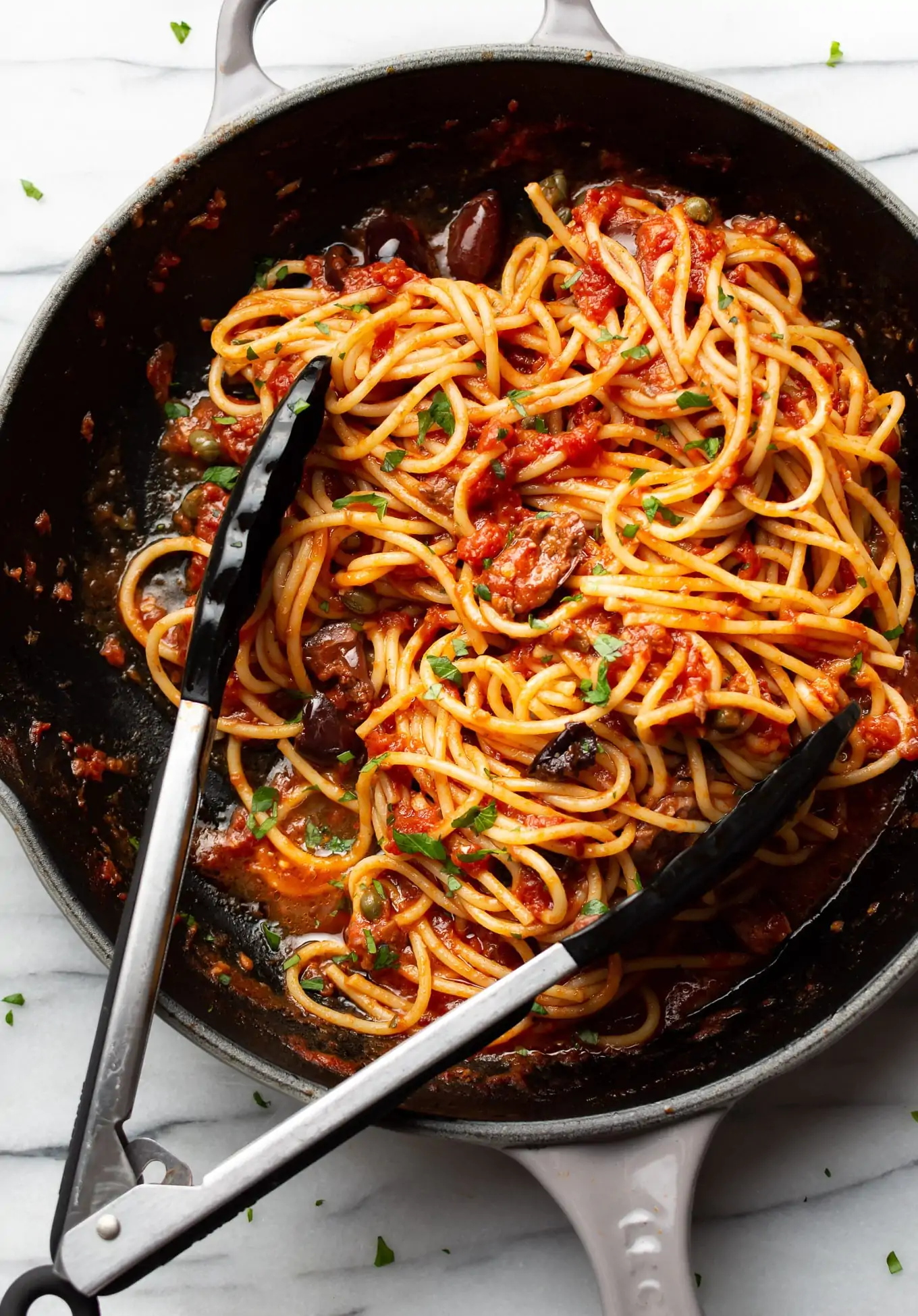
Pasta puttanesca coats springy spaghetti in a chunky tomato sauce with briny capers, meaty Kalamata olives, and a little heat. The key is to warm the garlic, pepper flakes, and chopped anchovies in olive oil before adding the tomatoes. The anchovies break down, giving the whole sauce a savory depth without leaving obvious pieces of fish.
This easy pasta puttanesca serves four and takes 30 minutes, including 10 minutes of prep. It’s a good weeknight choice when the fridge is nearly empty: the sauce relies on canned and jarred staples, and the fresh parsley is entirely optional.
Why This Pasta Puttanesca Recipe Works
The sauce gets its depth from what goes into the skillet first, not from a long simmer.
- Olive oil carries the aromatics. Warming the garlic and pepper flakes in oil spreads their flavor through the sauce. That gives the finished pasta a more even heat than sprinkling flakes over each bowl.
- Chopped anchovies break down quickly. Small pieces soften in the warm oil as you stir, so their savory flavor reaches every bite instead of collecting in salty pockets.
- Whole tomatoes give you texture control. Crushing them yourself leaves irregular pieces that soften during the simmer. The smaller bits blend into the sauce while the larger ones give it some body.
- Capers and olives do different jobs. Capers bring a sharp, tangy bite, while Kalamata olives add a rounder, fruitier flavor. Halving the olives distributes them without losing their meaty texture.
Ingredients You’ll Need
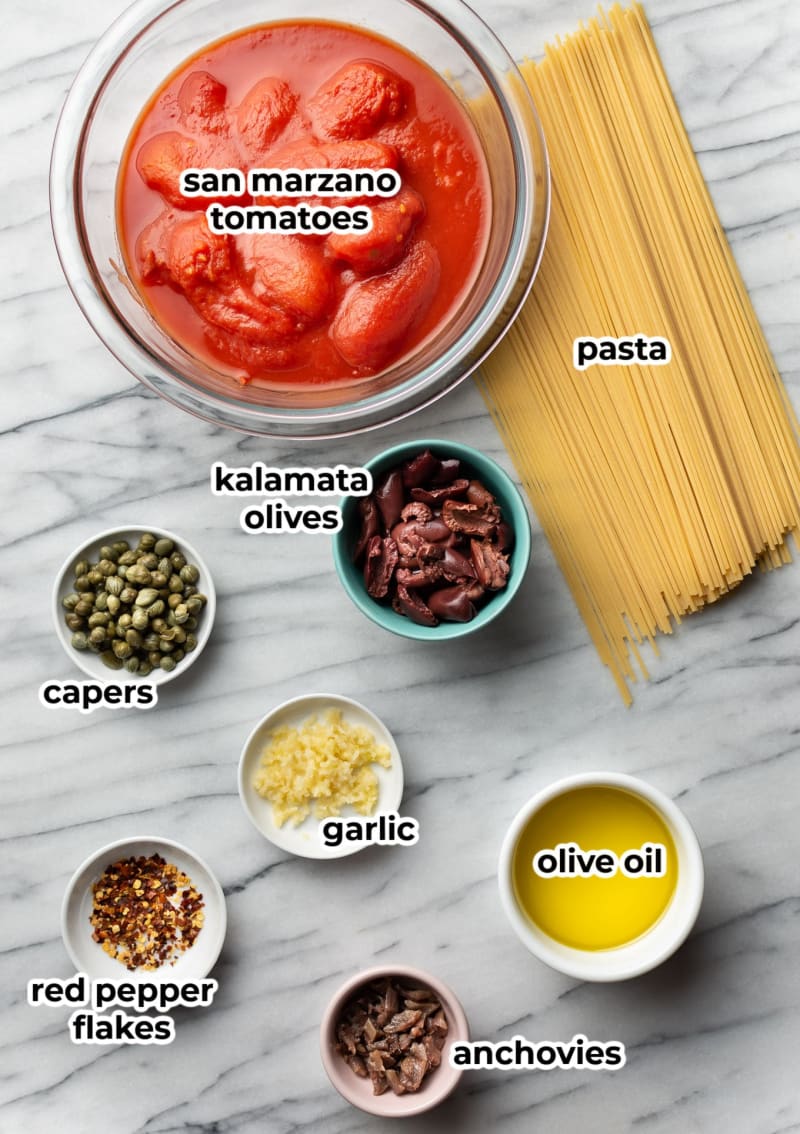
Most of the flavor comes from the pantry, but the tomatoes set the tone. Choose a can you’d be happy to use in a simple tomato sauce.
- Pasta: Use 8 ounces of dry pasta. Spaghetti is a good match because the tomato sauce clings to the long strands.
- Whole canned tomatoes: Use one 28-ounce can, including all the juices. San Marzano plum tomatoes are a good choice for their sweet, rounded flavor.
- Olive oil: A quarter cup gives the anchovies and aromatics enough oil to cook in and adds richness to the tomatoes.
- Garlic: Mince six cloves so the garlic disperses evenly rather than turning up in large pieces.
- Crushed red pepper flakes: Start with half a teaspoon, or adjust to taste. The heat comes through more clearly after the flakes warm in the oil.
- Anchovy fillets: Cut four to five fillets into small pieces. Look for fillets packed in oil rather than whole salt-packed anchovies.
- Capers: Drain two to three tablespoons. The capers bring acidity and salt without needing to pour any brine into the skillet.
- Kalamata olives: Use half a cup of pitted olives and cut them in half so they’re easy to pick up with the pasta.
- Salt and pepper: Use both to taste, keeping in mind that the anchovies, capers, and olives already season the sauce.
- Fresh parsley: Chop some to taste, if using. Its fresh, grassy flavor is a nice contrast to the salty sauce.
How to Make Pasta Puttanesca
1. Cook the spaghetti
Bring a large pot of salted water to a boil. Cook the pasta following the package directions for al dente, and get the sauce going while the pot heats and the pasta cooks.
Bite into a strand near the end of cooking. It should be tender enough to chew easily but still offer a little resistance at the center.
2. Crush the tomatoes
Tip the whole tomatoes and their juices into a bowl while the pasta is underway. Break up the tomatoes with your hands, or press them against the side of the bowl with a fork.
There’s no need to make a smooth puree. Squeeze the tomatoes low in the bowl to keep the juices from squirting onto the counter.
3. Warm the aromatics
Put the olive oil, minced garlic, red pepper flakes, and chopped anchovies in a skillet over medium heat. Stir as they cook for 3 to 4 minutes, watching the garlic closely so it doesn’t burn.
Look for gentle sizzling and a fragrant, still-pale garlic mixture. You can nudge any remaining anchovy pieces apart with the back of a spoon.
4. Simmer the sauce
Stir the crushed tomatoes and juices into the skillet along with the drained capers and halved olives. Turn down the heat and let the sauce simmer gently for 15 to 20 minutes, stirring occasionally, until it thickens and the flavors come together.
Look for small bubbles rather than a rolling boil. When you drag a spoon through the sauce, it should leave a path that fills in slowly.
5. Toss and garnish
Taste the sauce and add salt and pepper as needed. Before draining the pasta, scoop out some hot cooking water if you’d like to thin the sauce, then toss the drained pasta in the skillet with a splash as needed. Finish with chopped parsley if using.
Lift and turn the strands so the sauce coats them evenly. Spoon any olives and capers left in the skillet over the plated pasta.
Tips and Common Mistakes
A little attention at the stove keeps the garlic sweet and the finished sauce balanced.
- Set the tomatoes beside the stove. Have them crushed before you heat the skillet so you can add them as soon as the garlic is fragrant.
- Leave the skillet uncovered. Steam needs to escape for the tomato juices to concentrate. If the sauce spits, turn down the heat rather than trapping the steam with a lid.
- Taste a complete bite. Sample the tomato sauce with a piece of olive or a caper before adding salt. The liquid alone won’t tell you how salty the finished dish will taste.
- Adjust the bold ingredients individually. Use more garlic for a stronger aroma, more anchovy for savory depth, or more olives for a brinier bite. You don’t have to increase them all together.
- Avoid rinsing the spaghetti. Drain it without running water over it. The starch on the surface helps the tomato sauce cling, and the pasta stays hot for tossing.
Substitutions and Variations
You can swap the pasta shape or shift the briny flavors without changing the basic method.
- Crushed tomatoes: Use canned crushed tomatoes in place of whole ones and skip the bowl. The sauce will have a more even texture.
- Short pasta: Penne or rigatoni makes it easier to scoop up the sauce and olives in the same bite. Follow the package timing for that shape.
- Green olives: Try pitted green olives for a firmer, sharper bite. Taste one first, since some are considerably saltier than Kalamatas.
- Anchovy-free: Leave out the fillets for a vegetarian version. An extra spoonful of chopped capers adds punch, though the sauce will be tangier and less deeply savory.
- Fresh herb finish: Swap the parsley for torn basil for a sweeter aroma, or use a little chopped fresh oregano for a more pungent finish.
What to Serve with Pasta Puttanesca
Pair the pasta with a crisp romaine and cucumber salad dressed lightly with lemon and olive oil. The cool crunch is a good contrast to the warm, briny sauce. For other fresh sides, browse our salad recipes.
For a bigger dinner, add roasted zucchini and plain grilled chicken. Choose a lightly seasoned main from our chicken recipes so the puttanesca remains the strongest flavor on the plate.
Make-Ahead, Storage and Reheating
Make ahead: Make the sauce a day ahead, cool it promptly, and refrigerate it in a covered container. Warm it while the pasta cooks; save the parsley and the final toss for serving.
Storage: Refrigerate leftover pasta in an airtight container for 3 to 4 days. If you have extra sauce that hasn’t been tossed with the pasta, store it separately.
Freezing: Freeze the cooled sauce in a freezer-safe container for up to 3 months and thaw it overnight in the fridge. Cook fresh pasta for serving, since the tossed spaghetti tends to soften after freezing.
Reheating: Warm leftovers in a skillet over low heat with a splash of water, turning the pasta gently as the sauce loosens. Stop when it’s hot throughout so the spaghetti doesn’t continue to soften.
Pasta Puttanesca FAQs
Can I use fresh tomatoes instead of canned?
Yes, but use ripe plum tomatoes and expect a less predictable simmer. Fresh tomatoes vary in water content, so reduce the sauce until it coats a spoon rather than relying on the clock alone.
Should I put Parmesan on pasta puttanesca?
It’s optional. The sauce already has plenty of savory flavor, so taste a bite first; if you want cheese, a light grating won’t overwhelm the capers and olives.
Can I double the sauce?
Yes. Use a wider skillet if you have one so the tomatoes have room to reduce, or expect a deeper batch to take longer to thicken.
Can I use anchovy paste instead of fillets?
Yes. Check the tube for its suggested fillet equivalent and stir the paste into the oil with the garlic so it disperses before the tomatoes go in.
How do I fix a sauce that tastes too salty?
Dilute it with unsalted crushed tomatoes if you have some, then simmer until the sauce thickens again. If it only needs a little loosening, use plain hot water instead of salted pasta water.
Printable Recipe
Recipe adapted from Salt & Lavender. Photos courtesy of Salt & Lavender, used with permission.
Easy Pasta Puttanesca
Ingredients
- 8 ounces uncooked pasta I used spaghetti
- 1 (28 ounce) can whole tomatoes (with juices) see note
- 1/4 cup olive oil
- 6 cloves garlic minced
- 1/2 teaspoon crushed red pepper flakes or to taste
- 4-5 anchovy fillets cut into small pieces
- 2-3 tablespoons capers drained
- 1/2 cup Kalamata olives pitted and halved
- Salt & pepper to taste
- Chopped fresh parsley optional, to taste
Instructions
- Boil a large salted pot of water for the pasta and cook it al dente according to package directions.
- Meanwhile, add the canned tomatoes to a bowl and crush them (it's easiest to do this using your hands, but you could also use a fork).
- Add the olive oil, garlic, red pepper flakes, and anchovies to a skillet over medium heat. Cook for 3-4 minutes (watch the garlic doesn't burn).
- Stir in the tomatoes, capers, and olives. Reduce the heat and simmer gently for 15-20 minutes, stirring occasionally, until the sauce has thickened and the flavors meld.
- Season with salt & pepper as needed. Toss with the drained pasta (add a splash of the hot pasta water prior to draining if you wish to thin the sauce), and garnish with parsley if desired.
Notes
- I recommend San Marzano plum tomatoes for best flavor. You may swap the whole canned tomatoes with crushed tomatoes if you prefer.
- The garlic, anchovy, and olive quantities are quite flexible. If you want bolder flavor, add more of each. Measure with your heart!
- Feel free to add in more chopped fresh herbs such as basil or oregano.
- You can also find this recipe on page 53 of the Salt & Lavender: Everyday Essentials cookbook.


