Easy Ranch Chicken


Easy ranch chicken pairs golden, pan-seared cutlets with a creamy ranch gravy made right in the skillet. The thin pieces cook quickly, while a little flour thickens the buttery broth into a smooth sauce that clings to every bite.
This dinner takes 10 minutes to prepare and 20 minutes to cook, for 30 minutes total, and serves four. It fits a busy weeknight, but the savory gravy also makes it feel right at home with a relaxed Sunday dinner.
The sauce is flavorful and fairly salty, so taste before adding any salt. Serve it over potatoes, rice or noodles to make the most of every spoonful.
Why This Easy Ranch Chicken Recipe Works
A few practical choices help the cutlets stay tender and make the gravy smooth, flavorful and ready at the same time as the chicken.
- Thin cutlets cook evenly. Halving the breasts lengthwise creates four pieces with more consistent thickness. They brown quickly and are easier to finish gently in the sauce than whole breasts.
- A hot skillet builds flavor. The chicken develops a golden surface over medium-high heat, leaving browned bits in the pan. Those bits enrich the gravy when the broth goes in.
- Butter and flour thicken the broth. Cooking the flour briefly in melted butter forms a roux and removes its raw taste. Whisking in broth gradually helps it dissolve without lumps.
- Ranch seasoning flavors the sauce. The seasoning brings herbs and savory flavor in one step. Since it and the broth can both be salty, low-sodium broth helps keep the finished dish balanced.
Ingredients You’ll Need
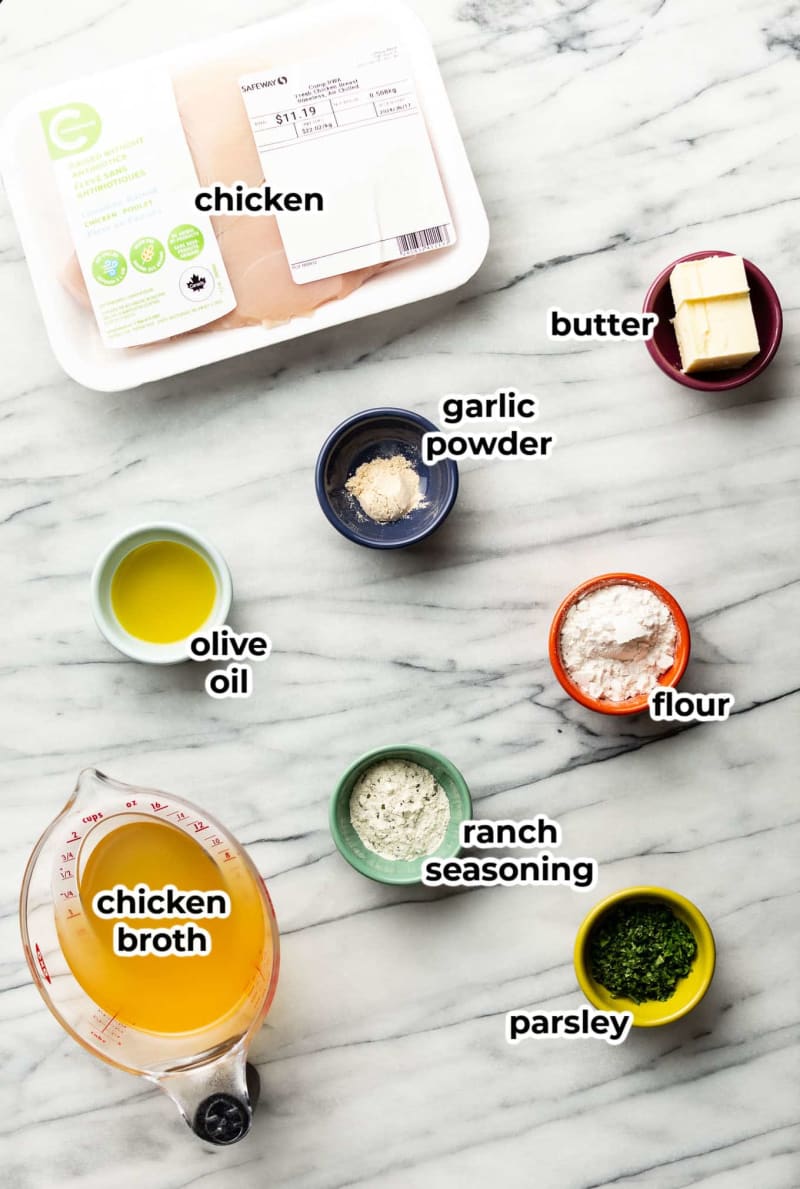
This recipe uses familiar ingredients and builds the sauce in the same skillet as the chicken. Measure the broth before you start so it is ready to whisk in.
- Chicken breasts: Two large breasts, cut lengthwise into four thinner cutlets. Choose similarly sized pieces so they cook at about the same rate.
- Pepper: To taste, for seasoning the chicken. Hold the salt; the ranch seasoning and broth provide plenty of savory flavor.
- Garlic powder: Half a teaspoon seasons the cutlets without adding moisture that could interfere with browning.
- Olive oil: One tablespoon helps the chicken brown in the skillet. A neutral cooking oil is a suitable alternative.
- Butter: Three tablespoons total, divided between searing and the roux. Unsalted butter gives you more control over the sauce’s saltiness.
- Flour: Two tablespoons thicken the broth into gravy. All-purpose flour works well; whisk thoroughly to prevent lumps.
- Low-sodium chicken broth: One and one-quarter cups form the sauce. Low-sodium broth is especially helpful because ranch seasoning adds salt too.
- Ranch seasoning: One tablespoon gives the gravy its ranch flavor. Use less if you are sensitive to salt or prefer a milder sauce.
- Fresh parsley: One tablespoon, chopped, is optional but recommended. It brings a fresh note and a little color to the creamy-looking gravy.
Equipment You’ll Need
- Large skillet: Use a skillet roomy enough to brown the four cutlets without crowding; it also holds the chicken and gravy for the final simmer.
- Whisk: A whisk helps blend the broth into the roux smoothly and distribute the ranch seasoning through the sauce.
- Instant-read thermometer: Check the thickest part of a cutlet for 165°F so you can stop cooking as soon as the chicken is safe and tender.
- Tongs: They make it easier to turn the cutlets and return them to the skillet without tearing the browned surface.
How to Make Easy Ranch Chicken
1. Prepare the cutlets
Slice each chicken breast lengthwise to make four thinner pieces. Season the cutlets with pepper and garlic powder.
Try to keep the pieces similar in thickness. Even cutlets are less likely to dry out while thicker parts finish cooking.
2. Heat the skillet
Set a skillet over medium-high heat and add the olive oil and 1 tablespoon of butter. Give the pan a few minutes to heat before adding the chicken.
The butter should melt and the pan should feel hot; if the chicken is added too early, it may steam instead of browning.
3. Brown the chicken
Arrange the cutlets in the skillet and cook for about 4-5 minutes per side, until golden. Move them to a plate and keep any juices that collect there.
If the skillet is too crowded, work in batches. The chicken does not need to be fully cooked yet; it finishes in the gravy.
4. Make the roux
Lower the heat to medium and add the remaining butter. Once it has melted, stir in the flour and cook for about a minute.
Keep stirring so the flour is coated in butter and does not scorch. The mixture should look smooth and slightly pasty.
5. Whisk in the broth
Pour in the broth slowly while whisking, continuing until the roux has dissolved. Whisk in the ranch seasoning.
Add the liquid in a steady stream and scrape the skillet as you whisk; this loosens the browned bits and helps keep the gravy lump-free.
6. Finish in the sauce
Return the chicken to the skillet along with any juices from the plate. Cook for another 4-5 minutes, or until the thickest part reaches 165°F and the sauce has thickened a bit more. Turn the heat down if needed so the gravy bubbles gently.
A gentle simmer gives the cutlets time to cook through without letting the sauce thicken too much first. Check the thickest cutlet with an instant-read thermometer.
7. Garnish and serve
Sprinkle with chopped parsley if using and serve immediately. Taste the gravy before considering extra salt.
The sauce should coat a spoon but still be easy to pour over the chicken or your chosen side.
How to Tell When It’s Done
The cutlets should have a golden exterior and feel firm but not hard. The gravy will look smooth and lightly thickened, with a gentle bubble rather than a rapid boil.
Use an instant-read thermometer in the thickest part of a cutlet; chicken is ready at 165°F. If a piece has not reached that temperature, keep it in the gently bubbling sauce and check again shortly.
If the sauce thickens before the chicken is done, lower the heat so it simmers gently. If the chicken reaches temperature first, remove it briefly while the gravy finishes to avoid overcooking the meat.
Tips and Common Mistakes
These small adjustments help you get tender chicken and a gravy with balanced seasoning.
- Cut the breasts evenly. Similar thickness helps all four cutlets cook at roughly the same pace. If one piece is much thicker, flatten it gently so it catches up.
- Let the skillet heat first. A properly heated pan starts browning the chicken quickly and builds flavorful bits for the gravy. Avoid moving the cutlets around while their first side sears.
- Use low-sodium broth. Ranch seasoning is already salty, and regular broth can push the sauce too far. If salt is a concern, use broth with low or no sodium.
- Whisk as you pour. Gradually adding broth while whisking helps the flour disperse evenly. If a few small lumps remain, keep whisking as the sauce warms.
- Taste before salting. The seasoning and broth may provide enough salt on their own. Adjust only after the chicken is cooked and the sauce has had a chance to come together.
Substitutions and Variations
You can adjust the seasoning and serving style without changing the skillet method.
- Less ranch seasoning: Use half the amount for a milder, less salty gravy. The ranch flavor will be subtler, so taste before deciding whether to add more.
- Homemade ranch blend: A homemade mix lets you control the salt and herbs. Keep the amount to the recipe’s tablespoon so the sauce remains balanced.
- No-sodium broth: This is a useful choice if you are sensitive to salt. The gravy may taste less seasoned, so adjust carefully at the end.
- Boneless chicken thighs: Thighs can replace the breasts and stay juicy, but their shape and thickness affect cooking time. Check each piece for 165°F before serving.
- Gluten-free flour: A measure-for-measure gluten-free blend can thicken the gravy. Check its package guidance, since the sauce may thicken differently from one blend to another.
What to Serve with Easy Ranch Chicken
Spoon the ranch gravy over mashed potatoes, rice, egg noodles or buttered pasta. For a lighter plate, pair the chicken with green beans, broccoli or a crisp salad.
The sauce is rich enough to make simple sides feel complete. Find more ideas in our chicken recipes or browse easy dinner ideas.
Make-Ahead, Storage and Reheating
Make ahead: Cut and season the chicken shortly before cooking, or keep it covered in the refrigerator until you are ready to use it. For the best texture, make the gravy and finish the chicken just before serving rather than holding the sauce for later.
Storage: Refrigerate leftovers in a covered airtight container within 2 hours of cooking and use within 3 to 4 days. Store the chicken with the gravy to help keep it moist.
Freezing: Freeze cooled chicken and gravy together in a freezer-safe container for up to 3 months. Thaw in the refrigerator; the sauce may separate slightly, but gentle reheating and whisking can bring it back together.
Reheating: Warm the chicken and gravy gently in a covered skillet over low heat, stirring the sauce and turning the cutlets as needed. Add a small splash of broth if the gravy has thickened in the refrigerator, and heat until steaming throughout.
Easy Ranch Chicken FAQs
Can I make easy ranch chicken with chicken thighs?
Yes. Boneless thighs work in place of the breasts, though their thickness and shape may change how long they take to cook. Check the thickest part for 165°F.
How do I keep ranch gravy from getting too salty?
Use low- or no-sodium broth and reduce the ranch seasoning if needed. Taste the sauce before adding any salt, since both ingredients contribute seasoning.
Why is my ranch gravy lumpy?
The flour may not have blended evenly into the butter, or the broth may have gone in too quickly. Whisk steadily as you add the broth, and continue whisking while the sauce warms.
Can I use ranch dressing instead of ranch seasoning?
No, not as a direct swap. Dressing adds liquid, oil and other ingredients, so it can change the gravy’s thickness and flavor; use a dry ranch seasoning blend for this method.
Can I make this without a meat thermometer?
A thermometer is the most reliable way to check doneness, especially because cutlet thickness varies. Cook until the thickest part reaches 165°F rather than judging only by the outside.
What should I do if the gravy gets too thick?
Lower the heat and whisk in a little broth until the sauce loosens. Keep it at a gentle simmer while the chicken finishes cooking.
Printable Recipe
Recipe adapted from Salt & Lavender. Photos courtesy of Salt & Lavender, used with permission.

Easy Ranch Chicken
Ingredients
- 2 large chicken breasts
- Pepper to taste
- 1/2 teaspoon garlic powder
- 1 tablespoon olive oil
- 3 tablespoons butter divided
- 2 tablespoons flour
- 1 1/4 cups low sodium chicken broth
- 1 tablespoon ranch seasoning I use Hidden Valley
- 1 tablespoon chopped fresh parsley optional but recommended
Instructions
- Cut the chicken in half lengthwise so you've got 4 thinner cutlets. Season each piece with pepper and the garlic powder.
- Add the olive oil and 1 tablespoon of the butter to a skillet over medium-high heat. Let the pan heat up for a few minutes.
- Add the chicken to the pan and cook for about 4-5 minutes/side until golden. Transfer the chicken to a plate and set aside.
- Reduce the heat to medium. Add the remaining butter to the skillet, and once it's melted, stir in the flour and cook for about a minute.
- Slowly whisk in the broth until the roux has fully dissolved.
- Whisk in the ranch seasoning.
- Add the chicken back to the skillet, along with any juices from the plate, and cook for another 4-5 minutes or until it has finished cooking through (165F) and the sauce has thickened up a bit more. You may need to turn the head down again so it's gently bubbling (you don't want the sauce to get too thick before the chicken is cooked through).
- Sprinkle with fresh parsley if using, and serve immediately. This recipe is fairly salty, so you probably won't need to add any extra salt.
Notes
- Use an instant read meat thermometer to ensure that chicken isn’t overcooked or undercooked.
- This recipe is fairly salty due to the ranch seasoning and chicken broth. If you’re particularly sensitive to salt but still want to make this recipe, use low (or no sodium) chicken broth, halve the amount of ranch, or make your own homemade ranch seasoning.


