Easy Skillet Lasagna

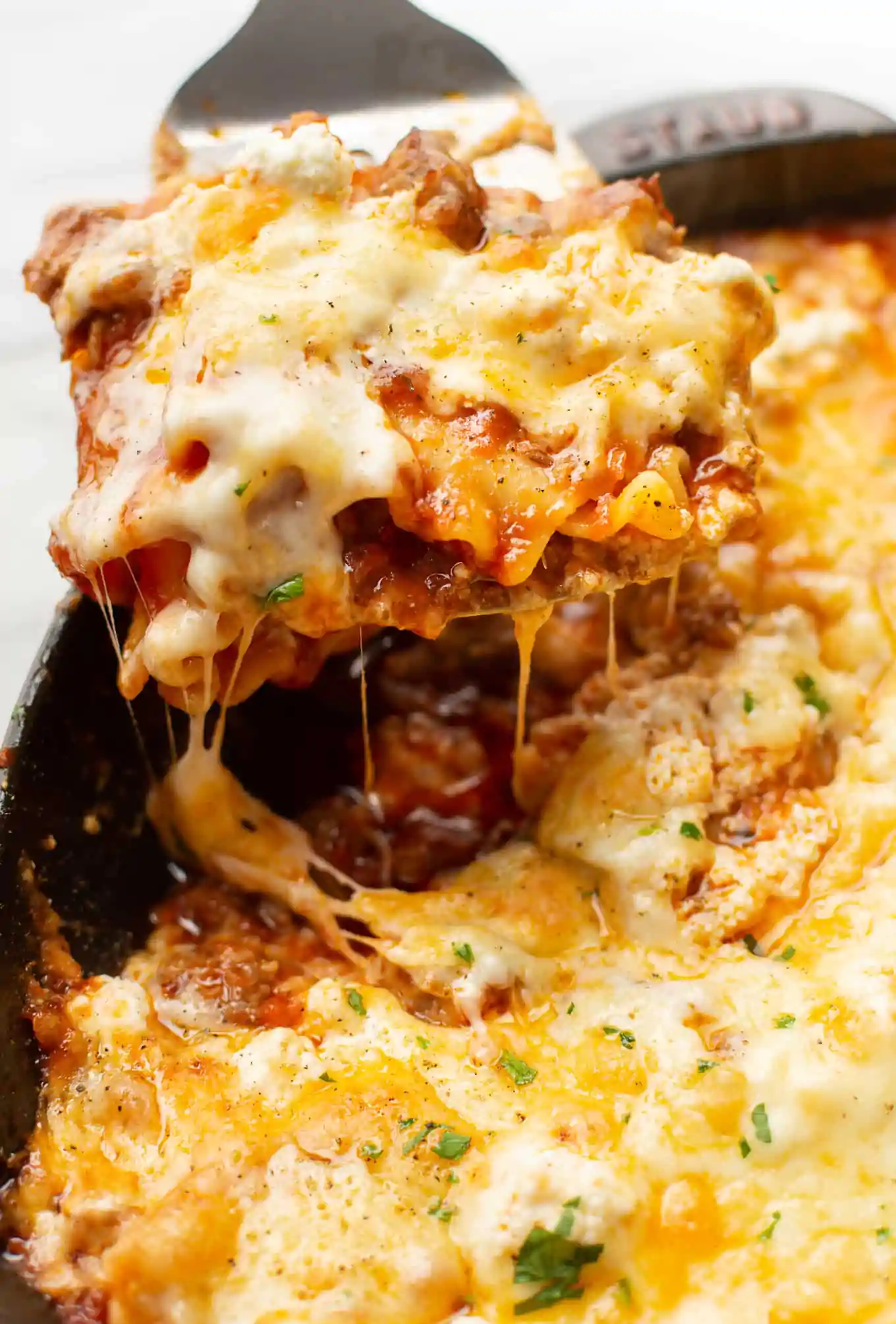
Easy skillet lasagna brings the savory sausage, tomato sauce and stretchy cheese of a layered lasagna together in one pan. Broken noodles simmer directly in the sauce, so they soak up flavor while the ricotta, parmesan and mozzarella form a bubbling, browned top.
It takes 10 minutes to prep and 40 minutes to cook, and serves six. Make it for a weeknight dinner when you want lasagna flavor without assembling separate layers, or serve it straight from the skillet at a casual family meal.
Why This Easy Skillet Lasagna Recipe Works
The one-pan method saves assembly time, but a few details also help the noodles cook evenly and the cheese finish well.
- Sausage builds a savory base. Browning it with onion develops rich flavor before the sauce and broth go in. Breaking the meat into small pieces also distributes it throughout the pasta.
- The noodles cook in the sauce. As they simmer, the broken lasagna noodles absorb the marinara and broth rather than needing a separate pot. Stirring helps each piece spend time submerged.
- Three cheeses give contrasting texture. Ricotta adds soft, creamy pockets, while parmesan brings a salty, nutty note and mozzarella melts into a stretchy blanket.
- The broiler browns the top quickly. A short broil adds color after the cheese melts in the oven. Keeping a close eye on the skillet prevents the cheese from going from golden to scorched.
Ingredients You’ll Need
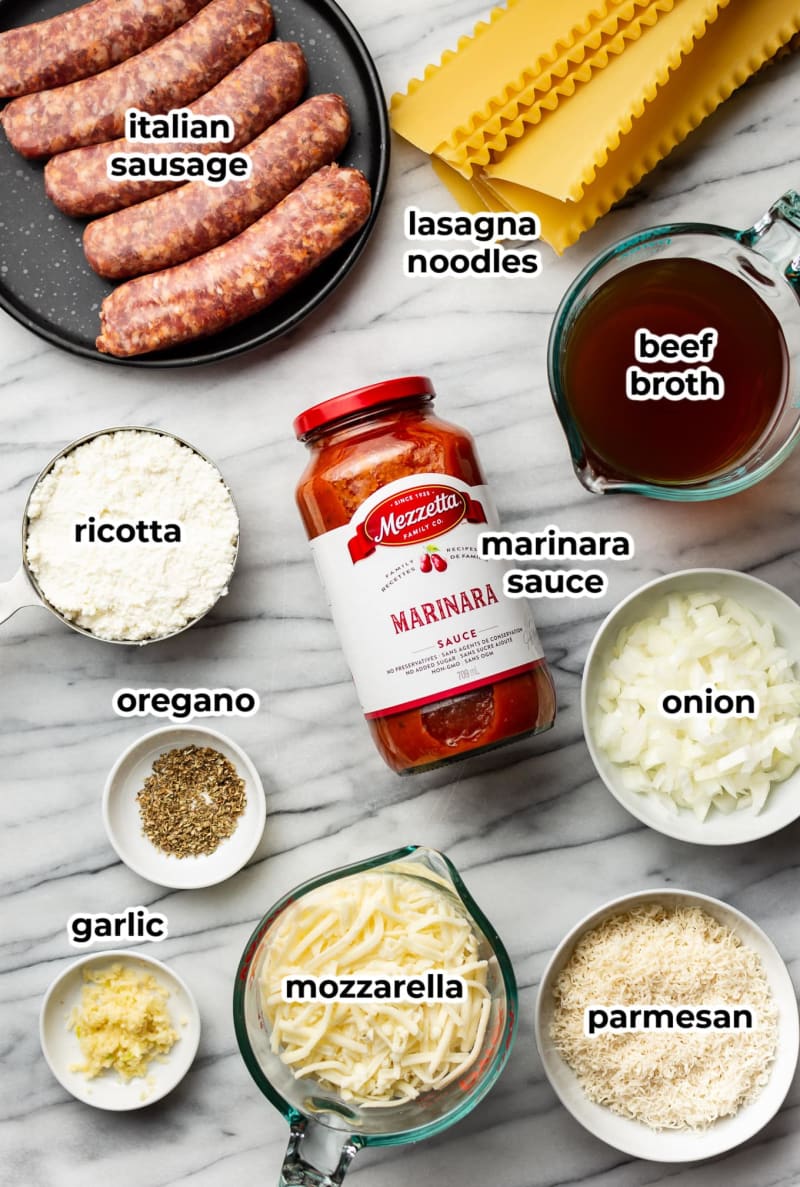
This skillet meal uses familiar lasagna ingredients, with broth to cook the noodles right in the pan. Here is what each one contributes.
- Italian sausage: Sixteen ounces of sausage meat, or sausage removed from its casing. It seasons the sauce as it browns.
- Onion: Half a medium onion, chopped, softens into the sausage base and adds sweetness.
- Garlic: Three to four cloves, minced, add a fragrant savory note. Stir it in after browning so it does not burn.
- Marinara sauce: One 24-ounce jar forms the tomato base. Choose a marinara you enjoy eating on its own.
- Beef or chicken broth: Two cups provide the liquid the dry noodles need to cook in the skillet.
- Dried oregano: Half a teaspoon adds a familiar herb note to the tomato sauce.
- Lasagna noodles: Eight regular, uncooked noodles, broken into small pieces. Avoid oven-ready noodles, which are not intended for this method.
- Ricotta: One cup makes creamy pockets across the top. Whole-milk or part-skim ricotta both work.
- Parmesan cheese: One cup, freshly grated, adds a savory, salty layer over the ricotta.
- Mozzarella: Two cups of shredded cheese melt into the familiar stretchy lasagna topping.
- Salt and pepper: Season to taste at the end, since sausage, marinara and parmesan can all bring salt.
Equipment You’ll Need
- Oven-safe skillet: Use a skillet at least 12 inches wide so the noodles have room to simmer and the pan can go under the broiler.
- Wooden spoon or heat-safe spatula: Use it to break up the sausage and stir the noodles without scraping aggressively against the skillet.
How to Make Easy Skillet Lasagna
1. Heat the oven
Set the oven to 400°F and position a rack in the top third.
Check that your skillet is oven-safe before you start; it will move from the stovetop into the oven.
2. Brown the sausage
Put the sausage and chopped onion in a large oven-safe skillet, no smaller than 12 inches. Cook over medium-high heat for about 10 minutes, breaking the sausage into small pieces as it browns.
The meat should be browned rather than pink, and the onion should begin to soften. If using whole sausages, remove the meat from the casings first.
3. Cook the garlic
Stir the minced garlic into the sausage mixture and cook for 30 seconds.
Once the garlic smells fragrant, move on promptly so it does not scorch in the hot pan.
4. Add sauce and noodles
Pour in the marinara, broth and oregano, then stir to combine. Break the uncooked noodles into small pieces and add them to the skillet.
Use your spoon to push the noodle pieces down into the liquid as much as possible.
5. Simmer until nearly tender
When the mixture bubbles again, lower the heat to maintain a fairly rapid simmer, not a hard boil. Cook for about 15-20 minutes, stirring every few minutes so nothing sticks and the noodles rotate into the sauce. Adjust the heat as needed.
The noodles should bend but remain al dente, and the liquid should look like pasta sauce rather than soup. Do not rush this stage; the noodles need to be nearly cooked before baking.
6. Add the cheeses
Take the skillet off the heat. Spoon dollops of ricotta over the noodles, then scatter the parmesan and mozzarella evenly across the top.
The cheeses do not need to form perfectly even layers; distributing them across the surface gives each serving a mix of creamy and stretchy bites.
7. Bake and brown
Bake uncovered at 400°F for 10 minutes, then broil for a few minutes to brown the cheese.
Watch closely during broiling. Pull the skillet when the cheese is spotted golden and bubbling, before the edges turn too dark.
8. Rest before serving
Let the skillet sit for 5 minutes, then taste and add salt and pepper if needed. Top with fresh basil or parsley if you like.
The brief rest helps the sauce settle, making it easier to scoop neat portions.
How to Tell When It’s Done
If the noodles are still quite hard and the liquid has disappeared before the 15-20 minutes are up, add a splash more broth, lower the heat and simmer longer. Once baked, check a noodle from the center; it should be tender throughout, not chalky or stiff.
Tips and Common Mistakes
A steady simmer and a close watch at the end make the biggest difference in this skillet lasagna.
- Keep the noodles moving. Stir every few minutes and press stray pieces into the liquid. This helps prevent sticking and unevenly cooked edges.
- Aim for a lively simmer. A hard boil can cook the liquid away before the noodles soften. Reduce the heat if the sauce is bubbling aggressively.
- Add broth if the pan dries out. If the liquid disappears while the noodles remain hard, add a splash of broth and continue simmering over lower heat.
- Stay beside the broiler. Cheese can brown very quickly under direct heat. Watch it continuously during the final few minutes.
- Taste before salting. Sausage, marinara and parmesan can make the sauce salty already, so adjust the seasoning after cooking.
Substitutions and Variations
You can change the meat, broth or cheese to suit what is on hand, while keeping the simmering method intact.
- Ground beef: Swap in ground beef for a less fennel-forward flavor. You may want to drain excess fat after browning before adding the sauce.
- Chicken broth: Choose chicken broth or beef broth according to the flavor you prefer; both provide the liquid needed for the noodles.
- Cottage cheese: Use cottage cheese in place of ricotta for a slightly tangier, less smooth topping. Small-curd cottage cheese gives a texture closer to ricotta.
- Part-skim mozzarella: It melts well and makes a slightly less rich topping than whole-milk mozzarella. Avoid very wet fresh mozzarella, which can release extra liquid.
- Fresh herbs: Finish with basil or parsley for a fresh contrast to the rich sauce. Add them after baking so their flavor stays bright.
What to Serve with Easy Skillet Lasagna
Serve it directly from the skillet with a crisp green salad or roasted broccoli to balance the rich sausage and cheese. Garlic bread is a good choice for catching the tomato sauce, while steamed green beans keep the meal simple.
For another pasta night, browse our dinner recipes or find more ideas among our chicken recipes.
Make-Ahead, Storage and Reheating
Make ahead: You can chop the onion and garlic ahead and refrigerate them in a covered container. For the best noodle texture, cook the skillet shortly before serving rather than simmering the noodles in advance.
Storage: Cool leftovers promptly and refrigerate them in a covered container for 3 to 4 days. Do not leave the cooked dish at room temperature for more than 2 hours.
Freezing: Freeze cooled portions in airtight freezer-safe containers for up to 3 months. The noodles may soften after thawing, but the flavor remains good; thaw overnight in the refrigerator.
Reheating: Warm individual portions in the microwave, covered, stirring or turning them partway through. For a larger amount, reheat covered in a 350°F oven until hot; add a small splash of broth if the sauce has thickened.
Easy Skillet Lasagna FAQs
Can I use oven-ready lasagna noodles?
No, regular uncooked lasagna noodles are the intended choice here. Oven-ready noodles absorb liquid differently, so they may turn soft before the sauce reduces properly.
Can I make skillet lasagna without an oven-safe pan?
Yes, but transfer the simmered mixture to an oven-safe baking dish before adding the cheeses. Bake it there, then broil only if the dish is safe for broiler use.
Can I make this skillet lasagna vegetarian?
Yes. Replace the sausage with a plant-based ground sausage or chopped mushrooms, browning them with the onion. The flavor and richness will change, so season to taste.
How can I serve this to six people?
It makes six servings as written. Pair each portion with a salad or vegetable side for a complete meal.
Can I double the recipe in one skillet?
Usually not in a standard skillet, because the noodles need space to simmer and stay submerged. Make two batches or use a much larger oven-safe pan, allowing room to stir safely.
Printable Recipe
Recipe adapted from Salt & Lavender. Photos courtesy of Salt & Lavender, used with permission.
Easy Skillet Lasagna
Ingredients
- 16 ounces Italian sausage
- 1/2 medium onion chopped
- 3-4 cloves garlic minced
- 1 (24 ounce) jar marinara sauce
- 2 cups beef or chicken broth
- 1/2 teaspoon dried oregano
- 8 uncooked lasagna noodles (regular, not oven-ready) broken into small pieces
- 1 cup ricotta
- 1 cup freshly grated parmesan cheese
- 2 cups shredded mozzarella
- Salt & pepper to taste
Instructions
- Preheat your oven to 400F and move the rack to the top third of the oven.
- In a large, oven-safe skillet (use a skillet no smaller than 12"), add the sausage meat and onion and cook over medium-high until browned (about 10 minutes), breaking it up as you go along.
- Stir in the garlic and cook for 30 seconds.
- Add in the marinara sauce, broth, and oregano, and give it a good stir, then add in the lasagna noodles.
- Once it starts to bubble again, reduce the heat so it's simmering fairly rapidly but not boiling like crazy. Let it cook until the noodles are bendy but not fully cooked (al dente) and the liquid has reduced considerably (it should look more like pasta sauce than soup). This should take about 15-20 minutes depending on how hot you're cooking it. Stir it every few minutes to ensure nothing is sticking to the bottom of the pan and that the noodles all get a chance to be submerged in the sauce as it tends to cook down fairly quickly. Adjust heat as needed to maintain a simmer. Important: don't rush through this step or the noodles won't end up fully cooked by the end.
- Remove from the heat. Dollop on the ricotta (I just use a spoon), and then sprinkle the parmesan and mozzarella evenly over top. Bake, uncovered, for 10 minutes, and then broil for a few minutes to brown the cheese (watch it carefully).
- Let it sit for 5 minutes, and then serve. Season with extra salt & pepper if needed. Fresh basil and/or parsley are delicious on top but totally optional!
Notes
- Use ground sausage meat or if using whole sausages, take the meat out of the casings. Anything around 16 oz/1 lb. will work.
- Troubleshooting tips: since this is a one pot meal and every oven/stove/skillet can vary, timing or liquid measurements may need to be adjusted on the fly. The key to this recipe is ensuring that the noodles get cooked al dente before you put the skillet in the oven. If you have cooked them on too high of a heat and you find the noodles are still quite hard and the liquid has disappeared well before 15-20 minutes have gone by, add in a splash more broth, reduce the heat, and cook them for a bit longer. See blog post for more tips and step-by-step photos.


