Hoisin and Sesame Salmon

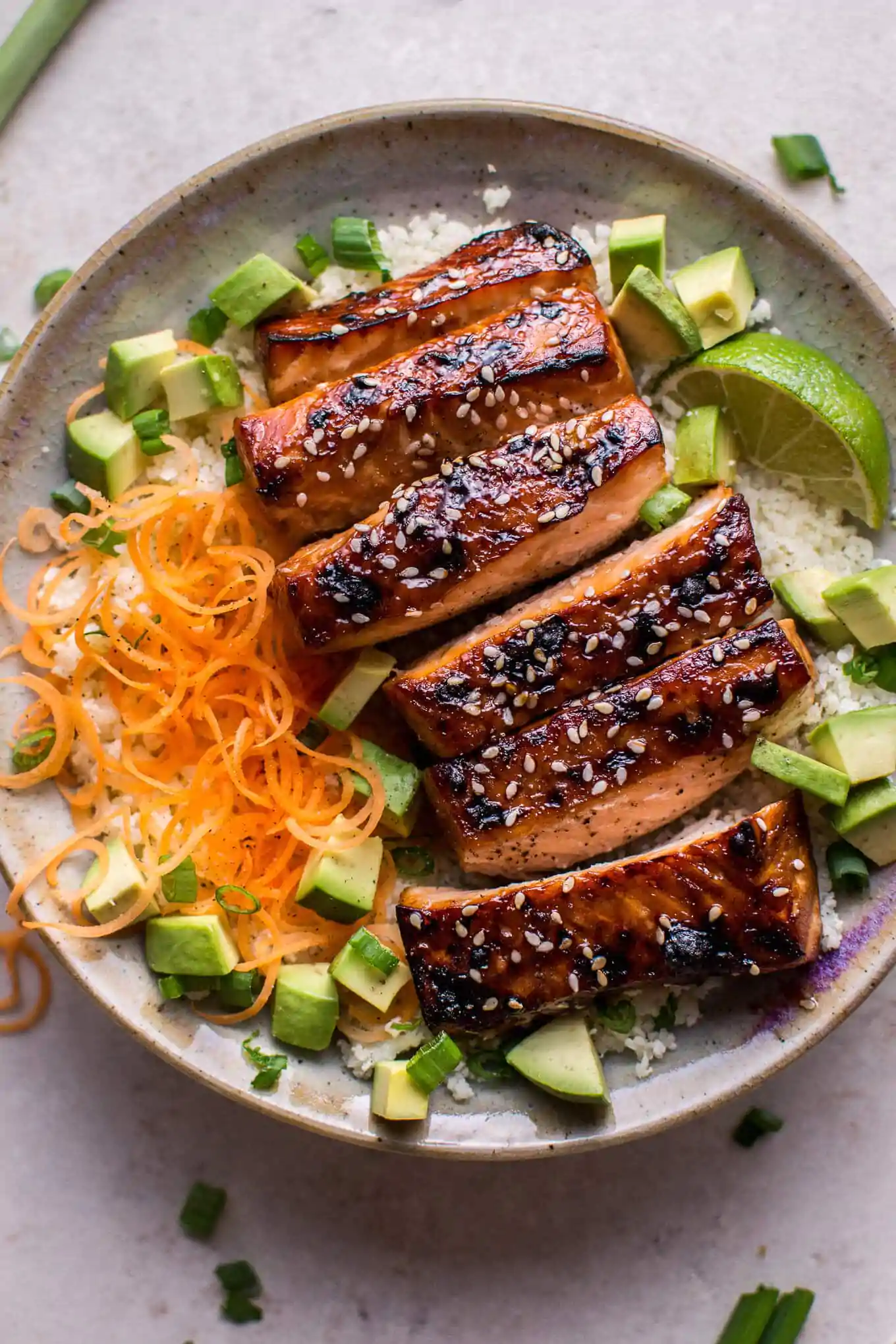
Hoisin and sesame salmon pairs broiled fish with a glossy, savory-sweet glaze and a bed of tender cauliflower rice. A second brush of hoisin and a sprinkle of sesame seeds give the top a lightly sticky finish, while fresh lime, avocado, carrot and scallions bring brightness and crunch.
The recipe serves two and takes about 67 minutes from start to finish, including marinating time. It makes a satisfying dinner bowl for a weeknight, and the components can be prepared in parallel while the salmon marinates.
Use two salmon portions or one larger piece, adjusting your doneness checks for thickness. The vegetables are easy to arrange in bowls, so each person can add lime and extra hoisin to taste.
Why This Hoisin and Sesame Salmon Recipe Works
This bowl works because the cooking steps build flavor without requiring complicated techniques. A few timing choices help the salmon and vegetables come together smoothly.
- The marinade seasons the fish. Hoisin, soy sauce, lime and garlic powder give the salmon a sweet, salty and gently tangy base. The marinating time lets those flavors reach the surface before broiling.
- A final glaze adds contrast. The extra hoisin goes on just before cooking, so the top tastes concentrated and glossy. Sesame seeds add a nutty note against the sweet sauce.
- Cauliflower makes a quick base. Pulsing florets until they resemble rice or couscous creates small pieces that cook evenly in a covered skillet. Stirring occasionally helps them soften without sticking.
- Fresh toppings balance the bowl. Carrot, avocado, scallions and lime bring crisp, creamy and citrusy notes to the rich fish. The different textures make each bite feel balanced.
Ingredients You’ll Need
The ingredients are divided between the salmon, its marinade and the bowl toppings. Prepare the vegetables while the fish marinates to keep the final assembly easy.
- Salmon: Two pieces, or one larger piece of fresh salmon. Choose portions of similar thickness so they cook at a similar pace.
- Cauliflower: Half a head, cut into florets before processing. Fresh cauliflower gives the rice-like base a mild flavor and tender texture.
- Olive oil: One tablespoon for the skillet. It helps the cauliflower cook evenly and keeps it from sticking.
- Salt: To taste, for seasoning the cauliflower rice. Add a little, then adjust after cooking.
- Hoisin sauce: Two tablespoons for the marinade, plus about one tablespoon per salmon piece for the top. Keep extra hoisin for serving if desired.
- Sesame seeds: To taste, scattered over the glazed salmon before broiling. They add a toasted, nutty finish.
- For the marinade: Two tablespoons hoisin sauce, two tablespoons soy sauce, juice of half a lime and half a teaspoon garlic powder season the fish.
- For serving: One large spiralized, ribboned or julienned carrot, one diced avocado, two chopped scallions using green parts only, lime wedges and optional extra hoisin.
Equipment You’ll Need
- Food processor: Use it to pulse the cauliflower florets into small rice-like pieces; stop before they turn into a puree.
- Skillet with lid: A covered skillet lets the cauliflower soften while retaining enough moisture to cook through.
- Rimmed baking sheet and foil: Line the sheet with foil to make cleanup easier and keep the salmon secure while it broils.
- Zip-top bag: A large bag holds the marinade and salmon together, making it easy to coat the fish evenly.
- Fork: Use the tines to check whether the thickest part of the salmon flakes easily.
How to Make Hoisin and Sesame Salmon
1. Marinate the salmon
Put the marinade ingredients in a large zip-top bag with the salmon. Seal the bag, turn it to coat the fish, and marinate for 30 minutes.
Set the bag in the refrigerator while it marinates. Keep the raw-fish marinade separate from anything you plan to serve.
2. Prepare the cauliflower
When the salmon is about halfway through marinating, process the cauliflower florets on low speed until they look like rice or couscous. Warm the olive oil in a skillet over medium heat, add the cauliflower and a bit of salt, then cover and cook for about 10 minutes, stirring occasionally, or until it reaches your preferred tenderness.
Pulse in short bursts and check the texture often; finely chopped pieces cook better than wet, pureed cauliflower.
3. Prep the toppings
Spiralize, ribbon or julienne the carrot, dice the avocado, and chop the green parts of the scallions. You can finish any remaining prep while the salmon cooks.
Cut the toppings before the fish goes under the broiler so the bowls are ready to assemble.
4. Set up the broiler
Turn the oven broiler to high and move the rack to the top. Cover a baking sheet with foil for easier cleanup.
Have the lined sheet ready before removing the salmon from its marinade.
5. Glaze the salmon
Lift the salmon pieces out of the marinade and discard the used marinade. Spoon about one tablespoon of hoisin sauce over each piece, spread it evenly, and finish with sesame seeds.
Coat the top in a thin, even layer so the glaze covers the fish without pooling on the sheet.
6. Broil until flaky
Set the salmon on the prepared sheet and broil for 10 to 12 minutes, or until it flakes easily with a fork. The thickness of the fish affects how long it needs, so watch it closely.
Check the thickest section first. Remove the fish as soon as it flakes easily rather than leaving it under the broiler for extra color.
7. Assemble the bowls
Divide the cauliflower rice between bowls and add the salmon, carrot, avocado and scallions. Serve right away with lime wedges and extra hoisin sauce if desired.
Add the avocado at the end to keep its cut surface fresh, and let each person squeeze lime over their bowl.
How to Tell When It’s Done
The salmon is ready when the thickest part flakes easily under gentle pressure from a fork. The flesh should look opaque through the center rather than glossy and raw.
For a temperature check, use an instant-read thermometer in the thickest part; fish is generally considered done at 145°F. Check a smaller piece separately, since it may finish before a larger portion.
If the salmon is not ready, return it to the broiler and check again shortly. If the top is browning too quickly, move the sheet farther from the heat and continue checking the center.
Tips and Common Mistakes
Keep an eye on moisture and timing, especially when the salmon pieces are different sizes.
- Avoid overprocessing the cauliflower. Stop once the pieces look like rice or couscous. Continuing to pulse can release moisture and leave the finished base soft and clumpy.
- Stir the cauliflower occasionally. Mixing the pieces during their covered cook helps them soften evenly and reduces sticking at the bottom of the skillet.
- Discard the marinade after use. The bag has held raw salmon, so do not use that liquid as a serving sauce. Use the separate extra hoisin instead.
- Check the fish before the timer ends. The 10 to 12 minutes is a guide, not a guarantee for every thickness. Start checking as the fish nears the end of that range.
- Keep the avocado until assembly. Cut it near serving time to limit browning. If you need to prep early, a little lime juice can help protect the surface.
Substitutions and Variations
The bowl can adapt to what you have, though a few swaps will change its flavor or texture.
- Brown or white rice: Use cooked rice instead of cauliflower rice for a heartier, starchier base. The salmon and toppings stay the same.
- Frozen cauliflower rice: It can replace the fresh cauliflower if you have it on hand. Follow its package directions for cooking and season to taste.
- Tamari: Use tamari in place of soy sauce for a gluten-free alternative, checking the hoisin label as well if needed.
- Cucumber: Thinly sliced cucumber can replace carrot for a cool, crisp topping. It is less sweet and gives the bowl a fresher crunch.
- Chili heat: Add a little chili sauce at serving for a spicy-sweet contrast. Keep it separate so diners can choose their own heat level.
What to Serve with Hoisin and Sesame Salmon
Serve the bowls immediately while the salmon is warm and the avocado is fresh. Add lime at the table, and offer extra hoisin for anyone who wants a sweeter, more intensely glazed bite.
For a bigger meal, pair the bowls with a simple cucumber salad or steamed greens. Browse our chicken recipes for another weeknight main, or find more ideas in our dinner recipes.
Make-Ahead, Storage and Reheating
Make ahead: Marinate the salmon for the stated 30 minutes, and use that time to prepare the cauliflower and toppings. You can chop the carrot and scallions ahead and refrigerate them covered; dice the avocado just before serving.
Storage: Refrigerate cooked salmon and the cauliflower rice in separate airtight containers within 2 hours of cooking. Use within 1 to 2 days, and store the avocado and other fresh toppings separately for the best texture.
Freezing: Cooked salmon and cauliflower rice can be frozen separately in airtight freezer containers, though the fish may be softer after thawing. Do not freeze the assembled bowls with avocado or fresh toppings.
Reheating: Warm the salmon gently in a covered skillet or microwave just until heated through, and reheat the cauliflower separately. Add fresh toppings and lime after warming; avoid prolonged heating, which can dry out the fish.
Hoisin and Sesame Salmon FAQs
Can I use one large salmon fillet instead of two pieces?
Yes. Use one larger piece as written, but check the thickest section for easy flaking because a larger fillet may need a different amount of time.
Can I marinate the salmon longer than 30 minutes?
It is better to keep close to the stated marinating time. The lime juice is acidic, and an extended soak can affect the surface texture of the fish.
Can I cook the salmon without a broiler?
Yes, you can bake it instead, but the browning and cooking time will differ. Check the thickest part for doneness rather than assuming the broiler timing will apply.
Why is my cauliflower rice watery?
It may have been processed too finely or released moisture as it cooked. Pulse only to rice-sized pieces, and uncover near the end if excess liquid remains.
Can I make this bowl gluten-free?
Yes, use gluten-free tamari instead of soy sauce and check that the hoisin sauce is labeled gluten-free. Ingredient formulations vary, so verify both labels.
Can I serve the salmon skin-on?
Yes. Broil it skin-side down and lift the cooked fish from the skin when serving if you prefer not to eat it.
Printable Recipe
Recipe adapted from Salt & Lavender. Photos courtesy of Salt & Lavender, used with permission.
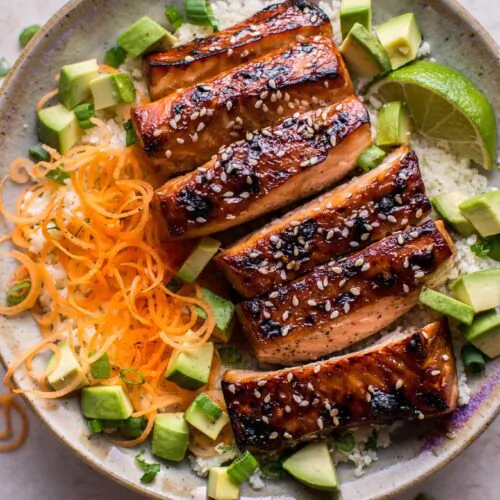
Hoisin and Sesame Salmon
Ingredients
- 2 pieces (or one larger piece) fresh salmon
- 1/2 head cauliflower
- 1 tablespoon olive oil
- Salt to taste
- 2 tablespoons hoisin sauce
- Sesame seeds to taste
Marinade:
- 2 tablespoons hoisin sauce
- 2 tablespoon soy sauce
- Juice of 1/2 lime
- 1/2 teaspoon garlic powder
For serving:
- 1 large carrot spiralized (or ribboned or julienned)
- 1 avocado diced
- 2 scallions chopped (green parts only)
- Lime wedges
- Extra hoisin sauce (optional)
Instructions
- Add the marinade ingredients to a large ZipLoc bag along with the salmon. Marinate for 30 minutes.
- When salmon is about half way through marinating, you can start to prepare the other ingredients. To make the cauliflower rice: add cauliflower florets to a food processor and process on low speed until it reaches the consistency of rice or couscous. Add to a skillet on medium heat with olive oil and a bit of salt. Cook, covered, for about 10 minutes (stir occasionally) or until it reaches your desired tenderness.
- Start to prep the carrot, avocado, and scallions. You can finish prepping them while the salmon cooks.
- To cook the salmon, turn your oven broiler on high and move the rack to the top. Line a baking sheet with foil for easy clean-up. Take the salmon pieces out of the marinade and discard it. Add about 1 tablespoon of hoisin sauce to the top of each piece of salmon (spread on evenly with a spoon), and then sprinkle each piece of fish with sesame seeds. Broil the salmon for 10-12 minutes or until it flakes easily with a fork. Timing really depends on the thickness of the fish, so be careful not to overcook it.
- Once the salmon is cooked, assemble the bowls and enjoy immediately. Serve with lime wedges and extra hoisin sauce if desired.


