Instant Pot Beef Stew


Instant Pot beef stew pairs deeply browned beef with carrots, celery, and Yukon Gold potatoes in a savory tomato-broth gravy. Searing the meat first builds a rich base, while pressure cooking makes the beef tender without a long simmer on the stove.
Plan on 15 minutes of prep and 50 minutes of cook time, with additional time for the pot to come to pressure; the total time is 100 minutes. It makes 6 servings and is a hearty choice for a family dinner, a chilly evening, or make-ahead lunches.
A cornstarch slurry stirred in at the end gives the broth a glossy, spoon-coating finish. The vegetables stay in substantial pieces, so every bowl feels like a full meal.
Why This Instant Pot Beef Stew Recipe Works
A few steps build flavor while helping this pressure-cooker stew cook evenly and avoid common pot warnings.
- Scraping the pot protects the pressure cook. Deglazing with broth loosens the browned residue before pressure cooking. Leaving stuck-on bits behind can trigger a burn warning.
- Tomato paste brings concentrated flavor. Stirring it into the broth adds savory depth and body without needing a long reduction. The broth helps disperse it evenly.
- Large vegetable cuts hold their shape. Carrots and potatoes cut into generous bite-size pieces are less likely to disappear into the gravy during pressure cooking.
- The slurry thickens the broth at the end. Mixing cornstarch with cold water first helps prevent lumps. Adding it after pressure cooking lets you control the final consistency.
Ingredients You’ll Need
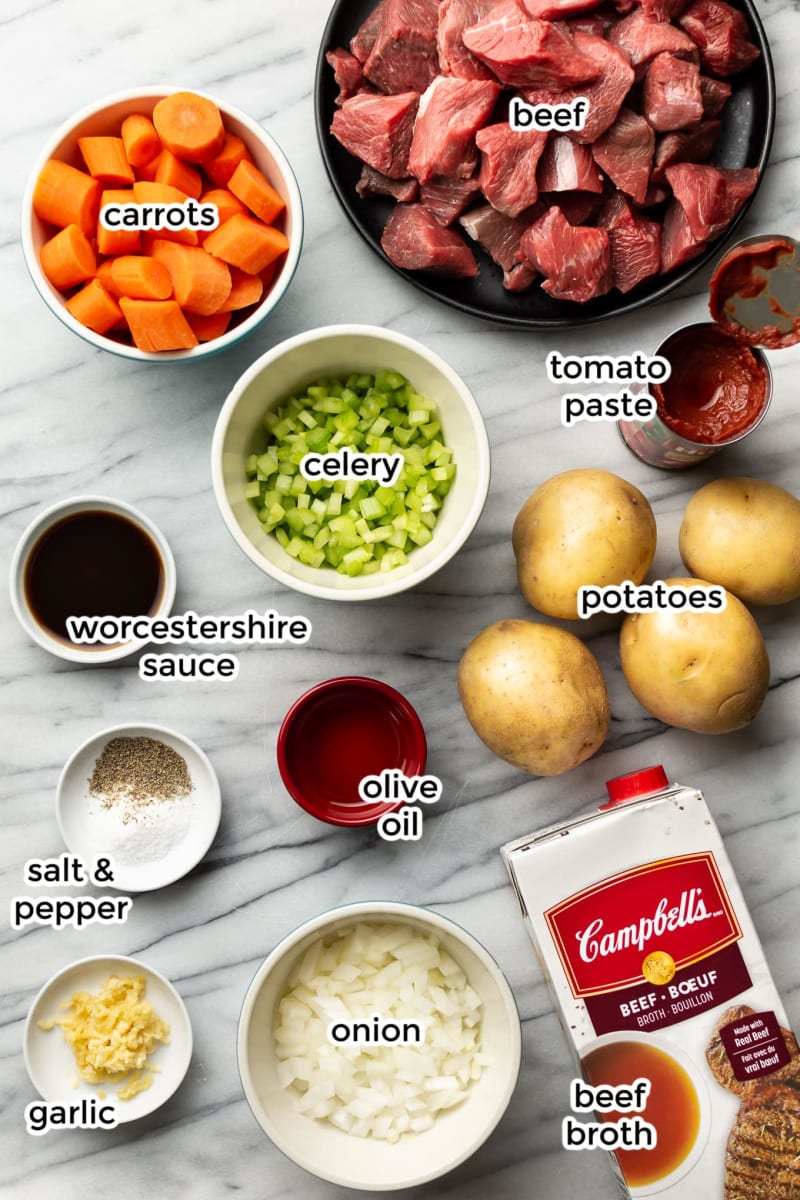
The ingredients are familiar, but cutting the vegetables generously and choosing stew-friendly beef helps them finish well under pressure.
- Beef stew meat: Two pounds of stewing cubes or chuck, cut into similar-sized pieces. Chuck has good flavor and becomes tender during pressure cooking.
- Olive oil: Two tablespoons, divided between the batches of beef. It helps the meat brown rather than stick.
- Onion: One medium onion, chopped. It softens into the savory base and adds sweetness.
- Garlic: Six cloves, minced. Add it after the onion so it turns fragrant without scorching.
- Beef broth: Three cups. You will use some to loosen the browned bits, then add the remainder to the pot.
- Tomato paste: One 6-ounce can, unless using double-concentrated paste, when you may want half as much. It adds color and savory depth.
- Worcestershire sauce: One tablespoon. Its tangy, savory flavor rounds out the beef broth.
- Salt and pepper: One teaspoon of salt plus pepper to taste, with more salt and pepper added at the end if needed.
- Carrots: Three large, peeled and cut into generous bite-size chunks. Larger pieces are less prone to turning mushy.
- Celery: Three sticks, chopped. It brings a fresh, savory note to the stew base.
- Yukon Gold potatoes: One pound, peeled and diced into generous bite-size pieces. Their creamy texture suits the thick broth.
- Cornstarch: Two tablespoons, mixed with cold water to make a slurry after cooking. This thickens the finished stew.
Equipment You’ll Need
- Tongs: They make it easier to turn the beef and lift the browned pieces out between batches.
- Wooden spoon: A sturdy spoon helps scrape the pot bottom thoroughly while you add broth.
- Small bowl: Use it to combine the cornstarch and cold water smoothly before adding the slurry.
How to Make Instant Pot Beef Stew
1. Brown the first batch
Add 1 tablespoon of olive oil to the Instant Pot and press the sauté button. When the oil is hot, add half the beef and brown it on every side, using tongs to turn the pieces.
Let the beef develop browned patches before turning it. If the pieces are crowded, they will steam instead of sear.
2. Sear the remaining beef
Transfer the first batch to a plate. Add the second tablespoon of olive oil and brown the rest of the beef, then set it aside as well.
The bottom of the pot should have browned residue, not a layer of burnt bits. That residue is flavor for the broth.
3. Soften the onion
Add the chopped onion to the pot and sauté for 3-4 minutes. Add a splash more oil if the pot looks dry.
The onion should soften and pick up some color from the pot, but it does not need to brown deeply.
4. Add the garlic
Stir in the minced garlic and cook for about 30 seconds, just until fragrant.
Keep it moving so the garlic does not scorch against the hot pot.
5. Deglaze the pot
Pour in about a cup of beef broth and scrape the bottom thoroughly with a wooden spoon. Loosen every browned bit before adding the other ingredients.
Run the spoon over the whole base; it should feel smooth rather than catch on stuck-on food.
6. Build the broth
Stir in the rest of the beef broth, tomato paste, Worcestershire sauce, salt, and pepper until the tomato paste is evenly incorporated.
A smooth, reddish-brown broth is easier to combine with the vegetables than a paste left in clumps.
7. Add beef and vegetables
Return the browned beef to the pot, then add the carrots, celery, and potatoes. Leave the cornstarch out until the pressure cooking is finished.
Check once more that no browned bits are stuck on the bottom before sealing the cooker.
8. Pressure cook the stew
Close the lid, set the valve to sealing, and cook on high pressure for 35 minutes. The Instant Pot will take 10-15 minutes to reach pressure before the countdown begins.
Make sure the lid is locked and the valve is set correctly. Keep the vegetables in the liquid as much as possible.
9. Release pressure and thicken
When cooking ends, let the pressure release naturally for 10-15 minutes, then quick-release the remaining pressure. Mix the cornstarch with 2 tablespoons of cold water, stir the slurry into the stew, and let it thicken for a few minutes; use the sauté button if needed. Taste and adjust salt and pepper.
The broth should turn glossy and cling lightly to a spoon. Stir gently so the softened potatoes do not break apart.
How to Tell When It’s Done
The beef should be fork-tender, and the carrots and potatoes should yield easily when pierced while still holding their shape. If a piece of beef feels firm or chewy, return the lid and continue pressure cooking until tender.
Check the largest pieces of beef rather than relying only on the pressure-cook time. The stew should be piping hot throughout; if any pieces are not tender, cook them longer before thickening.
Tips and Common Mistakes
These details make the browning more effective and help prevent a burn warning or broken-down vegetables.
- Brown the beef in two batches. Crowding traps moisture around the meat and prevents good browning. Leave room between pieces so the hot surface can sear them.
- Use regular tomato paste when possible. Double-concentrated paste is stronger; if that is what you have, you may want to use half the amount specified.
- Cut the vegetables generously. Substantial pieces are more likely to stay intact through pressure cooking. Keep the carrots and potatoes similar in size for more even results.
- Let the pressure release naturally first. The 10-15 minute natural release is part of the method. Quick-release the remaining pressure only after that pause.
- Season again at the end. The broth and vegetables absorb seasoning as they cook. Taste after thickening, then adjust salt and pepper to suit the finished stew.
Substitutions and Variations
A few practical swaps can work, though they may change the stew’s flavor or texture.
- Chuck roast: Cut chuck into stew-sized cubes if pre-cut stew meat is unavailable. Its connective tissue softens during pressure cooking and gives the broth a beefy flavor.
- Different potatoes: Red potatoes can replace Yukon Golds and tend to hold their shape well. Russets are starchier and may break down more in the stew.
- Low-sodium broth: This is a useful option if you want more control over salt. Taste the finished stew and add seasoning gradually.
- Gluten-free Worcestershire: Choose a certified gluten-free version if needed. Check the product label, since formulations vary.
- Thicker gravy: For a more substantial finish, add the prepared slurry and use the sauté function as directed until the broth reaches your preferred consistency.
What to Serve with Instant Pot Beef Stew
Serve each bowl with crusty bread, dinner rolls, or a simple green salad to balance the rich broth. The potatoes make it filling on its own, while buttered noodles or steamed green beans are good additions for a larger meal.
For more cozy dinner inspiration, browse our beef recipes and dinner recipes.
Make-Ahead, Storage and Reheating
Make ahead: Chop the onion, garlic, carrots, celery, and potatoes ahead and refrigerate them in covered containers. For the best texture, wait to cook the stew until serving day; the beef can also be browned just before pressure cooking.
Storage: Cool leftovers promptly and refrigerate them in a covered airtight container for 3-4 days. Store the stew within 2 hours of cooking, and keep it chilled rather than leaving it at room temperature.
Freezing: Freeze cooled stew in airtight, freezer-safe containers for up to 3 months. Thaw it overnight in the refrigerator; the potatoes may soften slightly after freezing and thawing.
Reheating: Warm leftovers gently on the stovetop, stirring occasionally, or microwave individual portions until steaming hot throughout. Add a splash of broth if the gravy thickened in the refrigerator.
Instant Pot Beef Stew FAQs
Can I use frozen beef in Instant Pot beef stew?
Yes, but this method starts by browning the beef, so thaw it first for the intended sear. Frozen cubes will not brown properly and may affect how evenly the stew cooks.
Why did my Instant Pot show a burn warning?
A common cause is browned residue stuck to the bottom after searing. Deglaze thoroughly with the broth before adding the remaining ingredients, and check that nothing is catching on the base.
Can I leave the potatoes unpeeled?
Yes. Yukon Gold skins are thin, so you can leave them on if you wash the potatoes well; the finished stew will have a more rustic look.
Can I double this beef stew?
Only if the ingredients stay below your pressure cooker’s maximum fill line. Keep the same cooking time, and allow for a longer time for the pot to reach pressure.
How can I make the gravy thicker?
Yes, use the cornstarch slurry after pressure cooking and let the stew thicken for a few minutes. The sauté function helps activate the cornstarch if the gravy needs more body.
Can I make this without an Instant Pot?
Yes, but the timing and method will differ. A stovetop Dutch oven or slow cooker needs its own recipe directions for safe, tender results.
Printable Recipe
Recipe adapted from Salt & Lavender. Photos courtesy of Salt & Lavender, used with permission.

Instant Pot Beef Stew
Ingredients
- 2 pounds beef stewing cubes or chuck
- 2 tablespoons olive oil divided
- 1 medium onion chopped
- 6 cloves garlic minced
- 3 cups beef broth
- 1 (6 ounce) can tomato paste see note
- 1 tablespoon Worcestershire sauce
- 1 teaspoon salt
- Pepper to taste
- 3 large carrots peeled & cut into fairly large bite-size pieces
- 3 sticks celery chopped
- 1 pound Yukon Gold potatoes peeled & diced (fairly large bite-size pieces)
- 2 tablespoons cornstarch
Instructions
- Add 1 tablespoon of the oil to your Instant Pot. Press the "sauté" button and once the oil is hot, add half the beef. Brown the beef on all sides (I find this easiest to do with tongs). I like to do two batches so the meat isn't crowded and browns nicely.
- Once the beef is seared, transfer it to a plate and set aside. Repeat for the second batch (use the second tablespoon of olive oil).
- Add the onion to the IP and sauté for 3-4 minutes (add a splash more oil if needed).
- Stir in the garlic and cook for about 30 seconds.
- Add about a cup of the beef broth to the IP and scrape any brown bits from the bottom thoroughly (a wooden spoon works well). This is important as it'll help prevent getting an IP burn warning.
- Stir in the rest of the broth, tomato paste, Worcestershire sauce, salt, and pepper until smooth.
- Add the remaining ingredients except for the cornstarch (including returning the beef to the pot).
- Close the lid and set the valve on “sealing”, and cook on high pressure for 35 minutes. It will take 10-15 minutes for the Instant Pot to get up to pressure.
- Once the countdown is done, let the pressure release naturally for 10-15 minutes, and then do a quick release for the rest of the pressure. Mix the cornstarch with 2 tablespoons of cold water and add the slurry to the IP. Give it a good stir and let it thicken up for a few minutes (you can put the "sauté" button back on if needed to activate the cornstarch). Season with salt & pepper to taste and enjoy!
Notes
- If using a tube of double concentrated tomato paste, you may want to halve the amount.
- This recipe has been tweaked since it was first published. This was a difficult decision since the original received many positive reviews, but some readers’ newer Instant Pots gave burn warnings, and honestly the negative comments were disheartening. I haven’t encountered the problem with my 2018 model, but I
want this recipe to work for all readers, so I reformulated it. You can print the old recipe if it worked for you. - Inactive time represents the time it will take to get your Instant Pot up to pressure.
- I use this 6-quart Instant Pot.
- Stove-top: Try my Beef Stew.
- Crockpot: Try my slow cooker beef stew recipe.


