Kung Pao Zoodles


Kung pao zoodles bring the sweet, tangy heat of kung pao sauce to crisp-tender zucchini noodles. A quick cornstarch slurry thickens the glossy sauce, while peanuts add crunch and scallions keep each bite fresh.
The recipe serves two and takes 15 minutes from start to finish, with 9 minutes of prep and 6 minutes of cooking. It makes a fast weeknight meal or a lively vegetable-forward side, and the short cook keeps the zucchini from turning limp.
Have the sauce ingredients measured and the zucchini spiralized before you heat the skillet. The cooking moves quickly, and the noodles are best served as soon as they leave the pan.
Why This Kung Pao Zoodles Recipe Works
This quick skillet method balances a bold, sticky sauce with zucchini that still has some bite.
- A medium spiral makes sturdy noodles. Medium-cut zucchini noodles hold their shape better than very thin strands during tossing. They cook quickly but are less likely to collapse as soon as they meet the hot sauce.
- The sauce builds flavor in the skillet. Soy sauce, sesame oil, rice vinegar, chili paste, sherry, brown sugar and garlic bubble together before the zucchini goes in. That brief simmer brings the sweet, salty, spicy and sharp notes together.
- A slurry thickens without lumps. Mixing cornstarch with cold water first disperses it evenly. Stirring that mixture into the bubbling sauce quickly gives it enough body to cling to the noodles.
- Peanuts provide contrast. Their firm crunch offsets the tender noodles and glossy sauce. Adding them with the zucchini lets them warm through without needing a separate cooking step.
Ingredients You’ll Need
The ingredients make a punchy, lightly sweet sauce with enough heat to stand up to the mild zucchini.
- Zucchini: Two medium zucchini, spiralized on a medium setting. Choose firm vegetables and trim the ends before spiralizing.
- Soy sauce: One tablespoon adds salty, savory depth. Use a gluten-free version if needed.
- Sesame oil: One tablespoon brings a toasted, nutty aroma to the sauce.
- Rice vinegar: Two tablespoons add a bright, tangy edge that balances the sugar and sesame oil.
- Chili paste: One tablespoon, or to taste, supplies the heat. Adjust to suit your tolerance.
- Sherry: One tablespoon is optional but adds extra depth. You can leave it out if you prefer.
- Brown sugar: One packed tablespoon softens the vinegar’s sharpness and rounds out the chili.
- Garlic: One minced clove gives the sauce a fragrant savory note.
- Cornstarch and water: One tablespoon cornstarch whisked with two tablespoons cold water thickens the sauce; mix just before using.
- Peanuts: Half a cup adds a generous crunchy contrast. Use unsalted peanuts if you want more control over saltiness.
- Scallions: Two, using only the green parts, chopped for a fresh finish and mild onion flavor.
- Sesame seeds: Use as much as you like for an optional garnish and extra toasted sesame flavor.
Equipment You’ll Need
- Spiralizer: Use its medium setting to make noodles that remain substantial as they cook.
- Large skillet: A skillet gives the sauce room to bubble and lets you toss the noodles without crowding.
- Small bowl: Use it to combine the cornstarch and cold water into a smooth slurry.
- Tongs: They make it easier to turn and coat the long zucchini strands continuously.
How to Make Kung Pao Zoodles
1. Spiralize the zucchini
Run the zucchini through a spiralizer on the medium setting. Set the noodles aside while you prepare the sauce ingredients.
Aim for long, even strands. If the zucchini is especially wet, blot the noodles gently before cooking.
2. Start the sauce
Put the soy sauce, sesame oil, rice vinegar, chili paste, sherry, brown sugar and minced garlic in a skillet over medium-high heat. Let the mixture bubble for a minute or two.
Stir as it heats so the sugar dissolves and the garlic does not sit in one spot. The sauce should be actively bubbling before you add the slurry.
3. Mix the slurry
While the sauce heats, combine the cornstarch with 2 tablespoons cold water. Stir until the powder is fully dispersed.
Scrape the bottom of the bowl to pick up any settled cornstarch; an even slurry thickens more smoothly.
4. Thicken the sauce
Stir the cornstarch mixture into the skillet. Keep stirring as the sauce thickens quickly.
Look for a glossy sauce that lightly coats a spoon. If the slurry has settled, stir it again just before pouring.
5. Toss in the noodles
Add the zucchini noodles, peanuts and chopped green scallions to the pan. Cook for a few minutes, tossing continuously with tongs until the noodles are coated.
The zucchini will release some water as it cooks. Stop while the strands still have a little structure; prolonged cooking makes them limp and watery.
6. Garnish and serve
Sprinkle sesame seeds over the top if desired. Serve immediately while the noodles are still warm and the peanuts retain their crunch.
Divide the noodles promptly rather than leaving them in the hot skillet, where residual heat will continue softening them.
How to Tell When It’s Done
The sauce should look shiny and cling to the zucchini rather than pooling thinly at the bottom of the skillet. The noodles should be hot and coated, but still hold a slight bite when you lift a strand.
Zucchini releases moisture quickly, so do not wait for the pan to look completely dry. If the noodles are already tender and the sauce has loosened, take the skillet off the heat and serve; further cooking will soften them more.
If the sauce seems thin before adding the zucchini, give the cornstarch mixture another stir and keep stirring it into the bubbling sauce until it thickens. Once the vegetables are in, toss continuously and finish cooking after a few minutes rather than letting them sit.
Tips and Common Mistakes
A little preparation and a short, active cook make the biggest difference to the finished texture.
- Measure everything first. The sauce and noodles cook quickly, so have the ingredients ready beside the skillet before you begin heating it.
- Use the medium spiralizer setting. Very thin strands soften faster and are more likely to break. Medium noodles give you a more substantial bite.
- Stir the slurry just before adding it. Cornstarch settles to the bottom of the bowl. A quick re-stir helps it thicken the sauce evenly instead of leaving starchy clumps.
- Keep the noodles moving. Continuous tossing coats the strands and limits the time any one area spends against the hot pan.
- Don’t cook until dry. The zucchini naturally gives off water. Trying to cook away every drop can leave the noodles overly soft.
- Serve straight from the skillet. The noodles continue to soften as they sit in the hot sauce. Move them to plates promptly for the best texture.
- Taste the chili paste first. Heat levels vary between products, so the amount can be adjusted to taste. If you are unsure, start with less and add more while the sauce is heating.
Substitutions and Variations
A few simple swaps let you tune the heat, seasoning and crunch without changing the quick skillet method.
- Sriracha: If chili paste is unavailable, use sriracha in its place. It brings a similar spicy note, though the sauce may taste a little tangier.
- Gluten-free: Choose tamari or another gluten-free soy sauce. Check the labels on the chili paste and sherry as well if gluten avoidance is important.
- Skip the sherry: Leave it out if you do not keep sherry on hand. The sauce will still have plenty of flavor from the soy, vinegar, garlic and chili.
- Less heat: Use less chili paste than the listed amount and taste the sauce as it cooks. You can add more before the noodles go in, but reducing the heat after serving is difficult.
- Cashew crunch: Swap in cashews for the peanuts if you prefer their milder, buttery flavor. Keep them whole or roughly chop them for easier bites.
- Extra vegetables: Thinly sliced bell pepper can add sweetness and crunch. Cook it briefly in the sauce before adding the zucchini so the noodles still get only a short cook.
What to Serve with Kung Pao Zoodles
Serve Kung Pao Zoodles as a light main dish for two, or pair them with steamed rice if you want a more filling meal. They also work alongside simply cooked chicken or tofu; keep any extra side mild so the spicy, tangy sauce stays in focus.
For another dinner idea, browse our easy dinner ideas or explore chicken recipes if you want to add a protein alongside the noodles.
Make-Ahead, Storage and Reheating
Make ahead: Spiralize the zucchini and chop the scallions ahead, then keep them covered separately in the refrigerator. You can also measure the sauce ingredients in advance, but make the cornstarch slurry just before adding it and cook the noodles immediately before serving.
Storage: Refrigerate leftovers in a covered container for up to 3 to 4 days. The zucchini will soften and release more liquid as it sits, so the texture is best on the day it is cooked.
Freezing: Freezing is not recommended because zucchini noodles become very soft and watery after thawing.
Reheating: For the best texture, warm leftovers briefly in a skillet over medium heat, tossing just until hot. You can also eat them cold, but drain off any liquid that has collected first.
Kung Pao Zoodles FAQs
Can I make Kung Pao Zoodles without a spiralizer?
Yes. Use a julienne peeler to cut the zucchini into long strands, or buy packaged zucchini noodles. Try to choose strands of similar thickness so they cook evenly.
How can I keep zucchini noodles from getting watery?
Cook them only for a few minutes and keep them moving in the pan. Zucchini naturally releases water, so serve as soon as the strands are coated and just tender.
Can I use store-bought zucchini noodles?
Yes. They work in the same quick skillet method; check their thickness and begin assessing the texture as soon as they are hot, since thin noodles soften quickly.
What can I use instead of sherry?
You can omit it, as it is optional. The sauce will still get savory depth from the soy sauce and garlic, along with tang from the rice vinegar.
Can I make this dish less spicy?
Yes. Use less chili paste, then taste the sauce before adding the zucchini. The heat can vary by brand, so adjust it to your preference.
Can I serve Kung Pao Zoodles as a side dish?
Yes. The recipe makes two servings and pairs well with rice or a simply prepared protein. Serve it promptly so the zucchini keeps some bite.
Printable Recipe
Recipe adapted from Salt & Lavender. Photos courtesy of Salt & Lavender, used with permission.
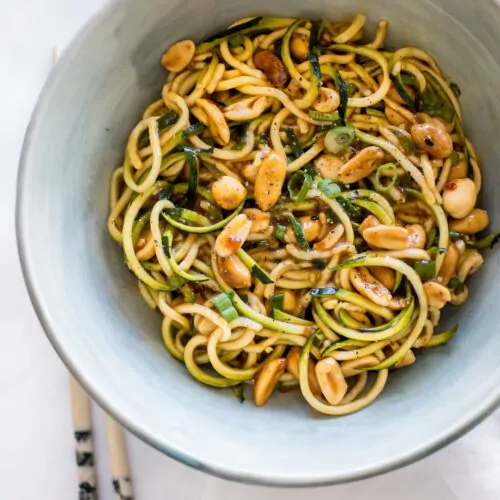
Kung Pao Zoodles
Ingredients
- 2 medium zucchini spiralized on medium setting
- 1 tablespoon soy sauce
- 1 tablespoon sesame oil
- 2 tablespoons rice vinegar
- 1 tablespoon (or to taste) chili paste
- 1 tablespoon sherry (optional but tasty)
- 1 tablespoon (packed) brown sugar
- 1 clove garlic minced
- 1 tablespoon cornstarch + 2 tablespoons cold water
- 1/2 cup peanuts
- 2 scallions (green parts only) chopped
- Sesame seeds for garnish (optional)
Instructions
- Spiralize zucchini on the medium setting and set aside.
- Add the soy sauce, sesame oil, rice vinegar, chili paste, sherry, brown sugar, and garlic to a skillet over medium-high heat. Let it bubble for a minute or two.
- Meanwhile, combine the cornstarch and 2 tbsp cold water.
- Stir the cornstarch mixture into the skillet. It should thicken the sauce up really quickly.
- Add the zucchini noodles, peanuts, and scallions to the pan. Cook for a few minutes, tossing continuously (I use tongs to do this). The zucchini will release some water. Don't overcook the zucchini or it will be very limp and watery.
- Sprinkle sesame seeds on top if desired. Serve immediately.
Notes
- If you can't find chili paste, sriracha sauce is a good substitute.
- This is the spiralizer I used to make this recipe.


