Lemon Chicken Orzo


Lemon chicken orzo cooks tender pasta, shredded chicken, and baby spinach together in a creamy, bright sauce. Toasting the orzo before it simmers adds a subtle nutty flavor, while lemon juice keeps the rich cream and parmesan from feeling heavy.
This one-pot dinner takes 10 minutes to prep and 20 minutes to cook, and serves four. It suits busy weeknights, and the leftovers make a filling lunch; serve it straight from the pot while the sauce is silky.
Why This Lemon Chicken Orzo Recipe Works
The cooking order helps the orzo absorb flavor while keeping the creamy sauce smooth and the greens fresh.
- One pot keeps the sauce cohesive. The orzo cooks directly in broth, lemon juice, and cream, releasing starch that naturally thickens the liquid. There is no separate pasta water to drain, and fewer dishes to wash.
- Lemon balances the cream. The lemon juice adds a clear, tart note that cuts through the butter, cream, and parmesan. Keep the heat at a gentle bubble after adding it to reduce the risk of the cream separating.
- Cooked chicken saves time. Shredded cooked chicken needs only a brief warm-through at the end, so it stays tender rather than simmering for the full pasta cooking time.
- Spinach goes in off the heat. Residual heat wilts the baby spinach while the covered pot rests. Adding it at the end preserves its color and avoids overcooking it into the sauce.
Ingredients You’ll Need
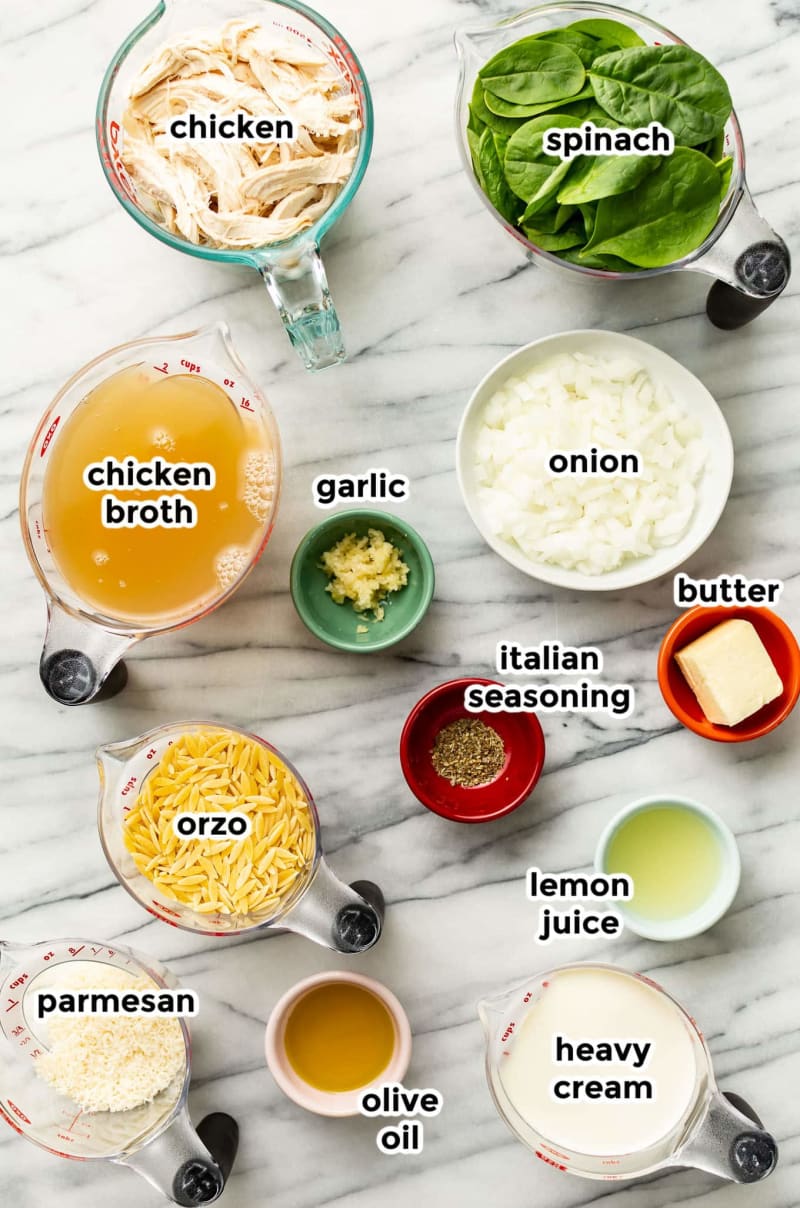
These everyday ingredients make a rich, lemony one-pot pasta. Use cooked chicken and freshly grated parmesan for the best texture.
- Olive oil: One tablespoon helps the onion soften without sticking as the pot heats.
- Butter: Two tablespoons add richness and help the onion cook gently.
- Onion: Half a medium onion, chopped, builds a savory base. Cut it into small pieces so it softens quickly.
- Garlic: Three cloves, minced, bring aromatic flavor; add them with the orzo so they do not cook too long on their own.
- Italian seasoning: A quarter teaspoon gives the pasta a light dried-herb note without overpowering the lemon.
- Orzo pasta: One cup uncooked orzo cooks in the sauce. It is rice-shaped pasta, not rice.
- Chicken broth: Two cups provide the liquid for cooking the orzo. Choose a broth you like the flavor of, since it becomes the sauce base.
- Lemon juice: Two tablespoons brighten the cream sauce. Freshly squeezed juice gives a clean citrus flavor.
- Heavy cream: One cup of heavy or whipping cream gives the sauce its richness and helps it stay smooth with the lemon.
- Cooked chicken: Two cups shredded cooked or rotisserie chicken make this a filling meal; remove skin and bones before shredding.
- Parmesan cheese: Half a cup, freshly grated, melts into the hot sauce and adds salty, savory depth.
- Baby spinach: Two packed cups wilt into the pasta during the covered rest. Fresh baby spinach needs no chopping.
- Salt and pepper: Season to taste at the end, after the broth and parmesan have contributed their salt.
Equipment You’ll Need
- Large, heavy-bottomed pot: Use a pot with room to stir the orzo and enough depth to hold the sauce and chicken without spilling.
- Wooden spoon or heat-safe spatula: A sturdy spoon helps scrape the bottom as the orzo simmers, preventing pasta from sticking.
- Measuring cups and spoons: Accurate amounts of pasta, broth, cream, and lemon juice help keep the sauce balanced.
- Chef’s knife and cutting board: Chop the onion and mince the garlic before heating the pot so they can be added without delay.
How to Make Lemon Chicken Orzo
1. Soften the onion
Set a pot over medium-high heat and add the olive oil, butter, and chopped onion. Sauté for 3-4 minutes, stirring now and then, until the onion begins to soften.
The onion should look glossy and softened, not browned. If it starts coloring quickly, lower the heat slightly.
2. Toast the orzo
Stir in the garlic, Italian seasoning, and uncooked orzo. Cook for 2-3 minutes, stirring often so the garlic and pasta warm evenly.
The garlic should smell fragrant and the orzo should look lightly coated. Keep it moving so the garlic does not scorch.
3. Simmer in the sauce
Pour in the chicken broth, lemon juice, and cream, then bring the mixture just to a bubble. Cook uncovered for 10 minutes, stirring fairly often; lower the heat to medium or medium-low as needed to maintain a gentle bubble.
Avoid a furious boil, which can reduce the liquid before the orzo is tender and may cause the cream to curdle. If the liquid disappears too quickly, reduce the heat and add a splash more broth or cream.
4. Warm the chicken
Stir the shredded cooked chicken into the pot once the orzo has simmered for 10 minutes. Continue cooking just long enough for the chicken to warm through.
The orzo should be close to tender. If it is still firm, keep the pot at a gentle simmer until it softens.
5. Wilt and finish
Take the pot off the heat and stir in the parmesan and spinach. Cover for 3-5 minutes, or until the sauce thickens to your liking, then season with salt and pepper as needed and serve immediately.
The spinach should be wilted and the sauce should cling to the pasta. If it looks loose, leave the pot covered longer so the orzo absorbs more liquid.
How to Tell When It’s Done
The orzo should be tender with a slight bite, not hard in the center. The sauce will look creamy and coat the pasta rather than pooling like broth; it thickens further during the covered rest.
If the liquid is reducing before the orzo is cooked, turn the heat down and add a splash of broth or cream. Keep cooking gently and stir often, checking the pasta again before adding more liquid.
If the pasta is tender but the sauce seems thin, cover the pot for longer than 3-5 minutes. The orzo will absorb liquid as it rests; serve once the consistency is creamy and spoonable.
Tips and Common Mistakes
A gentle simmer and a short covered rest make the biggest difference to the sauce and pasta texture.
- Keep the simmer gentle. A hard boil can make the liquid reduce before the orzo softens and can cause the cream to curdle with the lemon. Lower the heat as soon as the pot begins bubbling.
- Stir often while it simmers. Orzo can settle and stick to the bottom of the pot as it absorbs liquid. Stirring also helps you notice quickly if the sauce is reducing too fast.
- Use full-fat cream. The recipe relies on heavy or whipping cream to stay smooth alongside citrus and heat. Lower-fat substitutes are more likely to separate.
- Let the covered rest do its job. The parmesan melts and the orzo absorbs extra liquid during the 3-5 minute rest. If the sauce is still loose, extend the covered rest before changing the liquid balance.
- Season after the cheese goes in. Broth and parmesan can both be salty, so taste the finished pasta before adding salt. A few turns of pepper add warmth without masking the lemon.
Substitutions and Variations
A few changes are possible, though the cream and orzo are central to the intended texture.
- Rotisserie chicken: Use shredded rotisserie chicken as written for a convenient option. Remove the skin and bones, then add the meat near the end so it only needs warming.
- Leftover cooked chicken: Any plain cooked chicken can stand in for rotisserie chicken. Shred or chop it into bite-size pieces so it heats evenly through the pasta.
- Fresh herbs: Stir chopped parsley or dill into the finished dish if you have some on hand. They add a fresh herbal note but are not needed for the sauce to work.
- Baby kale: Use tender baby kale in place of spinach, allowing a little more covered resting time if needed for the leaves to soften. Its flavor is earthier and its texture will be firmer.
- Gluten-free pasta: A rice-shaped gluten-free pasta may cook and absorb liquid differently from orzo. Check its package guidance and expect to adjust the simmering time or liquid.
- Rice: Rice is not a direct swap for orzo because it needs different liquid amounts and cooking time. Use a recipe designed for rice rather than substituting it one-for-one here.
What to Serve with Lemon Chicken Orzo
Serve lemon chicken orzo on its own or with a crisp green salad and roasted vegetables to balance the creamy sauce. Warm crusty bread is useful for scooping up any sauce left in the bowl.
For more meal ideas, browse our chicken recipes or dinner recipes.
Make-Ahead, Storage and Reheating
Make ahead: Chop the onion and garlic and shred the cooked chicken ahead, storing them separately in the refrigerator. For the best texture, cook the orzo just before serving; it continues absorbing sauce as it sits.
Storage: Cool leftovers promptly and store them in a covered airtight container in the refrigerator for 3-4 days. Refrigerate within 2 hours of cooking.
Freezing: Freezing is not ideal because cream sauces can separate and the orzo may turn soft after thawing. If you do freeze portions, expect a change in texture when reheated.
Reheating: Warm leftovers gently in a saucepan over low heat, stirring in a splash of broth or cream to loosen the sauce. You can also microwave a covered portion in short intervals, stirring between them; stop once it is hot throughout.
Lemon Chicken Orzo FAQs
Can I use uncooked chicken in lemon chicken orzo?
No, not as a direct swap in this method. The recipe adds cooked chicken near the end, so cook raw chicken separately and shred it before stirring it in.
Why did my cream sauce curdle?
The sauce may have become too hot after the lemon juice and cream were added. Keep it at a gentle bubble rather than a vigorous boil, and use heavy or whipping cream rather than a lower-fat substitute.
Can I make lemon chicken orzo without spinach?
Yes. Leave it out, or replace it with another tender green that wilts quickly; the sauce and pasta will still cook as directed.
How can I make the sauce thicker?
Cover the pot for longer than 3-5 minutes after adding the parmesan and spinach. The orzo continues absorbing liquid as it rests, thickening the sauce without extra ingredients.
Can I double this recipe?
Yes, if your pot is large enough to stir everything comfortably. Keep the same gentle simmer and check that the orzo is tender before moving on, since a larger batch may heat differently.
Is orzo rice or pasta?
Orzo is pasta shaped like rice. It cooks and absorbs liquid differently from rice, so use orzo for the stated timing and liquid amounts.
Printable Recipe
Recipe adapted from Salt & Lavender. Photos courtesy of Salt & Lavender, used with permission.

Lemon Chicken Orzo
Ingredients
- 1 tablespoon olive oil
- 2 tablespoons butter
- 1/2 medium onion chopped
- 3 cloves garlic minced
- 1/4 teaspoon Italian seasoning
- 1 cup uncooked orzo pasta
- 2 cups chicken broth
- 2 tablespoons lemon juice
- 1 cup heavy/whipping cream
- 2 cups shredded cooked/rotisserie chicken
- 1/2 cup freshly grated parmesan cheese
- 2 cups (packed) fresh baby spinach
- Salt & pepper to taste
Instructions
- Add the oil, butter, and onion to a pot over medium-high heat. Sauté the onion for 3-4 minutes.
- Add the garlic, Italian seasoning, and orzo. Cook for 2-3 minutes, stirring often (this infuses the orzo with more flavor and toasts it a little).
- Stir in the chicken broth, lemon juice, and cream. Once it starts to bubble, continue cooking for 10 minutes, uncovered, stirring fairly often. You will probably need to turn the heat down a bit (to medium or even medium-low). It should gently bubble vs. furiously boil, and you don't want the liquid to reduce too much before the pasta has cooked. See notes below and blog post for troubleshooting tips.
- Stir in the chicken.
- Take the pot off the heat, stir in the parmesan and spinach, and cover the pot for 3-5 minutes or until it has thickened up to your liking. Season with salt & pepper as needed and serve immediately.
Notes
- Serves 4-6 depending on how much people eat.
- I don’t recommend subbing the cream. There’s a good chance the sauce will curdle with something lower fat (due to the fairly high heat + citrus).
- If the pasta is soaking up the liquid too fast (like before the orzo is cooked), turn the heat down and/or add a splash more broth or cream. If there’s too much liquid, cover the pot for longer than suggested in the recipe and the orzo will absorb it quickly.
- Orzo is pasta. If you want to make this with rice, you may have to adjust liquid measurements and cooking time (it’s a different recipe that I have not tested).


