Lemon Dill Salmon Pasta


Lemon dill salmon pasta pairs tender flakes of seared salmon with pasta in a creamy, lightly tangy sauce. Fresh dill and garlic bring a bright, savory finish, while a quick flour dredge helps the fish brown and gives the sauce a little body.
The recipe serves two and takes 20 minutes from start to finish, with just 5 minutes of prep and 15 minutes of cooking. Make it for a weeknight dinner when you want something polished without a long list of steps.
Have the pasta water heating while you prepare the salmon, then finish the sauce as the noodles cook. The dish is best served right away, while the cream sauce is silky and clings to the pasta.
Why This Lemon Dill Salmon Pasta Recipe Works
A few quick techniques let the salmon, herbs and sauce come together without overcooking the fish.
- A light flour coating helps the salmon brown. Dredging seasons the surface and encourages a golden sear. A little flour left on the fish also helps the cream sauce thicken as it cooks.
- The sauce starts in the salmon skillet. Broth, lemon juice and garlic loosen the browned bits left in the pan. Those savory bits add depth without another pot or a long simmer.
- Fresh dill keeps the cream sauce bright. Its green, herbal flavor balances the richness of the cream and butter. Adding it with the cream gives it time to flavor the sauce without losing its fresh character.
- Pasta water is easy to coordinate. Starting the sauce once the water boils lets both components finish at about the same time. Tossing the drained pasta in the skillet helps coat each piece evenly.
Ingredients You’ll Need
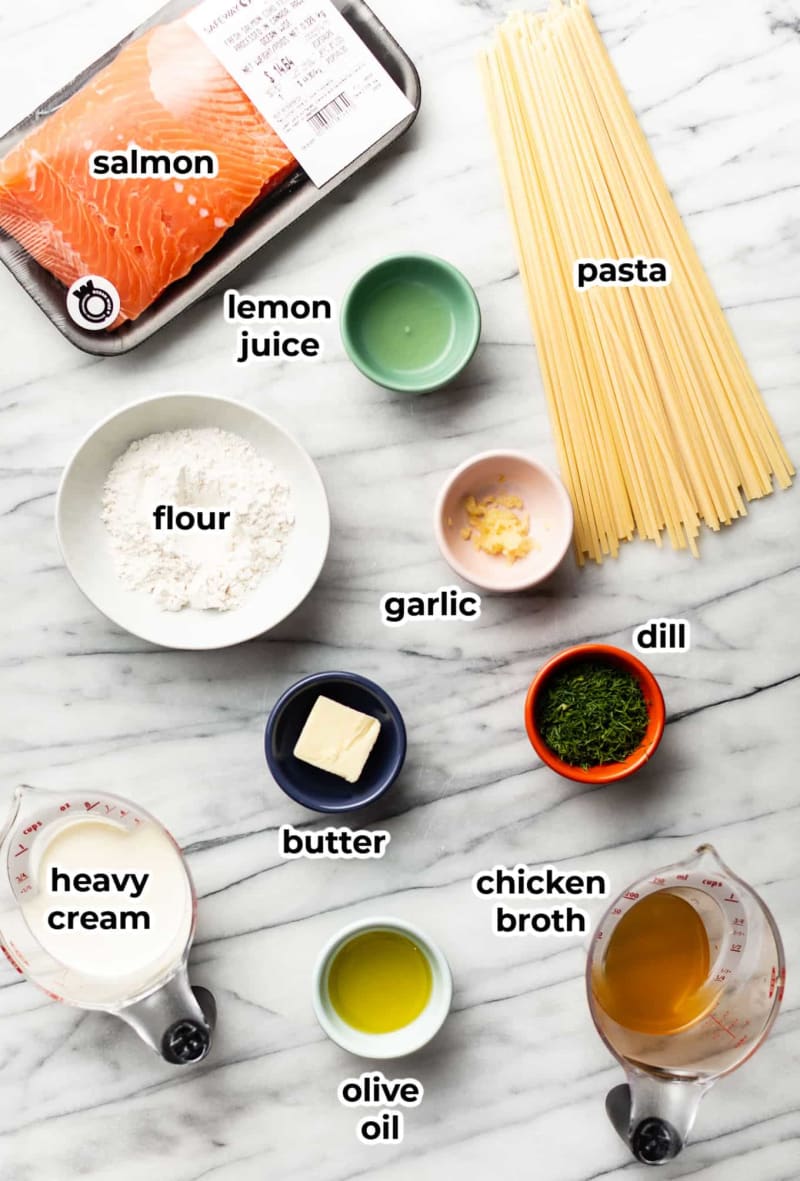
The ingredient list is compact, so good salmon and fresh dill make a noticeable difference. Set everything out before you start cooking.
- Uncooked pasta: Four ounces, in a shape that catches creamy sauce; cook it al dente according to the package directions.
- Fresh salmon: Half a pound, skinless or skin-on. Choose a fresh-looking piece and cut away any pin bones before cooking.
- Salt and pepper: Season to taste; add them to the salmon before dredging so the fish is seasoned throughout.
- Flour: Use enough to coat the salmon lightly for dredging; shake off any excess before it hits the pan.
- Olive oil: One tablespoon helps the salmon sear in the skillet without sticking.
- Butter: One tablespoon adds richness to the pan and the finished sauce.
- Chicken broth or dry white wine: A quarter cup of either loosens the browned bits and provides the base for the cream sauce.
- Lemon juice: One teaspoon brings a clean, tart note; measure it before adding so the sauce stays balanced.
- Garlic: Two cloves, minced, give the sauce a savory foundation. Mince them finely so they cook quickly.
- Heavy cream: Half a cup creates a rich sauce that reduces smoothly; avoid replacing it with milk or half-and-half.
- Fresh dill: One tablespoon, chopped, supplies the dish’s signature herbal flavor. Dried dill can stand in if needed.
- Optional garnishes: Fresh parsley and parmesan cheese are optional; use either or both for a fresh or savory finish.
Equipment You’ll Need
- Large pot: Use it to boil salted water and cook the pasta while you make the sauce.
- Skillet: A roomy skillet lets you sear the salmon, build the sauce and toss in the pasta.
- Colander: Drain the pasta before adding it to the skillet, so excess water does not thin the sauce.
- Fish spatula or thin turner: A flexible turner helps flip the salmon without breaking it before it is ready to flake.
How to Make Lemon Dill Salmon Pasta
1. Boil the pasta water
Bring a pot of salted water to a boil. Add the pasta and cook it al dente, following the package directions; begin the sauce once the water is boiling.
Taste a piece near the end of its package cooking time. It should be tender with a slight bite, since it will be tossed with the hot sauce.
2. Season and dredge the salmon
Season the salmon with salt and pepper, then coat it in flour. Brush or shake away loose flour so it does not burn in the skillet.
Aim for a thin, even coating rather than a thick crust.
3. Sear the salmon
Warm the olive oil and butter in a skillet over medium-high heat. When the pan is hot, add the fish and cook for 2 minutes per side, then transfer it out of the skillet.
Look for a browned surface before turning. If the salmon has skin, it should be easy to peel away when you flip it.
4. Build the sauce base
Pour the chicken broth or dry white wine into the same skillet, then stir in the lemon juice and minced garlic. Let the mixture bubble for about 30 seconds, then lower the heat to medium.
Scrape the skillet as the liquid bubbles to lift the browned bits into the sauce. Keep the garlic moving so it does not scorch.
5. Finish the salmon in cream
Stir in the heavy cream and chopped dill, then return the salmon to the skillet. Break the fish into bite-size pieces with a spoon and cook for a few more minutes, until it is cooked through and the sauce has reduced and thickened a little.
The fish should separate into moist flakes, and the sauce should lightly coat a spoon. Keep the heat at medium and avoid a hard boil.
6. Toss and serve
Drain the pasta and add it to the skillet. Toss until the noodles are coated, then serve immediately with parsley and parmesan if desired.
If the sauce seems thicker after the pasta goes in, toss steadily to distribute it. Serve while the sauce is warm and glossy.
How to Tell When It’s Done
The salmon is ready when its center is opaque and the flesh separates into moist flakes. For a temperature check, fish is safely cooked at 145°F in the thickest part; avoid relying only on the browned exterior.
The sauce should look creamy and lightly thickened, not watery or separated. If it is still thin after the salmon cooks through, let it bubble gently at medium heat a little longer, stirring so the cream does not catch on the pan.
If the sauce becomes too thick before the pasta is ready, lower the heat and stir it frequently. Add the drained pasta as soon as it is ready and toss promptly; the pasta and sauce are best combined just before serving.
Tips and Common Mistakes
Keep the fish tender and the sauce smooth by watching the pan rather than relying only on the clock.
- Start the sauce when the water boils. This keeps the pasta and salmon on a similar schedule, so the noodles do not sit drained while the sauce finishes.
- Use a light flour coating. Too much loose flour can scorch in the hot fat and make the sauce pasty. Shake off excess before searing.
- Wait for the skillet to heat. A hot pan helps the salmon brown instead of sticking and steaming. Add the fish once the oil and butter are hot.
- Turn the fish only once. Leaving it undisturbed for the stated sear helps form a browned surface and makes the piece easier to lift intact.
- Serve as soon as you toss. The pasta continues to absorb sauce as it sits, so prompt serving keeps the coating creamy rather than tight.
Substitutions and Variations
A few practical swaps work well, but keep the cream base intact for the smoothest sauce.
- Dry white wine: Use it instead of chicken broth for a more wine-forward sauce. The lemon and dill still provide the dish’s bright finish.
- Dried dill: Use 1 teaspoon in place of the fresh dill, then taste and build up gradually if you want a stronger herbal note.
- Skin-on salmon: It works as written; when you flip the fish, the skin should peel away easily if you prefer to remove it.
- Different pasta shape: Short pasta or long noodles can both work. Choose a shape that is easy to toss and holds the cream sauce.
- Parsley garnish: Leave it off or use it alongside the parmesan. Parsley adds a fresh finish but is optional.
What to Serve with Lemon Dill Salmon Pasta
Serve the pasta immediately with a simple green salad or steamed green vegetables to balance the creamy sauce. Crusty bread is useful for any sauce left on the plate.
For a fuller dinner spread, pair it with a light salad or browse more salad recipes and dinner recipes.
Make-Ahead, Storage and Reheating
Make ahead: This dish comes together quickly and is best cooked just before serving. You can mince the garlic, chop the dill and portion the other ingredients ahead, but cook the salmon and pasta at the last minute for the best texture.
Storage: Refrigerate leftovers in a covered airtight container within 2 hours of cooking and eat within 1 to 2 days, since the dish contains fish and cream.
Freezing: Freezing is not recommended; the cream sauce can separate after thawing, and the salmon and pasta may become soft.
Reheating: Warm leftovers gently in a skillet over low heat, stirring often and adding a small splash of broth if the sauce has tightened. Avoid boiling, which can break the cream sauce and dry out the salmon.
Lemon Dill Salmon Pasta FAQs
Can I use canned salmon for lemon dill salmon pasta?
Yes, but the texture will be softer and you will miss the browned flavor from searing fresh salmon. Drain it well and fold it into the cream sauce near the end so it warms without breaking apart.
Why did my cream sauce curdle?
Lemon juice can cause a sauce made with milk or half-and-half to curdle, which is why heavy cream is recommended here. A hard boil can also destabilize cream, so keep the sauce at a gentle simmer.
Can I double this pasta recipe?
Yes. Use a wide skillet or cook the salmon in batches so it sears rather than steams, then combine the portions with the sauce and pasta.
What pasta shapes work with salmon and dill?
Short shapes such as penne or fusilli are easy to toss and hold the creamy sauce. Long pasta also works; cook it al dente and transfer it promptly to the skillet.
Can I prepare the sauce without salmon?
Yes. Leave out the fish and follow the sauce steps, then toss in the pasta. The result will be a creamy dill pasta rather than a salmon main dish.
How can I make the dish less rich?
Serve smaller portions with a crisp salad or green vegetables rather than thinning the sauce with milk. The cream is important for keeping the lemon sauce smooth.
Printable Recipe
Recipe adapted from Salt & Lavender. Photos courtesy of Salt & Lavender, used with permission.

Lemon Dill Salmon Pasta
Ingredients
- 4 ounces uncooked pasta
- 1/2 pound fresh salmon
- Salt & pepper to taste
- Flour for dredging
- 1 tablespoon olive oil
- 1 tablespoon butter
- 1/4 cup chicken broth or dry white wine
- 1 teaspoon lemon juice
- 2 cloves garlic minced
- 1/2 cup heavy/whipping cream
- 1 tablespoon chopped fresh dill
- Optional garnish: fresh parsley, parmesan cheese
Instructions
- Boil a salted pot of water for your pasta. Cook it al dente according to package directions. I suggest starting the sauce once the water’s boiling.
- Season the salmon with salt & pepper and coat it in the flour.
- Add the oil and butter to a skillet over medium-high heat. Once the pan is hot, add the salmon and cook it for 2 minutes/side, then take the fish out of the pan and set it aside.
- Add the chicken broth, lemon juice, and garlic to the pan. Let it bubble for about 30 seconds. Reduce the heat to medium.
- Add the cream, dill, and salmon back into the pan. Break the fish up with your spoon into bite-size pieces. Cook it for a few more minutes until it's cooked through and the sauce has reduced and thickened a bit.
- Drain the pasta and add it to the skillet. Toss it & serve immediately with parsley and parmesan cheese if desired.
Notes
- You can use skinless or skin-on salmon. If using skin-on, it’s easy to peel off when you flip it over after searing it.
- Can’t get fresh dill? Try 1 teaspoon dried dill instead (build your way up from there).
- I don’t recommend substituting the cream for milk or half-and-half because the lemon juice will likely curdle the sauce.


