Lemon Garlic Shrimp Risotto

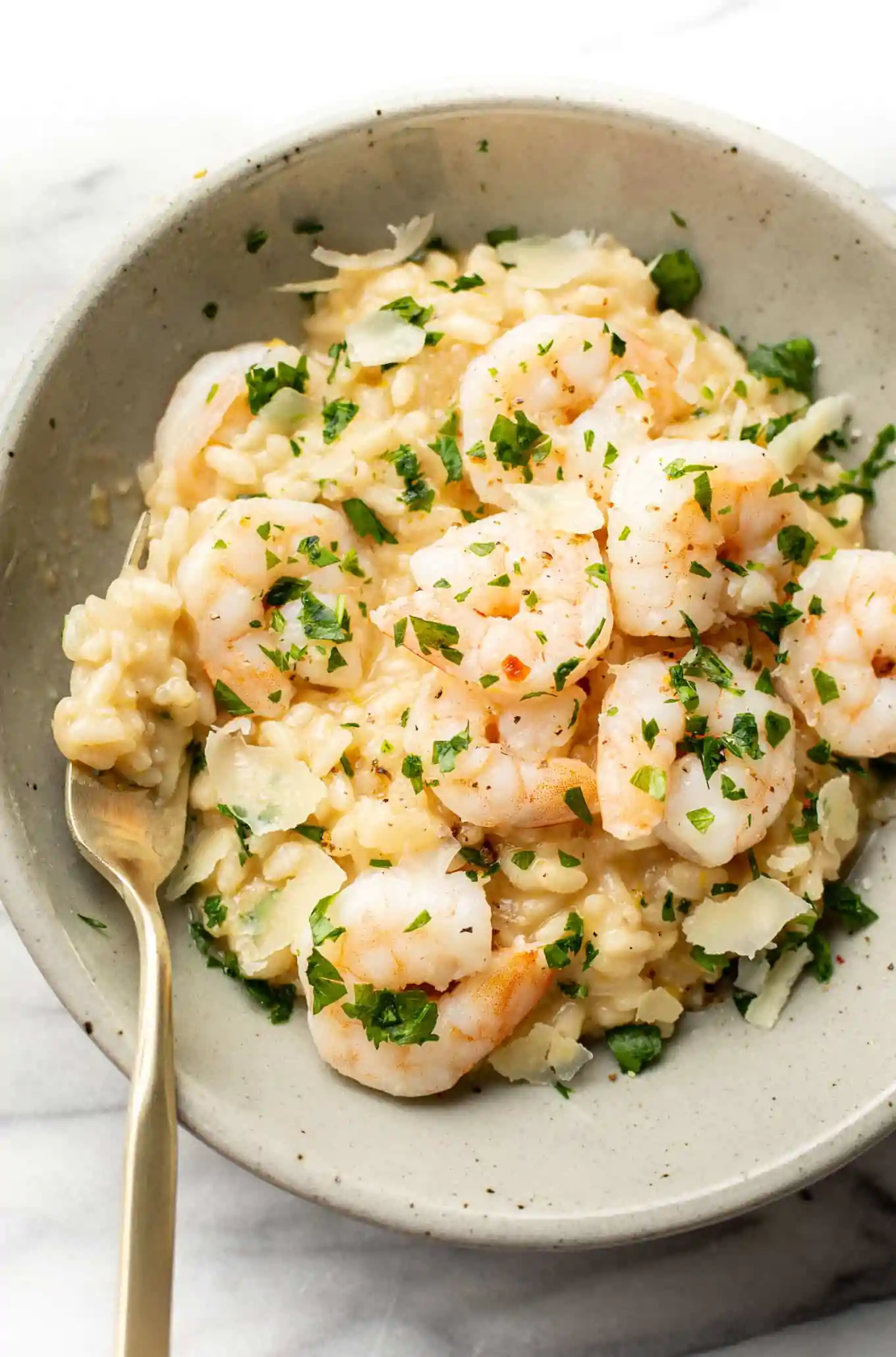
Lemon garlic shrimp risotto pairs creamy, gently chewy Arborio rice with buttery shrimp, plenty of garlic, and bright lemon. The rice becomes silky through gradual stirring and broth additions, while the shrimp cook separately so they stay tender rather than overcooking in the pot.
This recipe serves four and takes 70 minutes total, including 20 minutes of prep and 50 minutes of cooking. It makes a relaxed date-night dinner or a special meal for guests; give yourself time to stir, since rushing the rice can leave it unevenly cooked.
Keep the broth warm while the rice cooks, and have the shrimp ready to go before the risotto is finished. That timing lets you serve the seafood hot over the creamy rice.
Why This Lemon Garlic Shrimp Risotto Recipe Works
The method gives the rice time to release its starch while keeping the shrimp separate until the final minutes. A few deliberate choices make the finished dish creamy, bright, and balanced.
- Arborio rice creates a creamy texture. The rice releases starch as it is stirred and absorbs liquid, giving risotto its characteristic silkiness without cream. Its center should retain a slight bite.
- Stirring helps the rice cook evenly. Frequent stirring moves rice through the broth and prevents the bottom from sticking. Add the next ladle only after the previous liquid has mostly been absorbed.
- Wine adds balance. Dry white wine brings acidity that offsets the butter and parmesan. Let the rice absorb it before you begin adding broth.
- Lemon goes in near the end. Stirring in lemon juice and zest after cooking preserves their fresh, fragrant character. The citrus cuts through the richness of the butter and cheese.
Ingredients You’ll Need
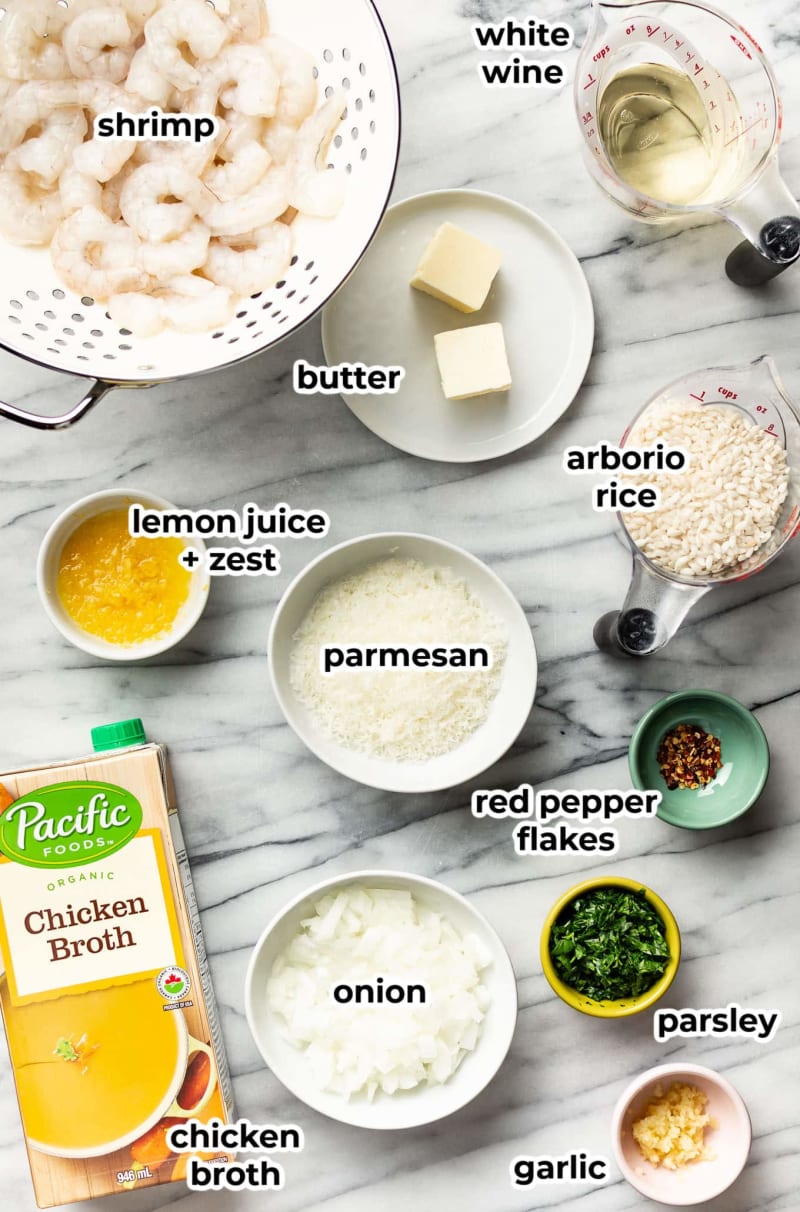
Use the quantities below as written, and prepare the shrimp and aromatics before you start cooking. That leaves you free to tend the rice as it absorbs the broth.
- Shrimp: One pound of uncooked shrimp, sized 31–40 per pound. Peel, remove the tails, and thaw first if frozen.
- Chicken or vegetable broth: Four cups, or stock. Choose either chicken or vegetable broth and keep it warm for gradual additions.
- Butter: Four tablespoons, divided between the rice and shrimp. It adds richness and helps cook the aromatics.
- Onion or shallot: Half a medium onion or one large shallot, finely chopped. Either gives the rice a savory base.
- Arborio rice: One cup, uncooked. This short-grain rice releases starch as it cooks, creating a creamy consistency.
- Dry white wine: Half a cup. Use a dry style that you would drink, rather than a sweet cooking wine.
- Lemon: One tablespoon of juice and the zest of one lemon, plus more juice for serving if desired.
- Parmesan: Half a cup, freshly grated. It melts into the rice and adds a salty, savory finish.
- Garlic: Four to five cloves, minced. It cooks with the shrimp, so mince it before you start.
- Crushed red pepper flakes: A quarter teaspoon adds gentle heat to the shrimp without overwhelming the lemon.
- Fresh parsley: One tablespoon, chopped, for a fresh, herbaceous garnish just before serving.
- Salt and pepper: To taste. Season the shrimp as they cook, then adjust the finished rice before serving.
Equipment You’ll Need
- Ladle: Use it to add broth a little at a time without pouring too much into the rice.
- Skillet: Cook the shrimp, garlic, and pepper flakes separately while the rice finishes.
How to Make Lemon Garlic Shrimp Risotto
1. Prepare the shrimp
If frozen, thaw the shrimp under cool running water. Peel them, remove the tails, and set them aside so they are ready to cook later.
Dry the peeled shrimp before they go into the skillet; excess water can make them steam rather than cook in the butter.
2. Warm the broth
Pour the broth into a fairly large saucepan or pot and set it over high heat. Just before it boils, turn the heat to low and keep it there while you make the risotto.
Keep a ladle nearby. The broth should stay hot but not continue boiling vigorously.
3. Soften the onion
In a Dutch oven or large, deep skillet, melt half the butter over medium heat. Add the finely chopped onion or shallot and cook until softened, about 5–7 minutes.
The pieces should look soft and translucent, not browned. Lower the heat if the edges start to color.
4. Toast the rice
Add the Arborio rice and stir constantly for 2–3 minutes, coating the grains in butter and onion.
The grains should look glossy and lightly toasted, with no liquid pooling in the pan.
5. Absorb the wine
Pour in the dry white wine and stir until the rice has absorbed it. Keep the rice moving across the bottom of the pot.
When a spoon drawn through the center leaves no loose wine behind, begin adding broth.
6. Cook the risotto gradually
Add the warm broth one ladle at a time, stirring nearly constantly and waiting until each addition is absorbed before adding more. Continue until you have used all the broth and the rice is al dente, about 25–30 minutes. If the rice bubbles too vigorously or cooks too quickly, lower the heat to medium-low. If it is still undercooked, warm more broth and add it gradually until the texture is right.
Taste a few grains as you go. The rice should be creamy but retain a slight bite, not feel hard in the middle or turn mushy.
7. Finish the rice
Turn off the burner and stir in the lemon juice, lemon zest, and parmesan. Cover the pot and let it sit on the stove while you cook the shrimp.
The cheese should melt into the rice, which should look loose and glossy. It will thicken a little as it rests.
8. Cook the shrimp
Melt the remaining butter in a skillet. Add the shrimp, minced garlic, crushed red pepper flakes, and salt and pepper; cook for about 2 minutes per side, or until the shrimp are pink and cooked through.
Look for opaque flesh and a curled shape. Remove the shrimp from the heat as soon as they are done to keep them tender.
9. Garnish and serve
Spoon the risotto into bowls and arrange the shrimp on top. Sprinkle with parsley, add a squeeze of lemon juice if you like, and adjust the salt and pepper to taste.
Serve promptly while the rice is creamy and the shrimp are hot.
How to Tell When It’s Done
Shrimp are cooked when their flesh is opaque throughout and pink on the outside. If a thick shrimp is still translucent in the center, return it to the skillet briefly and check again. Avoid leaving cooked shrimp in the hot pan while waiting for the rice.
Taste the finished dish before serving. The parmesan and broth contribute salt, while lemon should brighten rather than dominate; adjust seasoning and add a squeeze of lemon if the flavors taste heavy.
Tips and Common Mistakes
A little organization makes the steady risotto method easier and helps the shrimp finish at the right moment.
- Keep the broth warm. Cold broth slows the rice down when it is added. Hold it over low heat throughout the cooking process.
- Add broth gradually. A large pour can leave the rice swimming before it has released starch. Ladle in more only after the previous addition is absorbed.
- Stir nearly constantly. Frequent stirring encourages even cooking and helps prevent rice from sticking to the bottom. Keep the heat controlled so the liquid absorbs at a steady pace.
- Don’t rush the rice. The gradual process takes about 25–30 minutes. Turning up the heat to hurry it can leave the outside soft before the center is properly tender.
- Taste before adding more salt. Broth and parmesan can both be salty. Check the finished rice first, then season it and the shrimp as needed.
Substitutions and Variations
The core method works with a few practical swaps, though each one changes the flavor or texture slightly.
- Vegetable broth: Use vegetable broth instead of chicken broth for a meat-free base. The rice will still cook by the same gradual method.
- Shallot: Choose one large shallot in place of half a medium onion. It gives the base a slightly milder, more delicate flavor.
- No wine: Replace the wine with additional broth if needed. The risotto will lose some acidity, so finish with lemon to bring back brightness.
- Heat level: Reduce or omit the red pepper flakes for a milder dish, or add a little more if you want a noticeable kick.
- Parsley: Chopped chives can stand in for the parsley. They bring a mild onion note rather than parsley’s grassy freshness.
What to Serve with Lemon Garlic Shrimp Risotto
Serve the risotto as a complete main course, with a simple green salad or roasted asparagus alongside. Crusty bread is useful for catching any buttery sauce left in the bowl, while a crisp vegetable side keeps the meal from feeling too rich.
For another seafood-friendly dinner idea, browse our dinner recipes or explore more chicken recipes for a different weeknight meal.
Make-Ahead, Storage and Reheating
Make ahead: Prep the shrimp, chop the onion and garlic, and measure the rice and seasonings ahead; keep the shrimp refrigerated until cooking. Risotto is best cooked just before serving, since it thickens as it sits and loses its loose, creamy texture.
Storage: Refrigerate leftover risotto and shrimp promptly in a covered, airtight container for 1–2 days. Keep the shrimp and rice together or separate them, and do not leave the seafood at room temperature for more than 2 hours.
Freezing: Freezing is not recommended. The rice can become soft and grainy after thawing, and the shrimp may turn rubbery.
Reheating: Reheat leftovers gently in a saucepan over low heat, stirring often and adding a splash of broth or water to loosen the rice. Warm until hot throughout, taking care not to cook the shrimp for longer than needed.
Lemon Garlic Shrimp Risotto FAQs
Can I make lemon garlic shrimp risotto without wine?
Yes. Use additional broth in place of the wine, then taste the finished risotto and add lemon gradually to restore some brightness.
Can I use frozen shrimp?
Yes. Thaw them under cool running water, then peel and remove the tails before cooking. Pat them dry so they brown in the butter instead of releasing extra water.
Can I use a different kind of rice?
Arborio is the best choice for this method because it releases starch and gives the dish its creamy texture. Other short-grain risotto rice can work, but long-grain rice will not produce the same result.
Why is my risotto still hard after the broth is gone?
The rice may need more cooking liquid. Warm additional broth and add it a little at a time, stirring until the grains are tender with a slight bite.
Can I cook the shrimp in the risotto pot?
It is better to cook them separately as directed. Shrimp need only a short time, and cooking them apart lets you avoid overcooking while the rice finishes.
How many people does this risotto serve?
It serves four. For a larger gathering, risotto is easiest to cook in manageable batches so you can keep stirring and control how quickly the broth absorbs.
Printable Recipe
Recipe adapted from Salt & Lavender. Photos courtesy of Salt & Lavender, used with permission.
Lemon Garlic Shrimp Risotto
Ingredients
- 1 pound uncooked (31-40/pound size) shrimp
- 4 cups chicken or vegetable broth (or stock)
- 4 tablespoons butter divided
- 1/2 medium onion or 1 large shallot chopped finely
- 1 cup uncooked arborio rice
- 1/2 cup dry white wine
- 1 tablespoon lemon juice + zest from 1 lemon + more for serving
- 1/2 cup freshly grated parmesan cheese
- 4-5 cloves garlic minced
- 1/4 teaspoon crushed red pepper flakes
- 1 tablespoon chopped fresh parsley
- Salt & pepper to taste
Instructions
- Start the recipe by prepping the shrimp (thaw under cool running water, peel them, remove tails, etc.) to ensure they're ready to go for step 9.
- Add the chicken broth to a fairly large saucepan/pot over high heat. Reduce the heat to low just before it boils, and keep it on low heat for the duration of the recipe. Keep your ladle handy – you'll be gradually adding the hot broth to the risotto starting in step 7.
- Meanwhile, in a Dutch oven or large, deep skillet, melt half the butter over medium heat.
- Add the onion and sauté until softened (about 5-7 minutes).
- Add the rice and stir constantly for 2-3 minutes.
- Pour in the wine and stir until the rice fully absorbs it.
- Add the broth in, one ladle at a time, only adding more once the rice has absorbed it. Make sure you stir nearly constantly. Repeat this process until you've used up all the liquid and the risotto is al dente (give it a taste – it should have a little bite to it and not be too soft). Important: If the risotto is bubbling too much/seems to be cooking too rapidly, you may want to reduce the heat to medium-low. This step should be a gradual process for best results (about 25-30 minutes). If the rice is still undercooked, heat up more broth and add it gradually until desired texture is reached.
- Turn the burner off and stir in the lemon juice, lemon zest, and parmesan cheese. Cover the pot and let it sit on the stove.
- Melt the remaining butter in a skillet, then add the shrimp, garlic, crushed red pepper flakes, and some salt & pepper. Cook for about 2 minutes/side or until the shrimp are pink and cooked through.
- Serve the risotto with the shrimp and parsley sprinkled over top of each bowl, a squeeze of lemon juice if desired, and season with salt & pepper as needed.
Notes
- Risotto is a labor of love. Don’t try to speed up the process!


