Lemon Herb Risotto

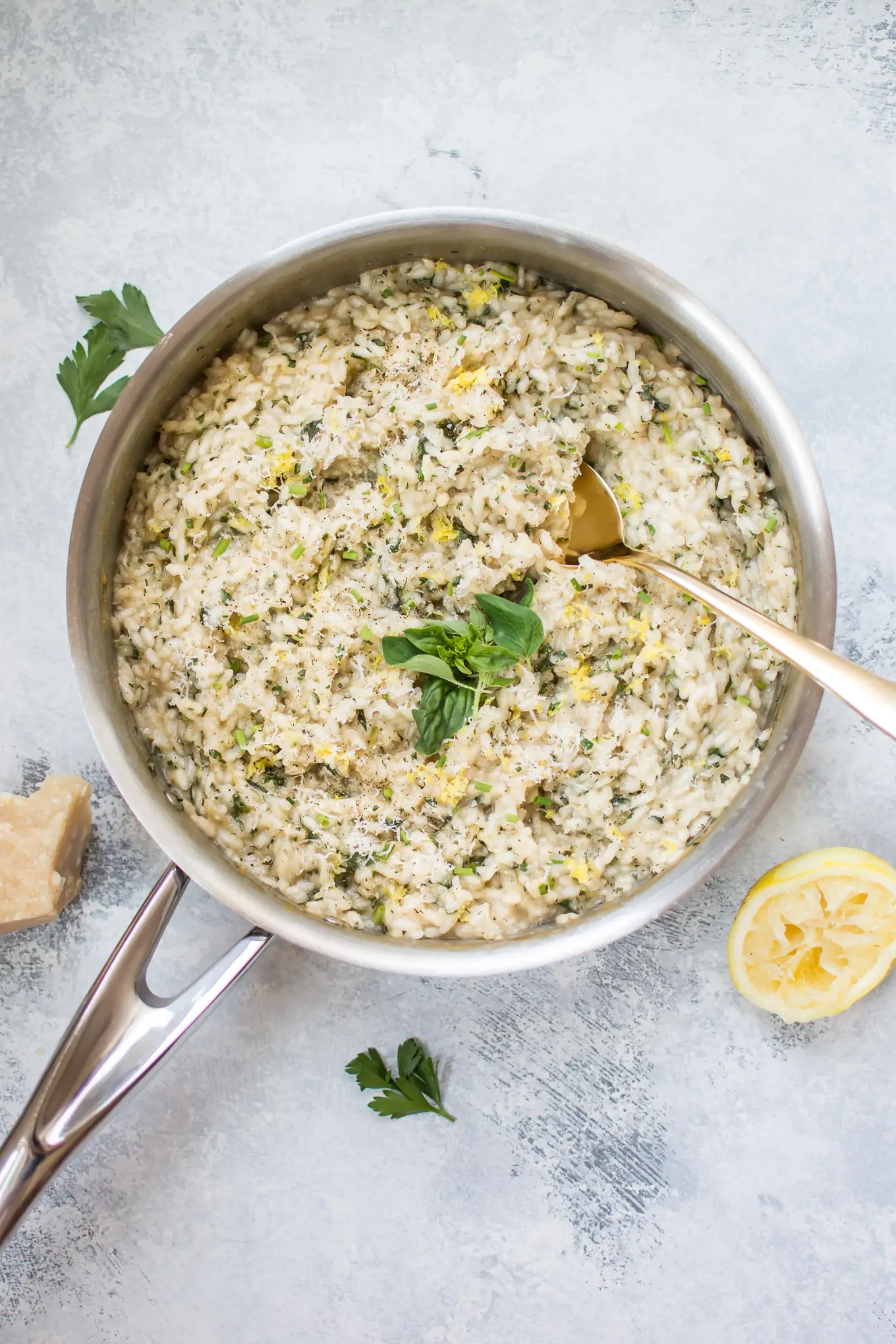
Lemon herb risotto is a creamy, slow-stirred rice dish brightened with fresh lemon and a generous mix of herbs. Arborio rice releases starch as it absorbs warm broth and wine, creating a silky texture without cream.
This version takes about 10 minutes to prep and 45 minutes to cook, and makes four servings. Serve it as a vegetarian side or make it the centerpiece of a relaxed weeknight meal.
Why This Lemon Herb Risotto Recipe Works
A steady, gentle cooking method lets the rice turn creamy while keeping the lemon and herbs fresh.
- Warm liquid keeps the cooking steady. Heating the broth and wine before adding them helps the rice keep simmering as you ladle in each addition. The liquid is ready when needed, so the pan does not repeatedly cool down.
- Arborio rice creates its own creaminess. Its starch thickens the liquid as the grains cook and release it through frequent stirring. That gives risotto a smooth, cohesive texture without adding cream.
- Butter coats the grains first. Stirring the rice in melted butter helps distribute flavor and prepares the grains for gradual liquid absorption. Keep the shallot and garlic pale so they stay sweet rather than turning bitter.
- Lemon and herbs go in at the end. Adding them after the rice is cooked preserves their bright, fresh character. Lemon zest brings fragrant citrus oils, while the juice cuts through the buttery, starchy rice.
Ingredients You’ll Need
Each ingredient has a clear job, from the warm cooking liquid to the fresh finish. Chop the herbs before you start stirring the rice.
- Vegetable broth: Five cups, warmed with the wine. Choose a broth you enjoy drinking; its flavor carries through every bite.
- White wine: One cup, added to the broth for warming. A dry white wine adds acidity and depth without making the risotto sweet.
- Butter: Two tablespoons for sautéing the aromatics and coating the rice. Use a plant-based butter or oil for a vegan version.
- Shallot: One small shallot, finely chopped. Its mild, savory sweetness adds flavor without overpowering the herbs.
- Garlic: Two cloves, minced so they soften quickly with the shallot. Fresh garlic gives the base a savory lift.
- Arborio rice: Two cups. This short-grain rice releases starch during cooking, which gives risotto its characteristic creamy body.
- Lemon: The juice and zest of one large lemon bring both sharpness and fragrance. Zest it before juicing for easier handling.
- Fresh herbs: Half a cup, packed and finely chopped. A mix of oregano, parsley, basil, chives and dill gives the finish a fresh, layered flavor.
- Salt and pepper: Season to taste near the end, after the broth has reduced into the rice. Broth salt levels vary.
- Parmesan cheese: Freshly grated, if desired. Stir it in before serving or scatter it over each portion for a savory finish.
How to Make Lemon Herb Risotto
1. Warm the broth and wine
Pour the vegetable broth and white wine into a pan and set it over high heat. Just before the liquid boils, turn the heat to low and keep it warm.
You want the liquid hot but not bubbling hard when you add it to the rice.
2. Soften the aromatics
Melt the butter in a skillet over medium heat. Add the finely chopped shallot and minced garlic, then cook for a couple of minutes without letting them brown.
The shallot should soften and smell fragrant. If it starts coloring, lower the heat.
3. Coat the rice
Stir the arborio rice into the skillet continuously for a couple of minutes, making sure the grains are coated with butter. Lower the heat to medium-low.
The grains should look glossy and evenly coated before you begin adding liquid.
4. Add the warm liquid
Pour in one ladle of the warm broth-and-wine mixture at a time, stirring often—nearly constantly. Wait until the rice has absorbed most of each addition before adding the next, and continue until you have used all the liquid.
The rice should remain gently simmering. Keep the liquid warm and avoid raising the heat to hurry the process.
5. Check the rice
As you approach the end of the liquid, taste a few grains to check their texture. Continue cooking until the risotto is al dente and creamy.
The grains should be tender around the edges with a slight bite in the middle, and the rice should move softly when stirred.
6. Finish with lemon and herbs
Once all the liquid has been used, stir in the lemon juice, lemon zest and chopped herbs. Season with salt and pepper to taste.
Taste after seasoning; the lemon should brighten the rice without masking the herbs.
7. Add parmesan and serve
If you like, stir freshly grated parmesan into the risotto before serving or sprinkle it over the top.
Serve promptly while the rice is creamy and loose.
How to Tell When It’s Done
Properly cooked risotto looks creamy and flows gently when stirred, rather than standing in a stiff mound. Taste a few grains: they should be al dente, tender but with a slight bite at the center.
If the rice is still hard after the liquid is used, warm some water and add it one ladle at a time, stirring until absorbed. Keep the heat moderate; turning it up to force the liquid in can leave the outside of the grains overcooked before the centers soften.
Tips and Common Mistakes
A little patience and attention to the pan make the texture much easier to manage.
- Keep the cooking liquid warm. Hot broth and wine help the rice maintain a steady simmer as you add each ladle. Keep the pan over low heat while you cook.
- Stir frequently. Regular stirring helps release starch and keeps the grains cooking evenly. You do not need to stir with force; a steady rhythm is enough.
- Don’t brown the aromatics. The shallot and garlic cook quickly in butter, and browning can make their flavor harsh. Lower the heat if the edges begin to color.
- Let each addition absorb. Adding the next ladle before the rice has taken up much of the previous one can leave the texture soupy. Watch the rice rather than following a rigid timer.
- Don’t rush with high heat. Faster evaporation does not mean the grains cook evenly. Keep the heat at medium-low once the rice is coated and give it time to absorb the liquid.
- Taste before the final ladle. Rice can reach al dente before all the liquid is needed. Check the texture as you go and stop when it is creamy and tender with a slight bite.
Substitutions and Variations
You can adjust the broth, herbs and finishing cheese to suit the meal.
- Use another broth: Chicken or beef broth can replace the vegetable broth if the dish does not need to be vegetarian. The result will have a more savory, meaty flavor.
- Make it vegan: Use oil instead of butter and omit the parmesan. The risotto will be less rich, but the starch from the rice still gives it a creamy texture.
- Change the herb mix: Use a different combination of fresh herbs if needed, keeping the total amount the same. Choose tender herbs you enjoy with lemon, and expect the flavor balance to shift.
- Skip the wine: Replace the white wine with more vegetable broth. The risotto will have less acidity, so taste the finished dish and adjust the lemon to your liking.
- Choose another cheese: A hard, finely grated cheese with a savory flavor can stand in for parmesan. Add it gradually so it enriches the rice without making it too salty.
What to Serve with Lemon Herb Risotto
Serve this risotto alongside roasted vegetables, sautéed greens or a crisp salad. For a more filling dinner, pair it with a simple protein or another dish from our chicken recipes.
It also makes a satisfying vegetarian main with extra herbs and parmesan at the table. Browse our salad recipes for a fresh, crunchy side.
Make-Ahead, Storage and Reheating
Make ahead: Risotto is best cooked just before serving because it thickens as it sits. You can chop the shallot, garlic and herbs ahead, and zest and juice the lemon shortly before cooking.
Storage: Refrigerate leftovers in a covered airtight container for 3 to 4 days. Cool and refrigerate promptly rather than leaving the rice at room temperature.
Freezing: Freezing is not recommended; the rice can turn soft and lose its creamy texture when thawed.
Reheating: Reheat gently in a saucepan over low heat, stirring in a splash of broth or water until creamy again. Taste and refresh with a little lemon or chopped herbs if needed.
Lemon Herb Risotto FAQs
Can I make lemon herb risotto without wine?
Yes. Replace the wine with additional vegetable broth; the flavor will be less tangy, so adjust the lemon after cooking if needed.
Can I use regular long-grain rice?
It is not a good substitute for arborio rice here. Long-grain rice releases less starch, so the finished dish will not have the same creamy texture.
Why is my risotto still soupy?
It may need more time for the rice to absorb the liquid. Keep stirring over medium-low heat until the grains are al dente and the mixture moves softly rather than pooling.
Can I make this risotto vegan?
Yes. Swap the butter for oil and leave out the parmesan. Check that your broth is also vegan.
What can I do if I run out of broth?
Warm water works as a final addition. Add it one ladle at a time and stir until absorbed, checking the rice texture as you go.
Printable Recipe
Recipe adapted from Salt & Lavender. Photos courtesy of Salt & Lavender, used with permission.
Lemon Herb Risotto
Ingredients
- 5 cups vegetable broth
- 1 cup white wine
- 2 tablespoons butter
- 1 small shallot chopped finely
- 2 cloves garlic minced
- 2 cups arborio rice
- Juice + zest from 1 large lemon
- 1/2 cup (packed) mixed fresh herbs (I used oregano parsley, basil, chives, & dill) chopped finely
- Salt & pepper to taste
- Freshly grated parmesan cheese (optional)
Instructions
- Add the broth and wine to a pan on high heat. You'll want to reduce the heat to low just before it boils.
- Melt the butter in a skillet on medium heat.
- Chop shallot and mince garlic then add to the skillet and cook for a couple of minutes, taking care not to brown them.
- Add the rice to the skillet and stir constantly for a couple of minutes, ensuring that it's coated in the butter. Reduce heat to medium-low.
- Add the liquid into the rice one ladle at a time, adding more once the rice absorbs it. Make sure you stir often... basically constantly. Repeat this process until you've used up all the liquid and the risotto is al dente and nice and creamy.
- Once you've used up all the liquid, stir in the lemon juice and zest, herbs, and season it with salt & pepper.
- If desired, serve risotto with freshly grated parmesan cheese. The cheese can be stirred in prior to serving or sprinkled on top.
Notes
- Cooking time may vary a bit depending on the heat you use and how quickly the rice soaks the liquid up. Don't force it by turning up the heat... risotto can be a bit of a slow process, but it's worth it. 🙂
- If you do find yourself needing more liquid towards the end and you're out of broth, you can just warm some water up and add it to the risotto one ladle at a time.
- If this dish being vegetarian isn't a concern, feel free to use any kind of stock/broth (chicken, beef, etc.).
- Swap the butter for oil and leave out the cheese to make this lemon and herb risotto vegan.


