Maple Glazed Salmon

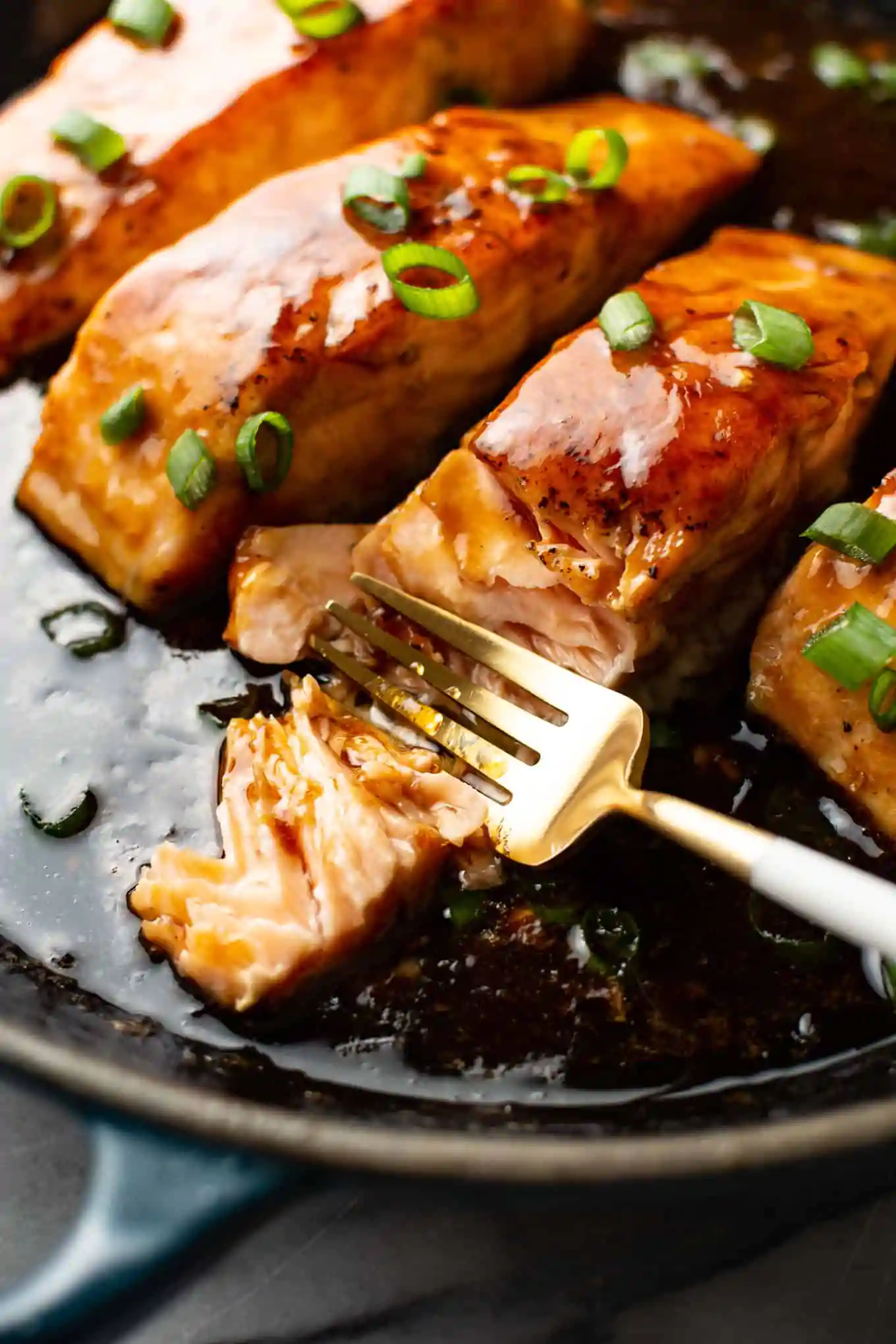
Maple glazed salmon pairs crisp-edged, pan-seared fish with a glossy sweet-savory sauce. Maple syrup, soy sauce, ginger and lemon give the glaze a balanced flavor, while butter makes it rich without hiding the salmon.
The recipe takes 30 minutes from start to finish and serves four. It is quick enough for a weeknight, but the shiny glaze and fresh scallion finish also make it a smart choice for a small dinner with guests.
Why This Maple Glazed Salmon Recipe Works
The method builds flavor in the same skillet, so the fish and glaze come together quickly without losing their distinct textures.
- Dry salmon sears better. Patting the pieces dry removes surface moisture that would otherwise steam the fish. A dry surface also helps the skin turn crisp in the hot skillet.
- The glaze balances sweet and savory. Maple syrup brings sweetness, while soy sauce and Worcestershire add salt and depth. Lemon juice and ginger keep the sauce from tasting heavy.
- Cornstarch gives the sauce body. Whisking it into the cold sauce ingredients helps prevent lumps. A brief bubble in the hot skillet thickens the glaze so it clings to the salmon.
- The skillet does double duty. Searing the fish first leaves savory browned bits in the pan. Butter and sauce pick up that flavor, making a more flavorful glaze without an extra pot.
- Finishing off the heat protects the glaze. Maple syrup can scorch if it cooks too long over high heat. Removing the skillet after a short bubble lets residual heat finish thickening the sauce.
Ingredients You’ll Need
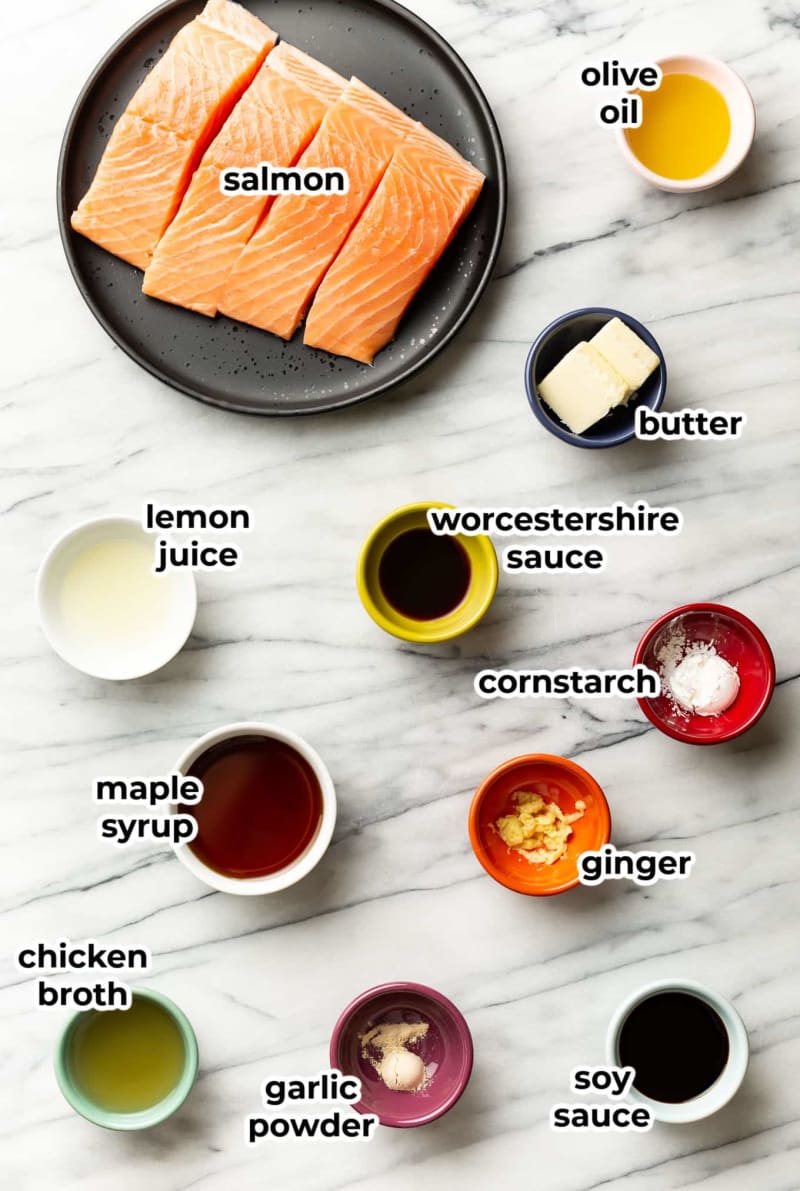
Use salmon pieces of similar thickness so they finish close together. The sauce ingredients are whisked into one mixture before the skillet gets hot.
- Fresh salmon: One pound, cut into four equal pieces. Choose evenly thick fillets; skin-on pieces can crisp nicely.
- Salt and pepper: Season to taste. Use enough to bring out the fish’s flavor, keeping in mind that soy sauce is salty.
- Olive oil: One tablespoon for searing. It helps coat the skillet and withstands the initial medium-high heat.
- Butter: Two tablespoons, divided between searing and the sauce. Unsalted butter gives you more control over saltiness.
- Chopped scallions: To taste, if desired, for a fresh, mild onion finish at serving.
- For the sauce: Three tablespoons maple syrup, one tablespoon soy sauce, 1/4 teaspoon garlic powder, 1/2 tablespoon lemon juice, 1/2 teaspoon grated fresh ginger, one teaspoon Worcestershire sauce, two tablespoons chicken broth or water, and one teaspoon cornstarch. Pure maple syrup gives the glaze its characteristic flavor.
Equipment You’ll Need
- Large skillet: Choose a skillet with room for all four salmon pieces in one layer, so they sear rather than steam.
- Medium bowl and whisk: Whisking the sauce before cooking disperses the cornstarch and keeps the mixture smooth.
- Fish spatula: A thin, flexible spatula helps turn the salmon without breaking its tender flesh.
- Paper towels: Use these to dry the fish thoroughly before seasoning and searing.
How to Make Maple Glazed Salmon
1. Prepare the salmon
If possible, take the salmon out of the refrigerator 15-20 minutes before you begin. Cut it into 4 equal pieces, pat each piece dry with a paper towel, then season with salt and pepper.
Pieces of similar thickness are easier to cook evenly. Dry the skin especially well if you want it crisp.
2. Whisk the sauce
Put the maple syrup, soy sauce, garlic powder, lemon juice, grated ginger, Worcestershire sauce, chicken broth or water, and cornstarch in a medium bowl. Whisk until the cornstarch is blended in.
Scrape the bottom and sides of the bowl so no starch remains settled there; give the sauce another quick whisk just before pouring.
3. Heat the skillet
Set a skillet over medium-high heat with the olive oil and 1 tablespoon of butter. Let the pan heat up for a few minutes.
The butter should melt and the oil should shimmer. If the butter starts browning heavily before the fish goes in, lower the heat slightly.
4. Sear the first side
Place the salmon in the skillet skin-side down. Cook for 5 minutes, then lower the heat to medium and turn each piece.
The fish should release more readily when the skin has seared. If it sticks, give it a little more time rather than forcing it.
5. Cook the second side
Cook the flipped salmon for another 2-3 minutes, until it is almost cooked through. Leave the pieces in place so the center can finish gently.
The outside will look opaque, while the very center may still be slightly translucent before the sauce goes in.
6. Thicken the glaze
Add the remaining butter and let it melt. Pour the sauce into the open spaces between the salmon pieces, let it bubble and thicken for 20-30 seconds or so, then remove the skillet from the heat.
Watch the sauce closely: it should turn glossy and begin to coat a spoon. The pan stays hot, so taking it off the burner helps prevent scorching.
7. Coat and serve
Turn the salmon over and spoon the glaze over the top. Serve immediately with chopped scallions if using; squeeze on extra lemon juice if desired. The skin is crispest right away, but you can peel it off if you prefer.
Spoon sauce from the skillet over each portion just before serving so every piece gets a glossy coating.
How to Tell When It’s Done
Salmon should look opaque around the sides and flake into moist sections when gently pressed with a fork. The center can retain a little translucence if you prefer it less cooked, but it should not look raw or feel cold.
For a temperature check, use an instant-read thermometer in the thickest part. The FDA recommends 145°F for fish; remove the salmon when it reaches that temperature, or cook to your preferred doneness while keeping in mind that the fish will continue to cook slightly in the hot skillet.
Tips and Common Mistakes
A few details help protect the crisp skin and keep the maple glaze smooth rather than sticky or scorched.
- Dry the fish well. Moisture on the surface slows browning and can make the skin stick. Blot the skin and flesh before seasoning.
- Keep the pieces in one layer. Crowded salmon releases steam and browns less effectively. Use a skillet large enough to leave some space around each piece.
- Start skin-side down. That gives the skin direct contact with the hot pan and time to crisp. Avoid repeatedly moving the fish while it sears.
- Whisk the sauce again. Cornstarch settles quickly, so stir it back into the liquid just before it goes into the skillet.
- Keep the glaze bubbling briefly. The sauce only needs 20-30 seconds or so to thicken. Longer cooking over heat can make the maple syrup scorch or turn overly sticky.
- Serve straight from the pan. The salmon skin loses crispness as it sits under sauce. Plate it promptly, then spoon on the glaze and garnish.
Substitutions and Variations
A few practical swaps work well, though the glaze’s balance will change slightly.
- Tamari: Use tamari in place of soy sauce for a similar savory flavor; choose a gluten-free version if needed.
- Coconut aminos: This can replace soy sauce for a less salty, slightly sweeter glaze. Taste before adding extra salt to the fish.
- Fresh garlic: Use a small amount of finely minced garlic instead of garlic powder. Add it with the sauce and watch closely so it does not burn.
- Ground ginger: If fresh ginger is unavailable, use a small pinch of ground ginger. Its flavor is warmer and less bright than freshly grated ginger.
- Water instead of broth: The recipe already allows either chicken broth or water. Water keeps the glaze lighter, while broth adds a little savory depth.
- Skinless salmon: Skinless fillets work with the same method, but they will not develop the crisp skin that makes the original especially appealing.
What to Serve with Maple Glazed Salmon
Serve with steamed rice, roasted broccoli, green beans or a crisp cucumber salad; each makes a good counterpoint to the sweet, buttery glaze. For more ideas, browse our chicken recipes and dinner recipes.
Make-Ahead, Storage and Reheating
Make ahead: Whisk the sauce ingredients together and refrigerate the mixture ahead of time; stir it well before cooking so the cornstarch is evenly mixed. For the best texture, cook the salmon just before serving rather than searing it in advance.
Storage: Refrigerate leftover salmon and sauce in a covered airtight container within 2 hours of cooking. Use within 3 to 4 days, following standard guidance for cooked fish and seafood.
Freezing: Freezing cooked salmon is possible, but the fish may become drier and the glaze can lose its smooth texture after thawing. If you freeze it, seal portions airtight and thaw overnight in the refrigerator.
Reheating: Warm leftovers gently in a covered skillet over low heat with a splash of water, turning once and spooning sauce over the fish. Avoid high heat, which can dry out the salmon and make the glaze scorch; cold leftovers also work flaked into a salad or rice bowl.
Maple Glazed Salmon FAQs
Can I use frozen salmon for maple glazed salmon?
Yes, but thaw it completely in the refrigerator first and pat it very dry. Ice or excess moisture will interfere with browning and can dilute the sauce.
Can I make the maple glaze without cornstarch?
Yes, but it will be thinner and less clingy. Simmer it briefly until reduced, watching closely because the maple syrup can burn.
How do I keep salmon from sticking to the skillet?
Let the pan heat with the oil and butter, then place dry fish skin-side down. Give it time to sear before turning; the skin usually releases more easily once browned.
Can I cook the salmon without the skin?
Yes. Sear the flesh side first and turn carefully, since skinless pieces are more delicate and will not have a crisp skin layer.
What if my salmon fillets are thicker than usual?
They may need longer than the stated cooking time. Keep the heat at medium after turning and check the thickest part for doneness before serving.
Can I double this recipe for a crowd?
Yes, but cook in batches if the salmon will not fit in one uncrowded layer. Make the glaze in a larger amount and combine it with the cooked pieces at the end.
Printable Recipe
Recipe adapted from Salt & Lavender. Photos courtesy of Salt & Lavender, used with permission.

Maple Glazed Salmon
Ingredients
- 1 pound fresh salmon
- Salt & pepper to taste
- 1 tablespoon olive oil
- 2 tablespoons butter divided
- For serving: chopped scallions optional, to taste
Sauce:
- 3 tablespoons maple syrup
- 1 tablespoon soy sauce
- 1/4 teaspoon garlic powder
- 1/2 tablespoon lemon juice
- 1/2 teaspoon fresh ginger grated
- 1 teaspoon Worcestershire sauce
- 2 tablespoons chicken broth or water
- 1 teaspoon cornstarch
Instructions
- Take the salmon out of the fridge 15-20 minutes prior to starting the recipe if possible. Cut the salmon into 4 equal pieces and pat dry with paper towel. Season with salt & pepper.
- Add the sauce ingredients to a medium bowl and whisk together.
- Add the olive oil and 1 tablespoon of the butter to a skillet over medium-high heat. Let the pan heat up for a few minutes.
- Cook the salmon (skin-side down) for 5 minutes, then reduce the heat to medium and flip the salmon and cook it for another 2-3 minutes (should be almost cooked through).
- Add the remaining butter to the skillet and let it melt, then pour in the sauce (just pour it in between the salmon pieces). Let it bubble/thicken for 20-30 seconds or so, and then take the pan off the heat (the pan will still be hot and the sauce will continue to thicken, but this avoids burning it). Flip the salmon over & spoon the sauce over top.
- Serve immediately with chopped scallions if using. Squeeze on some extra lemon juice if desired. The salmon skin will be nice and crispy and is delicious when you eat it right away, but feel free to peel it off it you prefer.
Notes
- Timing is for salmon that’s about 1″ thick. If your salmon is thicker or thinner, you may need to adjust cooking time a bit.


