Meatballs and Gravy


Meatballs and gravy brings browned, tender beef-and-pork meatballs together with a smooth, savory pan gravy. The meatballs brown in a skillet first, then simmer in the same pan so their crisp edges and browned bits give the sauce deeper flavor.
Prep takes 20 minutes, cooking takes 25 minutes, and the recipe serves 6. It makes a cozy family dinner, and the gravy is just as welcome over mashed potatoes on a chilly evening as it is spooned over noodles for a casual gathering.
Why This Meatballs and Gravy Recipe Works
Browning the meat and building the gravy in the same pan makes a straightforward dinner taste layered and rich.
- The beef and pork balance each other. Ground beef brings a hearty flavor, while pork adds fat that helps keep the meatballs tender. Using both also gives the gravy flavorful drippings to build on.
- Breadcrumbs and egg hold the meatballs together. The seasoned crumbs absorb some of the meat juices, while the egg binds the mixture. Together, they help the meatballs stay intact when you turn and simmer them.
- The roux thickens the gravy smoothly. Cooking flour briefly in melted butter helps it blend into the broth without a raw flour taste. Whisking in the broth gradually gives the sauce a better chance of turning lump-free.
- The meatballs finish in the gravy. Simmering them in the sauce lets them cook through while the gravy thickens around them. It also means the pan juices become part of the finished sauce.
Ingredients You’ll Need
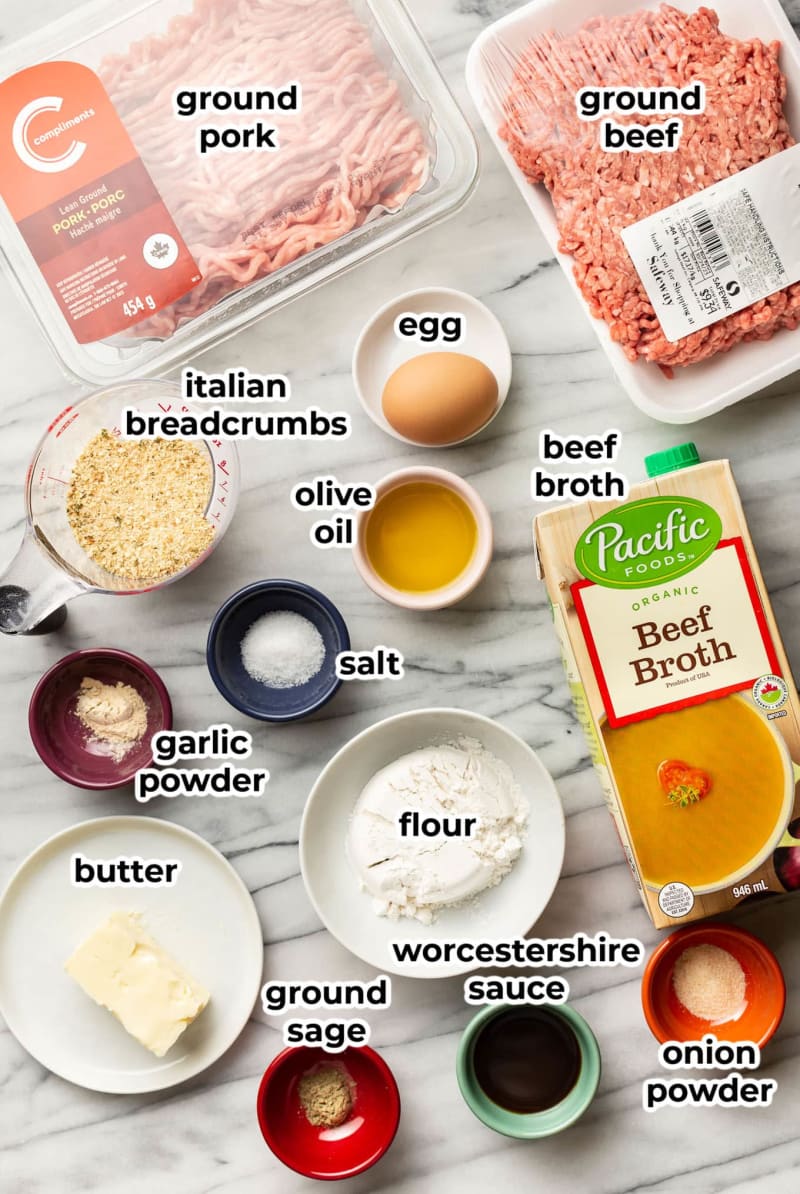
The ingredient list is split between the meatballs and the gravy. Measure the broth before you start so it is ready to whisk in as soon as the roux is golden.
- For the meatballs: Use 1 pound ground beef and 1 pound ground pork for a flavorful, tender mix. Add 1 large egg and 1/2 cup Italian seasoned breadcrumbs to bind it; season with 1 teaspoon salt, 1/2 teaspoon garlic powder and pepper to taste. Keep 2 tablespoons olive oil for frying.
- For the gravy: Melt 1/4 cup butter, or 1/2 stick, with 1/3 cup flour to make the roux. Whisk in 3 cups beef broth, then season with 1 tablespoon Worcestershire sauce, 1/2 teaspoon onion powder and 1/4 teaspoon ground sage. Finish with 1 tablespoon chopped fresh parsley if desired.
Equipment You’ll Need
- Large mixing bowl: A roomy bowl makes it easier to combine the meat without squeezing it into a dense mixture.
- Parchment-lined baking sheet: Use it to hold the shaped meatballs while you fry them, with less cleanup afterward.
- Large deep skillet or Dutch oven: Choose a pan wide enough to brown the meatballs in batches and deep enough to hold them in gravy.
- Tongs and whisk: Tongs help you turn the meatballs; a whisk breaks up flour as you add broth.
- Instant-read thermometer: Check the center of a meatball for a reliable doneness reading.
How to Make Meatballs and Gravy
1. Mix the meatball mixture
In a fairly large bowl, combine the ground beef, ground pork, egg, breadcrumbs, salt, garlic powder and pepper with your hands. Mix only until everything is evenly distributed.
Stop once the mixture holds together; working it too much can make the meatballs firm.
2. Shape the meatballs
Form 1 ¼–1 ½-inch meatballs, using about 2 ½ tablespoons of meat for each. The mixture should make approximately 25–30 meatballs. Set them on a parchment-lined baking sheet or a couple of plates.
Aim for similar-sized pieces so they brown and cook at a similar pace.
3. Brown the meatballs
Pour the olive oil into a large, deep skillet or Dutch oven and warm it over medium-high heat for a few minutes. Brown the meatballs in two batches, turning with tongs, for about 5–7 minutes per batch. Add a splash more oil for the second batch if the pan looks dry, then transfer the browned meatballs to a plate.
Look for browned surfaces on all sides; the centers will finish cooking later in the gravy.
4. Keep the browned bits
Pour off most of the fat from the pan, but leave the browned bits in place. Do not wipe out the skillet; those bits add flavor to the sauce.
If the bits are black rather than brown, remove them so they do not make the gravy taste scorched.
5. Cook the roux
Turn the heat down to medium and add the butter. When it has melted, sprinkle in the flour and stir frequently for a few minutes, until the mixture takes on a golden color.
The roux should look smooth and lightly golden, not dark brown or burnt.
6. Whisk in broth and seasonings
Pour in the beef broth slowly while whisking, taking care to blend the flour mixture into the liquid. Whisk in the Worcestershire sauce, onion powder and ground sage.
Scrape around the base and edges of the pan to loosen the browned bits and incorporate them.
7. Simmer until cooked through
Return the meatballs to the skillet and cook for about 10 minutes, or until they are cooked through and the gravy has thickened to your liking.
Keep the sauce at a gentle simmer. If it boils hard, lower the heat so the gravy does not reduce too quickly.
8. Season and serve
Taste the gravy and add extra salt and pepper as needed. Sprinkle with fresh parsley if using, then serve immediately.
Taste before adding salt because the broth and Worcestershire sauce may already season the gravy well.
How to Tell When It’s Done
The meatballs should look browned on the outside and feel firm but not hard. Cut one open if you need a visual check: the center should not look raw, and the texture should be cooked through rather than soft and paste-like.
For the most reliable check, use an instant-read thermometer in the center of a meatball; ground beef and pork should reach 160°F. If the center is not there yet, let the meatballs continue simmering in the gravy and check again.
Tips and Common Mistakes
A few small details help the meatballs brown evenly and keep the gravy smooth.
- Mix the meat gently. Combine the ingredients only until they hold together. A heavily worked mixture can turn dense, especially once it is shaped into small meatballs.
- Keep the pieces a similar size. Even sizing helps them brown and finish at the same pace. If some are much larger, they may need more time in the simmering gravy.
- Brown in two batches. Crowding the skillet traps steam and makes it harder to color the meatballs. Give each batch room to make contact with the hot pan.
- Save the browned bits. Pour off most of the fat, not the flavorful residue. Leaving those bits behind gives the gravy a deeper, meatier base.
- Whisk the broth in slowly. A steady pour while whisking helps the flour disperse instead of forming lumps. Pause to whisk out any thick patches before adding more liquid.
Substitutions and Variations
You can adapt the meat blend or seasonings, though each change shifts the flavor or texture a little.
- All ground beef: Use ground beef in place of the beef-and-pork combination. The meatballs will have a more straightforward beef flavor and may be a little less tender.
- All ground pork: Ground pork can replace both meats for a softer, milder meatball. Keep an eye on the skillet, since its fat may render differently.
- Plain breadcrumbs: Use plain crumbs instead of Italian seasoned breadcrumbs, then add a pinch of dried Italian herbs if you want to retain that seasoned flavor.
- Gluten-free breadcrumbs: A gluten-free crumb works as a binder in the meatballs. Use a gluten-free flour blend for the roux as well, and check that your Worcestershire sauce is suitable.
- Dried parsley: Skip the fresh parsley or use a small pinch of dried parsley in the gravy. Fresh parsley is mainly a bright garnish, so leaving it out will not change the sauce structure.
- More herbs: A little dried thyme can complement the sage in the gravy. Add it sparingly so it does not overpower the beef and Worcestershire.
What to Serve with Meatballs and Gravy
Spoon the meatballs and gravy over mashed potatoes, buttered egg noodles or steamed rice so each serving has something to catch the sauce. Roasted carrots, green beans or a simple green salad add freshness alongside the rich gravy.
For a comforting dinner spread, pair the skillet with a vegetable side and browse our dinner recipes or beef recipes for more ideas.
Make-Ahead, Storage and Reheating
Make ahead: Shape the meatballs ahead and refrigerate them covered until you are ready to cook. For best texture, brown them and make the gravy just before serving rather than holding the finished dish for a long time.
Storage: Refrigerate cooled meatballs and gravy in an airtight container for 3 to 4 days. Do not leave the cooked dish at room temperature for more than 2 hours.
Freezing: Freeze the cooled meatballs with their gravy in a sealed freezer-safe container. Thaw overnight in the refrigerator; the gravy may separate slightly, but gentle reheating and stirring will help bring it back together.
Reheating: Warm the meatballs and gravy in a covered skillet over low heat, stirring gently and adding a splash of broth if the sauce has become too thick. Heat until steaming throughout, taking care not to boil the gravy hard.
Meatballs and Gravy FAQs
Can I bake the meatballs instead of frying them?
Yes. Bake them on a lined sheet until browned and cooked through, then add them to the prepared gravy; the skillet will have fewer browned bits, so the sauce may taste a little less rich.
Can I make the meatballs smaller?
Yes. Smaller meatballs are easy to serve over noodles or potatoes, but they will cook faster, so check them earlier during the simmer.
What can I use instead of beef broth?
You can use chicken broth, though the gravy will have a lighter flavor. Choose a broth you enjoy on its own, since it makes up most of the sauce.
Why is my gravy lumpy?
Lumps usually form when broth is added too quickly or the roux is not whisked thoroughly. Keep whisking as you pour, and press any remaining lumps against the side of the pan with the whisk.
Can I double this recipe?
Yes, but brown the meatballs in batches so they have room to sear. Use a larger pot for the gravy, or prepare it in batches if your skillet cannot hold the full amount comfortably.
What does the sage add to the gravy?
Ground sage gives the sauce a warm, earthy note that suits the beef and pork. If you prefer a more classic beef-gravy flavor, reduce it or leave it out.
Printable Recipe
Recipe adapted from Salt & Lavender. Photos courtesy of Salt & Lavender, used with permission.

Meatballs and Gravy
Ingredients
Meatballs:
- 1 pound ground beef
- 1 pound ground pork
- 1 large egg
- 1/2 cup Italian seasoned breadcrumbs
- 1 teaspoon salt
- 1/2 teaspoon garlic powder
- Pepper to taste
- 2 tablespoons olive oil (for frying)
Sauce:
- 1/4 cup butter (1/2 stick)
- 1/3 cup flour
- 3 cups beef broth
- 1 tablespoon Worcestershire sauce
- 1/2 teaspoon onion powder
- 1/4 teaspoon ground sage
- 1 tablespoon chopped fresh parsley optional
Instructions
- Add all the meatball ingredients (except for the olive oil) to a fairly large prep bowl. Using your hands, mix it together and then form 1 ¼ – 1 ½-inch meatballs (use about 2 ½ tbsp meat/meatball and it'll make approx. 25-30 meatballs). Place the meatballs on a parchment-lined baking sheet for easy clean-up (or use a couple of plates).
- Add the olive oil to a large and deep skillet or a Dutch oven/pot and let it heat up for a few minutes over medium-high heat. Fry the meatballs in two batches until all sides are browned (about 5-7 minutes/batch). It's easiest to turn the meatballs with tongs. You may need to add a splash more oil for the second batch. Transfer meatballs to a plate.
- Pour out most of the fat from the skillet, but keep the browned bits in for extra flavor (don't wipe it out).
- Reduce the heat to medium and add the butter to the skillet. Once it’s melted, stir in the flour and cook, stirring often, for a few minutes until the roux starts to turn golden.
- Slowly whisk the beef broth in, and ensure the flour has dissolved into the sauce.
- Whisk in the Worcestershire sauce, onion powder, and ground sage.
- Add the meatballs back to the pan and cook for about 10 minutes or until the meatballs are cooked through and the gravy thickens to your liking.
- Season with extra salt & pepper as needed. Sprinkle with fresh parsley if using and serve immediately.


