Mississippi Pot Roast


Mississippi pot roast is a slow-cooked beef chuck roast that turns tender enough to pull apart with forks. Pepperoncini juice brings a bright, tangy edge to the rich butter, ranch seasoning and au jus, while searing gives the beef a savory browned exterior.
Prep takes 5 minutes and the recipe serves 6. Choose the oven (3-4 hours), the slow cooker (8 hours on low) or a pressure cooker (60 minutes at high pressure plus release time), then spoon the beef and juices over potatoes, rice or sandwich rolls.
Why This Mississippi Pot Roast Recipe Works
A few simple choices build flavor and turn a tough cut tender.
- Searing adds deep flavor. Browning creates savory bits that enrich the cooking juices.
- Pepperoncini balance the richness. The peppers and their brine add acidity and a mild, tangy flavor to butter and beef. The brine also helps season the liquid around the roast.
- Seasoning packets flavor the juices. Au jus and ranch mixes add salt, herbs and savory depth that mingle with the butter and beef juices.
- Low, covered heat softens the beef. A covered pot traps moisture while the connective tissue breaks down. Rushing the oven method at a higher temperature can leave the meat less tender.
Ingredients You’ll Need
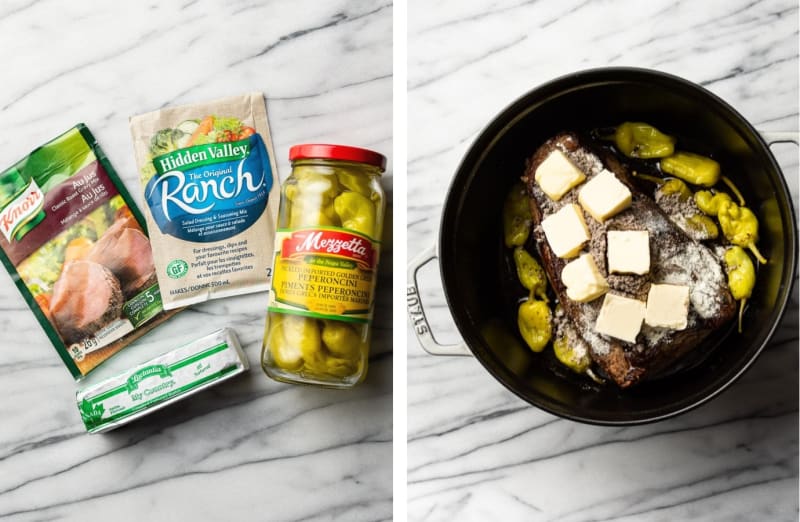
The ingredient list is short, but the cut of beef and the pepperoncini brine make a noticeable difference. Keep the roast covered as it cooks so it can soften in its flavorful juices.
- Olive oil: Two tablespoons for searing; any neutral cooking oil works.
- Beef chuck roast: Three to four pounds. Choose a well-marbled, tougher cut rather than lean beef so it can become tender during the long cook.
- Pepperoncini and brine: Twelve peppers plus a quarter cup of jar juice bring mild tang and acidity. Use the brine from the pepper jar, not plain vinegar.
- Au jus gravy mix: One 1-ounce packet, sprinkled straight over the roast for a concentrated savory base.
- Ranch seasoning mix: One 1-ounce packet supplies herbs and seasoning. Packet brands can vary in saltiness, so taste the finished juices before adding extra salt.
- Unsalted butter: Half a cup, or one stick, cut into pieces and placed over the roast. Unsalted butter lets the seasoning packets control the salt level.
Equipment You’ll Need
- Electric pressure cooker: The Instant Pot method uses its sauté setting to brown the beef before pressure cooking.
- Two forks: They make it easy to pull the cooked roast into shreds and toss the meat with its juices.
How to Make Mississippi Pot Roast
1. Choose a cooking method
For the oven, heat to 275F and set a rack in the middle position. For the slow cooker, plan to cook on low for 8 hours. For the Instant Pot, cut the roast into 3-4 pieces before browning.
The oven and slow cooker methods keep the roast in one piece; smaller pieces help the pressure cooker method brown and cook more evenly.
2. Sear the roast
For the oven, warm the olive oil in a Dutch oven over medium-high heat. For the slow cooker, use a skillet over medium-high heat; for the Instant Pot, use the sauté setting. Brown all sides, working in two batches in the Instant Pot if needed.
Look for browned patches rather than a gray surface. If using a skillet for the oven method, transfer the beef to a covered roasting dish after searing.
3. Add the brine and peppers
For oven cooking, take the pot off the heat and let it cool for a couple minutes before adding the pepperoncini juice. In the slow cooker, transfer in the seared roast and pour the juice over it. For the Instant Pot, turn off sauté, return all the meat to the pot, then add 3/4 cup of water and the pepperoncini juice.
Keep the brine in the pot rather than pouring it over the outside of the cooker. In the pressure cooker, the added water supplies the cooking liquid.
4. Season and top the beef
Arrange the peppers around the roast. Sprinkle the au jus and ranch packets over the meat, then place the butter pieces on top. In the Instant Pot, add all the meat before arranging the peppers and seasonings.
Spread the seasonings across the exposed surface so they can flavor the whole pot as the butter melts.
5. Cook using the oven
Cover the Dutch oven or roasting dish and roast at 275F for 3-4 hours, until the beef is fall-apart tender. A 3 lb. roast takes about 3.5 hours in the oven.
Keep the lid on while it cooks to hold in moisture. Check tenderness with a fork near the end of the stated range.
6. Cook using the slow cooker
Cover the slow cooker and cook on low for 8 hours, or until the meat pulls apart easily. Keep the lid on during cooking to avoid losing heat and moisture.
The roast should yield readily to a fork when it is ready to shred. If it still feels firm, continue cooking until it loosens.
7. Cook using the Instant Pot
Close the lid and set the valve to sealing. Cook at high pressure for 60 minutes, then allow the pressure to release naturally for 15 minutes before quick-releasing the remaining pressure.
Wait until the pressure indicator drops before opening the lid. Keep your hands and face clear of the steam during the quick release.
8. Shred and coat the beef
Use two forks to pull the beef apart right in the pot, then toss the shreds through the cooking juices. Remove any large pieces of fat you do not want in the serving dish.
Properly tender beef separates with little effort. If it resists the forks, cover it again and cook until it is easy to pull apart.
How to Tell When It’s Done
The defining sign is texture, not just the clock: the roast should pull apart easily when pressed with a fork. The meat will look deeply cooked and moist, and the juices should coat the shreds when you toss them together.
If the meat is tender but the pot looks watery, shred the beef and stir it through the juices so the seasoning coats each piece. Taste before adding any extra salt, since both seasoning packets contribute salt.
Tips and Common Mistakes
A few practical details help the roast brown well, stay moist and reach the texture that makes it easy to serve.
- Choose a marbled roast. Chuck with visible fat and connective tissue suits a long cook; lean beef dries out first.
- Brown every side. Searing deepens the juices. Skipping it still works, with less savory flavor.
- Keep the oven heat low. Hurrying the roast at a higher temperature leaves it less tender.
- Keep the lid in place. Lifting the lid lets out heat and moisture, so check only near the end.
- Scale oven time thoughtfully. For a roast larger than 3-4 pounds, the general guide is one hour per pound at 275F-300F. Use fork tenderness as the final check rather than relying on time alone.
Substitutions and Variations
You can change the cut or cooking setup, but keep the tenderizing method slow and choose a roast with enough fat.
- Another chuck cut: A similarly tough, well-marbled beef roast can work if chuck is unavailable. Avoid lean cuts, which are more likely to become dry.
- Milder pepper flavor: Use fewer peppers but keep the measured brine for a softer pepper flavor.
- No Dutch oven: Sear in a skillet, then move the roast to a covered roasting dish for the oven.
- Skip the sear: Put the roast straight into the pot. It will still turn tender, with a less browned flavor.
- Pork shoulder: Boneless pork shoulder makes a pork version with the same seasonings and a similarly long, gentle cook.
What to Serve with Mississippi Pot Roast
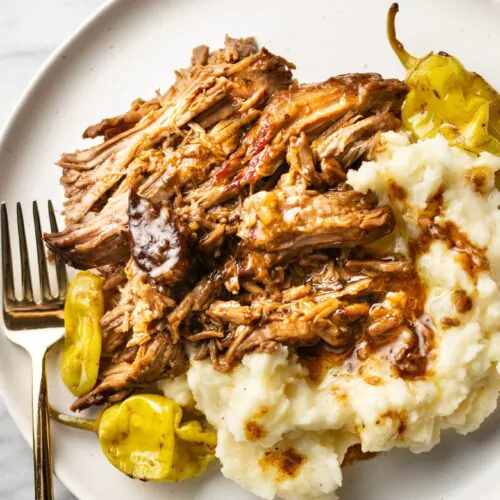
Serve the shredded beef and its juices over mashed potatoes, egg noodles or rice, which soak up the tangy, savory sauce. Roasted carrots, green beans or a crisp salad add freshness alongside the rich meat.
For sandwiches, pile the roast onto sturdy rolls and spoon on a little cooking liquid. Pair it with our dinner recipes or browse beef recipes for more meal ideas.
Make-Ahead, Storage and Reheating
Make ahead: Cook and shred the roast up to 3-4 days ahead, then refrigerate it in its juices so the meat stays moist. Reheat gently before serving.
Storage: Cool leftovers promptly and refrigerate them in a covered airtight container with the cooking juices for 3-4 days. Do not leave cooked beef at room temperature for more than 2 hours.
Freezing: Freeze the shredded roast with enough cooking liquid to coat it in an airtight freezer-safe container. Thaw it in the refrigerator before reheating; the texture may soften slightly, but the juices help keep it moist.
Reheating: Warm the beef with its juices in a covered saucepan over low heat, or covered in a low oven, until hot throughout.
Mississippi Pot Roast FAQs
Can I make Mississippi pot roast without searing it?
Yes. Skip the browning and add the roast directly, but expect less savory depth in the juices.
Can I use a lean roast for Mississippi pot roast?
No. A tougher, fattier cut like chuck stays moist and turns fork-tender; lean roasts dry out.
How much longer should I cook a roast larger than four pounds?
Plan on roughly one hour per pound at 275F-300F, and check that it pulls apart easily.
Can I make this in a pressure cooker without cutting the roast?
Cutting it into 3-4 pieces is part of the pressure-cooker method, because smaller pieces brown in batches and cook evenly.
Why is my pot roast still tough?
It likely needs more cooking time. Cover it and continue cooking until a fork can pull the meat apart easily; a roast can be cooked through before its connective tissue has softened.
How can I make the cooking juices less salty?
Use unsalted butter as listed and taste before adding any salt, since both seasoning packets are salty.
Printable Recipe
Recipe adapted from Salt & Lavender. Photos courtesy of Salt & Lavender, used with permission.
Mississippi Pot Roast
Ingredients
- 2 tablespoons olive oil
- 3-4 pounds beef chuck roast
- 12 pepperoncini peppers + 1/4 cup of the juice from the jar
- 1 (1 ounce) packet au jus gravy mix
- 1 (1 ounce) packet ranch seasoning mix I use Hidden Valley
- 1/2 cup unsalted butter (1 stick) cut into pieces
Instructions
Oven Instructions:
- Preheat your oven to 275F and move the rack to the middle position.
- Add the olive oil to your Dutch oven over medium-high heat and sear the roast on all sides until nicely browned. If you don't own a Dutch oven, sear the meat in a skillet then transfer it to a covered roasting dish.
- Take the pot off the heat and let it cool down for a couple minutes, then pour in the pepperoncini juice. Place the peppers around the roast, sprinkle the roast with the au jus and ranch packets, and then place the butter on top of the roast.
- Cover and roast for 3-4 hours or until it's fall-apart tender, then shred it with 2 forks right in the pot and toss with the juices. I roast a 3 lb. cut of beef for 3.5 hours.
Crockpot Instructions:
- Add the olive oil to a skillet over medium-high heat and sear the roast on all sides until browned.
- Transfer the roast to a slow cooker. Pour in the pepperoncini juice. Place the peppers around the roast, sprinkle the roast with the au jus and ranch packets, and then place the butter on top of the roast.
- Cover and slow cook on low for 8 hours or until it's fall-apart tender, then shred it with 2 forks.
Instant Pot Instructions:
- Cut the roast into 3-4 pieces.
- Add the olive oil to your Instant Pot and press the sauté button. Sauté the meat until browned on all sides (you'll likely need to do two batches).
- Turn the sauté button off. Add all the meat to the Instant Pot, plus 3/4 cup of water and the pepperoncini juice. Place the peppers around the roast, sprinkle the roast with the au jus and ranch packets, and then add the butter on top of the roast.
- Close the lid, ensure the valve is on "sealing", and set the timer to cook for 60 minutes on high pressure.
- Let the pressure release naturally for 15 minutes then quick release the rest. Shred the meat with two forks.
Notes
- The general rule is one hour per pound at 275F-300F, so if roasting a cut of meat that’s larger than 3-4 pounds, gauge it with that rule.
- Be sure to use a tougher, fattier cut of beef (don’t use something lean) or it’ll end up dry. You could make this a pork roast instead using boneless pork shoulder.
- I do not recommend cooking the roast any faster at a higher heat. It won’t end up as tender.
- If you really need to, you can skip the searing step, but the overall dish will be less flavorful.
- This recipe also can be found on page 35 of the Salt & Lavender: Everyday Essentials cookbook.


