Mostaccioli


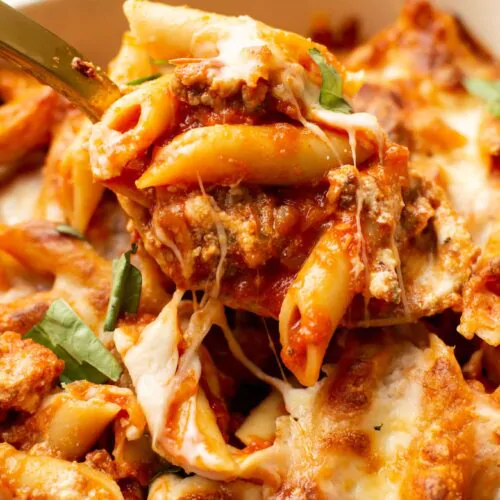
Mostaccioli is a hearty baked pasta layered with browned Italian sausage, marinara, mozzarella and a creamy ricotta mixture. The pasta stays substantial under its bubbling, browned cheese, while the ricotta gives each serving a soft, savory center.
This version takes 15 minutes to prep and 50 minutes to cook, makes 8 servings, and is a practical choice for a family dinner or a potluck. The sausage sauce and cheese layers bring lasagna-style comfort without building individual layers of noodles.
Why This Mostaccioli Recipe Works
A few choices make this baked mostaccioli cohesive instead of soft or dry. Here is what each one contributes.
- Brown the sausage first. Cooking the meat with onion develops savory browned bits before the marinara goes in. Breaking it up as it cooks distributes sausage through the whole dish.
- Drain excess fat. Removing extra rendered fat keeps the sauce from becoming greasy while retaining the sausage’s flavor. This also helps the layers settle neatly in the baking dish.
- Keep the ricotta in the middle. Dollops between the pasta layers make a creamy, seasoned center in each portion. The ricotta mixture stays distinct instead of disappearing into the tomato sauce.
- Finish under the broiler. A brief broil adds browned spots to the mozzarella after the casserole has heated through. Watch closely, since the cheese can go from golden to too dark quickly.
Ingredients You’ll Need
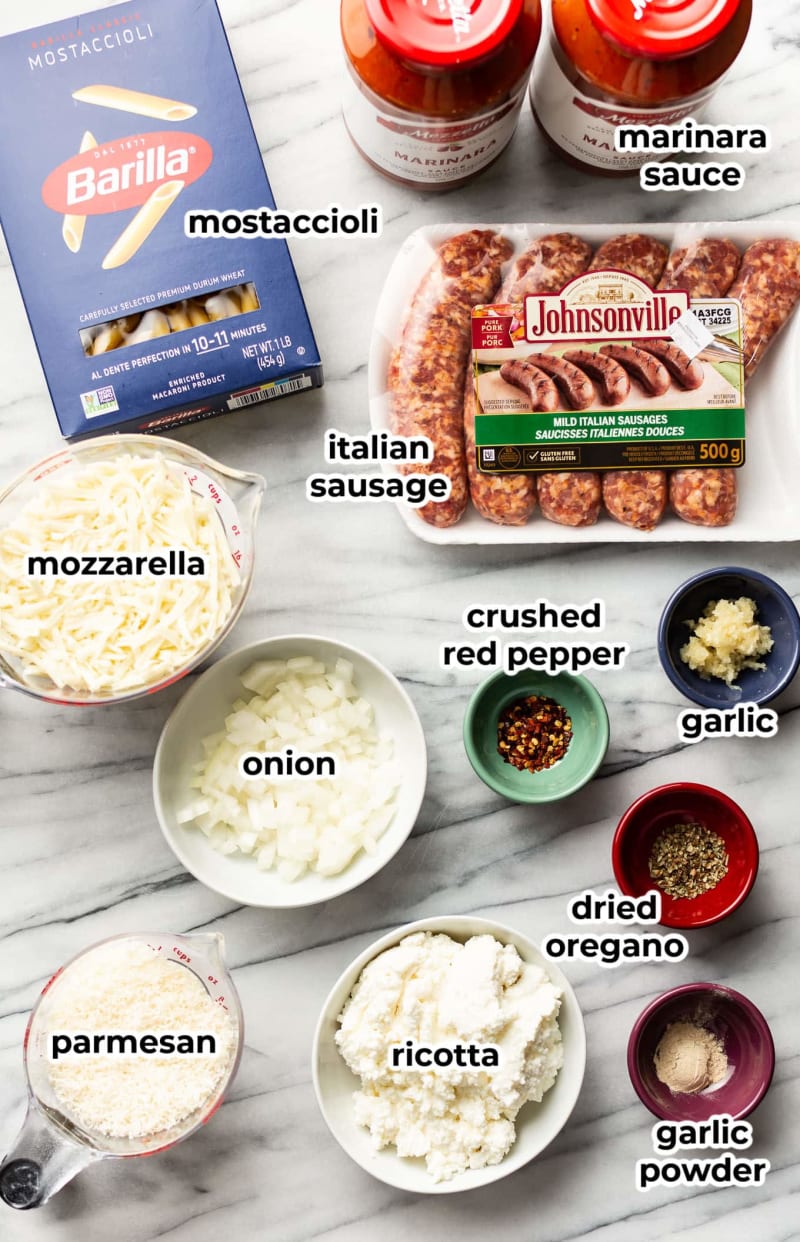
Mostaccioli uses familiar pasta-bake ingredients, with a seasoned ricotta layer tucked into the middle. The quantities below make a generous casserole for eight.
- Mostaccioli pasta: One pound, uncooked. Penne or ziti also works; look for ridged pasta if you want extra sauce-catching texture.
- Italian sausage: One pound of ground sausage meat, or remove the meat from sausage casings. Choose mild or spicy to suit your preference.
- Onion: Half a medium onion, chopped, adds sweetness and savory depth as it cooks with the sausage.
- Garlic: Four cloves, minced, give the sauce a fresh, aromatic base. Add it after the sausage browns so it does not scorch.
- Red pepper flakes: Half a teaspoon, optional. They add a gentle heat; leave them out for a milder casserole.
- Marinara sauce: Two 24-ounce jars provide enough sauce to coat the pasta and keep it moist during baking. Use a variety you enjoy eating.
- Mozzarella cheese: Two cups, shredded, cover the top with a stretchy, browned layer. Low-moisture mozzarella is easy to shred and browns well.
- Salt and pepper: Season to taste, checking the finished casserole before adding more because the sausage, sauce and cheeses may already be salty.
- Fresh basil and/or parsley: Optional, for serving. Chopped herbs add a fresh finish that balances the rich sausage and cheese.
- For the cheese layer: Combine 8 ounces ricotta, 1 cup freshly grated parmesan, 1/2 teaspoon garlic powder and 1/2 teaspoon dried oregano for a savory, spoonable middle.
Equipment You’ll Need
- Large pot: Use it to boil the pasta, then return the drained noodles to the same pot for tossing with sauce.
- Medium bowl: A bowl gives you room to stir the ricotta, parmesan and seasonings into a smooth mixture.
- Large skillet: The sausage and onion need enough room to brown and release excess fat before the sauce is added.
- 9×13-inch baking dish: This size holds the two pasta layers and ricotta filling in an even casserole.
- Tongs or two large spoons: Either tool makes it easier to coat the pasta evenly with sausage and marinara.
How to Make Mostaccioli
1. Heat the oven
Set the oven to 375°F and place a rack in the top third.
Starting with the oven ready means the assembled casserole can go straight in once the layers are built.
2. Mix the cheese layer
Stir the ricotta, grated parmesan, garlic powder and dried oregano together in a medium bowl until smooth. Set the mixture aside.
A uniform mixture is easier to spoon in small portions across the pasta.
3. Boil the pasta
Bring a large pot of salted water to a boil and cook the pasta for 2 minutes less than the package recommends. Drain it, then return it to the pot.
The noodles should still have a little firmness because they will finish cooking in the oven.
4. Brown the sausage
While the pasta cooks, put the sausage and chopped onion in a skillet over medium-high heat. Break up the meat as it cooks for about 10 minutes, until browned and cooked through.
There should be no raw-looking sausage remaining; smaller crumbles will spread more evenly through the casserole.
5. Add garlic and pepper
Stir the minced garlic and optional red pepper flakes into the skillet. Cook for about a minute, then drain off the excess fat.
The garlic should smell fragrant, not browned. Take care when pouring away the hot fat.
6. Coat the pasta
Add the sausage mixture and both jars of marinara to the pot with the pasta. Toss with tongs or two large spoons until the noodles are evenly covered.
Look for sauce between the noodles as well as on their surfaces; an even coating helps prevent dry pockets.
7. Build the first layer
Spread half of the sauced pasta in an even layer in a 9×13-inch baking dish. Spoon the ricotta mixture over it in small dollops.
The ricotta does not need to form a perfectly continuous sheet; distribute the dollops so each serving can get some.
8. Add pasta and mozzarella
Spread the remaining pasta mixture over the ricotta, then cover the top with the shredded mozzarella.
Smooth the pasta gently to the edges so the top layer heats evenly.
9. Bake and brown
Bake uncovered for 20 minutes. Broil for a few minutes, watching carefully, until the cheese is bubbly and browned.
Stay by the oven during broiling; the cheese should have golden patches without becoming dark or scorched.
10. Season and serve
Taste and add salt and pepper if needed. Finish with fresh basil and/or parsley, if desired.
Check the seasoning before serving, since the cheeses and sausage can contribute plenty of salt.
How to Tell When It’s Done
The casserole is ready when the mozzarella is melted and bubbling, with browned spots after broiling. The edges should be hot and the sauce should show a gentle simmer rather than looking watery.
The pasta should be tender but still hold its shape. If the top is browned but the center is not hot, return the dish to the oven and continue baking until heated through; avoid extending the broil, which can scorch the cheese.
For a clear check, slide a serving spoon into the center and look for steaming pasta and hot sauce around the ricotta. If the noodles still feel firm, bake longer before broiling the top.
Tips and Common Mistakes
These details help the pasta bake evenly and keep its layers distinct.
- Salt the pasta water. The noodles are the base of the casserole, and seasoning the cooking water helps them taste good throughout rather than relying only on the sauce.
- Use a large pot. The pasta needs room to move in boiling water, and the same pot makes tossing in the sauce easier once it is drained.
- Break the sausage into small pieces. Even crumbles spread through the pasta and make portions easier to serve than large clumps of meat.
- Drain the sausage fat. Leaving a pool of grease in the skillet can make the sauce slick. Drain the excess after the garlic has cooked.
- Broil with the oven in view. The final browning step takes only a few minutes and can happen quickly. Pull the dish as soon as the cheese is bubbly and browned.
Substitutions and Variations
You can adjust the pasta, sausage and cheese while keeping the same layered method.
- Mild sausage: Use mild Italian sausage if you want the tomato and herbs to lead. Add the red pepper flakes only if you want extra heat.
- Spicy sausage: Spicy Italian sausage adds heat throughout the meat layer. Consider omitting the optional pepper flakes to keep the flavor balanced.
- Sausage links: Links work if you remove the casings and crumble the meat into the skillet. The filling cooks the same way as ground sausage.
- Part-skim ricotta: Part-skim ricotta can replace whole-milk ricotta, though the middle layer may be a little less rich. Stir it thoroughly with the seasonings.
- Fresh herbs: Basil, parsley or a mix can finish the dish. Add them after baking so their fresh flavor and color stay noticeable.
What to Serve with Mostaccioli
Serve mostaccioli with a crisp green salad or roasted vegetables to balance the rich sausage and cheese. Garlic bread is a natural choice for catching extra marinara, while steamed broccoli makes the meal feel lighter.
For more dinner inspiration, browse our dinner recipes or find more ideas in our chicken recipes.
Make-Ahead, Storage and Reheating
Make ahead: You can assemble the casserole, cover it and refrigerate it before baking. For the best texture, cook the pasta just short of the package timing and wait to bake until serving; if assembling cold, allow extra time for the center to heat through.
Storage: Cool leftovers promptly and store them covered in an airtight container in the refrigerator for 3 to 4 days. Refrigerate within 2 hours of serving.
Freezing: Freeze baked portions in airtight, freezer-safe containers for up to 3 months. Thaw overnight in the refrigerator; the pasta may soften slightly, but the sauce and cheese still reheat well.
Reheating: Reheat individual portions in the microwave until steaming, or warm a larger amount covered in a 350°F oven until hot throughout. Uncover near the end if you want to refresh the browned cheese.
Mostaccioli FAQs
What does mostaccioli mean?
Mostaccioli is a tube-shaped pasta similar to penne. It is sometimes sold as penne lisce, and either smooth or ridged tubes work in this casserole.
Can I make mostaccioli without sausage?
Yes. Leave it out for a meatless bake, or replace it with sautéed mushrooms for a savory filling; the finished casserole will be less meaty.
Can I assemble this casserole the night before?
Yes. Cover the assembled dish and refrigerate it overnight, then bake until the middle is hot before broiling the top.
Can I use a different baking dish?
Yes, provided it can hold the layered pasta and is safe for the oven. A deeper or smaller dish may need different baking time, so check that the center is hot before serving.
How do I keep mostaccioli from becoming watery?
Drain the sausage fat and avoid cooking the pasta until fully tender before baking. These steps limit excess liquid and help the noodles retain their structure.
How many people does this mostaccioli serve?
It makes 8 servings. Pair each portion with a salad or vegetable side for a complete meal.
Printable Recipe
Recipe adapted from Salt & Lavender. Photos courtesy of Salt & Lavender, used with permission.
Mostaccioli
Ingredients
- 1 pound uncooked mostaccioli pasta see note
- 1 pound Italian sausage see note
- 1/2 medium onion chopped
- 4 cloves garlic minced
- 1/2 teaspoon red pepper flakes optional
- 2 (24 ounce) jars marinara sauce
- 2 cups shredded mozzarella cheese
- Salt & pepper to taste
- For serving: fresh basil and/or parsley optional
Cheese layer:
- 8 ounces ricotta cheese
- 1 cup freshly grated parmesan cheese
- 1/2 teaspoon garlic powder
- 1/2 teaspoon dried oregano
Instructions
- Preheat your oven to 375F and move the rack to the top third of the oven.
- In a medium bowl, add the cheese layer ingredients and stir them together until you've got a nice, smooth mixture. Set aside.
- Boil a large, salted pot of water for the pasta and cook it 2 minutes less than package directions suggest. Once it's done, drain it and add it back to the same pot it was cooked in.
- Meanwhile, add the sausage meat and onion to a skillet. Cook over medium-high heat, breaking the meat up as you go along, for about 10 minutes or until browned and cooked through.
- To the skillet, stir in the garlic and red pepper flakes and cook for about a minute. Drain the excess fat.
- Add the skillet mixture to the pot that has the pasta in it, and then pour in the marinara sauce. Toss until everything is coated (this is easiest to do with tongs or two large spoons).
- Add half the pasta/sauce mixture to a 9×13 baking dish, then spread it in an even layer.
- Spoon the ricotta over the pasta for the cheesy middle layer (you don't need to be too exact… I just put dollops here and there).
- Add the remaining pasta/sauce mixture and spread it out evenly, then top with the mozzarella cheese.
- Bake, uncovered, for 20 minutes, then broil for a few minutes (watch it carefully) until the cheese is bubbly and browned.
- Season with salt & pepper if needed, and serve with some fresh basil and/or parsley if desired.
Notes
- Penne or ziti works too. Mostaccioli is sometimes labeled as “penne lisce”.
- Use either ground sausage meat or buy sausages and take the meat out of the casings.


