One Pot Spaghetti


One pot spaghetti cooks lean ground beef, tomatoes, broth and dried pasta together in a Dutch oven, so the noodles take on the savory flavor of the sauce as they soften. Garlic, oregano and Italian seasoning build an aromatic base, while mozzarella melts into the finished pot.
The sauce stays generously loose, and the pasta continues to absorb it as it rests. Prep takes 10 minutes, cooking takes 20 minutes, and the recipe serves four.
It is a practical weeknight dinner when you want a hearty meal without a sink full of dishes. Serve it straight from the pot, with grated parmesan at the table.
Why This One Pot Spaghetti Recipe Works
The one-pot method is more than a cleanup shortcut: the pasta and sauce cook together, and a few simple adjustments help them finish at the same time.
- The beef builds the base. Browning the ground beef first gives the sauce a savory foundation. Breaking it up as it cooks also distributes small pieces throughout the finished pasta.
- Tomato paste deepens the flavor. Cooking it briefly with garlic takes away its raw edge and concentrates its tomato flavor before the broth and crushed tomatoes go in.
- The pasta cooks in the sauce. Spaghetti simmers directly in the beef and tomato mixture, absorbing seasoned liquid as it softens. Stirring occasionally helps the strands cook more evenly and keeps them from clumping.
- Covered mozzarella finishes the pot. Turning off the heat and covering the pot lets the cheese melt gently while the pasta takes up more of the remaining liquid. That short rest brings the sauce and noodles together without continued boiling.
Ingredients You’ll Need
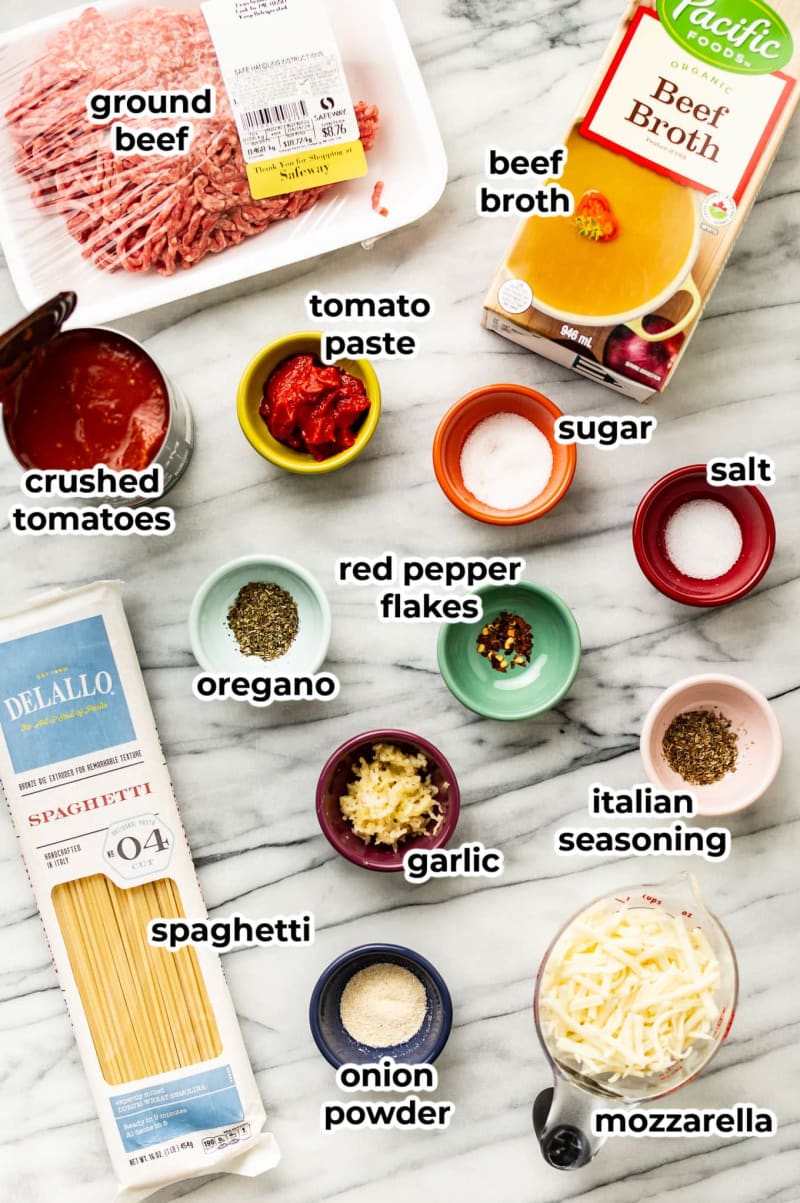
The ingredients are familiar pantry staples, but the seasoning and liquid balance make a difference. Here is what each one contributes.
- Lean ground beef: One pound gives the sauce a hearty base. Choose lean beef to limit excess grease, and spoon off fat after browning if needed.
- Tomato paste: Two tablespoons add concentrated tomato flavor; cook it briefly with the garlic before adding liquid.
- Garlic: Three to four cloves, minced, bring a fresh savory note. Mince before you start so it is ready when the beef browns.
- Onion powder: One teaspoon seasons the sauce without adding pieces that need extra cooking.
- Sugar: One teaspoon rounds out the acidity of the tomatoes without making the sauce taste sweet.
- Dried oregano: Half a teaspoon brings an earthy, familiar tomato-sauce flavor.
- Italian seasoning: Half a teaspoon adds a blend of herbs; it works alongside, not instead of, the oregano.
- Salt: Half a teaspoon is the starting amount. Use a little less if using regular table salt or if you are salt-sensitive.
- Crushed red pepper flakes: One pinch is optional and gives the sauce gentle heat.
- Beef broth: Three cups provide the liquid the spaghetti needs to cook. Keep extra broth nearby for adjusting the pot if it gets too dry.
- Crushed tomatoes: One 15-ounce can forms the tomato part of the sauce. Choose plain crushed tomatoes so you control the seasoning.
- Spaghetti: Eight ounces of uncooked pasta is half a standard American-sized package. Regular dried spaghetti cooks directly in the pot.
- Shredded mozzarella: One cup melts over the pasta during the covered rest, adding a mild, stretchy finish.
- Pepper: Optional, to taste. Add it near the end so you can adjust the seasoning after the cheese melts.
- Parmesan: Freshly grated parmesan is optional for serving and adds a salty, nutty finish at the table.
Equipment You’ll Need
- Soup pot or Dutch oven: Use a roomy, heavy pot that can hold the sauce and spaghetti together and maintain an even simmer.
- Lid: A close-fitting lid traps heat during the final rest so the mozzarella melts and the pasta absorbs more sauce.
- Wooden spoon or sturdy spoon: Use it to break up the beef and stir the long strands through the simmering sauce.
- Tongs: They make it easier to turn and separate spaghetti as it softens in the pot.
How to Make One Pot Spaghetti
1. Brown the beef
Set a soup pot or Dutch oven over medium-high heat and add the ground beef. Cook for about 7-8 minutes, breaking it into small pieces with a spoon as it browns; remove excess fat if needed.
The beef should be browned with no raw-looking patches. If there is a large pool of fat, spoon it out before adding the aromatics.
2. Cook the garlic and paste
Stir the tomato paste and minced garlic into the beef. Let them cook together for about a minute, stirring so the garlic does not stick or scorch.
The garlic should smell fragrant, and the paste will coat the beef rather than sit in a lump.
3. Season the mixture
Mix in the onion powder, sugar, oregano, Italian seasoning, salt and optional red pepper flakes until evenly distributed.
Stir well around the bottom of the pot; dry seasonings can collect in one spot if they are not mixed through.
4. Add tomatoes and broth
Pour in the beef broth and crushed tomatoes, then turn the heat up to high. Stir to combine the liquid with the beef and tomato paste.
Scrape the bottom of the pot to loosen any browned bits, then wait until the mixture comes to a boil before adding pasta.
5. Simmer the spaghetti
Add the uncooked spaghetti once the pot is boiling. Cook uncovered for 12 minutes, stirring occasionally, and reduce the heat as needed to keep a steady simmer rather than a furious boil.
The liquid should bubble consistently. If it is disappearing before the pasta is tender, add a splash more beef broth and lower the heat.
6. Melt the mozzarella
Turn off the burner but leave the pot in place. Sprinkle the mozzarella over the top, cover, and let it stand for 5 minutes or until the cheese melts and more liquid has absorbed.
Keep the lid on during the rest so trapped heat can melt the cheese evenly.
7. Toss and season
Gently toss the melted mozzarella through the spaghetti. Taste and add pepper or extra salt if needed, then serve with freshly grated parmesan if desired.
The sauce should cling to the strands while remaining generous; it will thicken further as the pasta sits.
How to Tell When It’s Done
The spaghetti is ready when the strands are tender but still hold their shape, and the sauce looks cohesive rather than watery. A steady simmer matters: a hard boil can cook away liquid before the pasta softens.
After the covered 5-minute rest, the mozzarella should be melted and the sauce thicker. If the pasta seems saucier than you want, give it a little more time to absorb liquid; remember it will continue thickening as it sits.
Tips and Common Mistakes
A little attention to the simmer and seasoning keeps this one-pot pasta saucy, tender and balanced.
- Break up the beef as it browns. Small, even pieces spread through the sauce and are easier to eat with spaghetti than large chunks.
- Watch the heat after the boil. A steady simmer cooks the noodles without reducing the liquid too quickly. Turn the burner down to medium or even medium-low as needed.
- Stir the strands occasionally. Spaghetti can stick together or catch on the bottom before it softens. Stirring helps separate it and distribute the sauce.
- Allow for the resting time. The covered pause melts the mozzarella and lets the pasta absorb more liquid. Serve soon afterward, since the sauce continues to thicken as it sits.
- Taste before adding extra salt. Broth, cheese and the beef all contribute savory flavor. Check the finished pot first, then adjust a little at a time.
Substitutions and Variations
You can adjust the seasoning and cheese to suit your pantry, while keeping the broth and pasta method in mind.
- Ground turkey: Use it in place of the beef for a lighter-tasting sauce. Since it is lean, watch the pot while browning and avoid letting it dry out.
- Ground pork: Pork makes the sauce richer and slightly sweeter. Spoon off excess fat after browning if needed.
- More heat: Increase the crushed red pepper flakes to taste for a spicier sauce, adding gradually so the heat does not overwhelm the tomato and beef.
- Different melting cheese: A mild provolone can replace mozzarella for a similarly soft, melty finish. A sharper cheese will make the sauce taste more pronounced.
- No red pepper: Leave out the optional flakes for a mild family-style pot. The garlic, oregano and Italian seasoning still give the sauce plenty of flavor.
What to Serve with One Pot Spaghetti
Serve the spaghetti hot with freshly grated parmesan and a green salad or steamed vegetables. Garlic bread is a useful choice if you want something to catch the extra tomato sauce.
For more meal ideas, browse our dinner recipes or find another family-friendly meal among our chicken recipes.
Make-Ahead, Storage and Reheating
Make ahead: For the freshest texture, cook the spaghetti just before serving because the noodles keep absorbing sauce as they sit. You can mince the garlic and measure the seasonings ahead, then keep them ready while the beef browns.
Storage: Refrigerate leftovers in an airtight container within 2 hours of serving and eat within 3 to 4 days. The pasta will continue to soak up sauce as it chills.
Freezing: Freeze cooled portions in airtight freezer-safe containers for up to 2 months. Thaw overnight in the refrigerator; the spaghetti will be softer and less saucy after thawing.
Reheating: Warm leftovers gently in a covered saucepan over low heat, stirring often and adding a splash of broth or water to loosen the sauce. Individual portions can also be microwaved, stirred partway through, until hot.
One Pot Spaghetti FAQs
Can I break the spaghetti in half before adding it?
Yes. Breaking the strands makes them easier to fit into the pot, though leaving them whole works too if you stir as they soften.
Can I use a different pasta shape?
Yes. Short shapes can work, but they may absorb liquid and cook at a different rate, so check for tenderness and adjust the simmer as needed.
Why is my one-pot spaghetti too watery?
The pasta may need more time to absorb the liquid. Let it simmer longer if it is tender enough to stir, or allow it to stand briefly; it thickens further as it rests.
Can I make this without a Dutch oven?
Yes. Use a large, deep soup pot with a lid, roomy enough for the spaghetti and sauce to cook together.
Is the crushed red pepper necessary?
No. It is optional, so leave it out for a mild sauce or use it for a little heat.
How much spaghetti should I serve per person?
The recipe uses 8 ounces of uncooked spaghetti for four servings, so divide the cooked pot into four portions.
Printable Recipe
Recipe adapted from Salt & Lavender. Photos courtesy of Salt & Lavender, used with permission.

One Pot Spaghetti
Ingredients
- 1 pound lean ground beef
- 2 tablespoons tomato paste
- 3-4 cloves garlic minced
- 1 teaspoon onion powder
- 1 teaspoon sugar
- 1/2 teaspoon dried oregano
- 1/2 teaspoon Italian seasoning
- 1/2 teaspoon salt see note
- 1 pinch crushed red pepper flakes optional
- 3 cups beef broth
- 1 (15 ounce) can crushed tomatoes
- 8 ounces uncooked spaghetti
- 1 cup shredded mozzarella
- Pepper optional, to taste
- Freshly grated parmesan cheese optional, for serving
Instructions
- Add the ground beef to a soup pot/Dutch oven over medium-high heat, and cook until just browned, breaking it up with your spoon as you go along (about 7-8 minutes). Spoon out excess fat if needed.
- Stir in the tomato paste and garlic, and cook for about a minute.
- Stir in the onion powder, sugar, oregano, Italian seasoning, salt, and crushed red pepper flakes.
- Add the beef broth and crushed tomatoes to the pot, and increase the heat to high.
- Once boiling, add in the spaghetti and cook for 12 minutes, uncovered, stirring occasionally. You will need to turn the heat down at some point to maintain a constant simmer (medium or even medium-low) so it's bubbling steadily but not furiously boiling. See notes below for troubleshooting tips.
- Turn the burner off (leave the pot on it). Sprinkle the mozzarella over top and close the lid for 5 minutes or until the cheese melts and more of the liquid absorbs. This recipe has lots of sauce.
- Gently toss it so the mozzarella is incorporated, and season with pepper and some extra salt if needed. Serve immediately with freshly grated parm if desired.
Notes
- Troubleshooting tip: as every pot/stove varies, cooking times are a guideline and you may need to adjust as needed. E.g., if you find the pasta isn’t quite cooked yet and the liquid is getting too low, add a splash more beef broth and/or turn the heat down. If there’s still too much liquid at the end of cooking time and/or the pasta isn’t yet cooked, cook it for a little longer. The pasta will absorb more liquid the longer it sits.
- If you’re using regular table salt rather than sea salt or kosher salt, you may want to add a bit less than suggested. If you’re particularly sensitive to salt, you can add less than suggested, but be sure to add enough salt as this recipe needs enough or it will be bland.
- 8 oz. is half a standard American-sized package of spaghetti.


