Pork Tenderloin Piccata


Pork tenderloin piccata pairs quick-seared pork medallions with a bright lemon-caper cream sauce. The flour coating turns golden in butter, while the sauce brings together citrus, briny capers and browned bits from the skillet.
It takes 5 minutes to prep and 20 minutes to cook, and serves four. Make it for a weeknight dinner when you want something more polished than plain pan-seared pork without adding a long list of steps.
Why This Pork Tenderloin Piccata Recipe Works
The method builds the sauce in the same skillet as the pork, using the flavorful browned bits to give each part of the dish more depth.
- Flour helps the pork brown. A light coating encourages a golden surface in the hot butter. Some flour also clings to the pan and helps the sauce thicken as it cooks.
- The skillet carries the flavor. Broth, lemon and butter loosen the browned bits left after searing. Scraping them into the liquid makes a more savory sauce without another pan.
- Capers balance the cream. Their salty, briny flavor cuts through the richness of the cream and butter. Draining them first keeps excess brine from making the sauce too sharp.
- The pork finishes in the sauce. Returning the medallions to the skillet lets them finish cooking while the sauce reduces. Keep the bubbling controlled so the cream stays smooth.
Ingredients You’ll Need
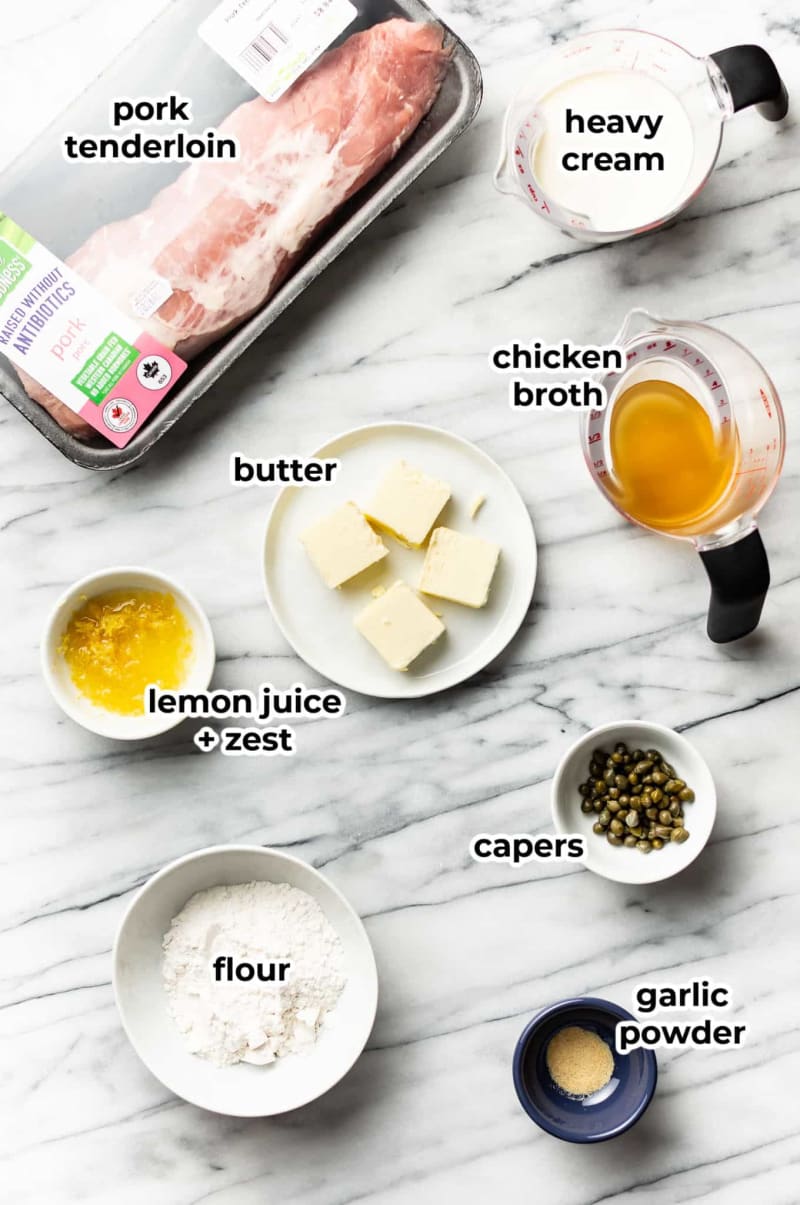
The ingredients are simple, but a few details make the sauce especially balanced. Use a skillet wide enough to brown the pork in a single layer if possible.
- Pork tenderloin: One pound, trimmed and sliced into rounds. Choose a fresh tenderloin with an even shape so the medallions cook at a similar pace.
- Salt and pepper: Season to taste. Apply it generously to the pork before the flour coating so the meat itself is well seasoned.
- Garlic powder: A quarter teaspoon adds savory flavor without introducing fresh garlic that could scorch during the sear.
- Flour: Use enough for dredging the pork. A thin, even layer helps create a golden crust and gives the sauce a little body.
- Butter: Four tablespoons, divided between searing and making the sauce. Butter adds richness and helps the pork develop color.
- Chicken broth or dry white wine: A quarter cup provides liquid for deglazing. Broth makes a savory, mellow sauce; dry wine gives it a more pronounced acidity.
- Lemon juice and zest: One tablespoon of juice plus the zest of one lemon brings fresh, fragrant acidity to balance the butter and cream.
- Brined capers: One tablespoon, drained, provides the signature salty, tangy bites. Rinse them briefly if you prefer a milder briny flavor.
- Heavy cream: Half a cup creates a smooth, rich sauce. Use heavy or whipping cream rather than a lower-fat substitute to reduce the chance of curdling.
- Parsley and/or Parmesan: Chopped parsley and freshly grated Parmesan are optional garnishes. Parsley adds freshness; Parmesan brings a salty, savory finish.
How to Make Pork Tenderloin Piccata
1. Slice and season the pork
Trim away excess fat and silver skin, then cut the tenderloin into rounds about 1 inch thick. Season generously with salt and pepper, add the garlic powder, and coat the pieces in flour.
Shake off extra flour so the pork has a fine coating rather than a thick, powdery layer.
2. Sear the medallions
Melt half the butter in a skillet over medium-high heat. When the pan is hot, add the pork and cook for about 3 minutes per side, until golden.
Give the pieces room to brown. If they resist when you try to turn them, let them cook a little longer before moving them.
3. Set the pork aside
Take the skillet off the heat and move the pork to a plate. Leave the browned bits in the pan; they will flavor the sauce.
Keep the medallions in a single layer so they do not steam against one another.
4. Deglaze and season
Add the chicken broth or dry white wine, lemon juice, lemon zest, remaining butter and drained capers to the skillet. Scrape across the bottom to release the browned bits.
The liquid should loosen the fond without leaving stubborn dark patches on the pan.
5. Add cream and pork
Stir in the cream and return the skillet to the heat. When the sauce bubbles again, put the pork back into the pan.
Stir until the cream is incorporated and the sauce looks even before adding the medallions.
6. Finish the sauce
Cook for another 3 to 5 minutes, until the pork is cooked through and the sauce has reduced to your liking. Lower the heat if the sauce is bubbling too vigorously.
The sauce should coat the pork lightly. Check the thickest medallion for doneness rather than relying on color alone.
7. Garnish and serve
Scatter chopped parsley and/or freshly grated Parmesan over the pork if desired, then serve it with plenty of sauce.
Add the garnish just before serving so the parsley stays fresh and the cheese does not disappear into the hot sauce.
How to Tell When It’s Done
The pork should be golden on the outside and no longer raw in the center. For a reliable check, use an instant-read thermometer in the thickest medallion; pork is safe at 145°F, followed by a brief rest.
Tips and Common Mistakes
A controlled sear and gentle simmer help keep the pork tender and the cream sauce smooth.
- Slice evenly. Rounds of similar thickness cook at a similar rate. Thinner pieces can dry out while thicker ones are still finishing.
- Coat lightly with flour. A thin dredge browns more cleanly than a heavy one. Shake away loose flour before the pork goes into the skillet.
- Wait for the skillet to heat. Adding the medallions to hot butter encourages a quick sear instead of a pale, steamy surface.
- Avoid crowding the pan. If the pork pieces are packed tightly, they release moisture and brown less effectively. Sear in batches if your skillet is small.
- Keep the sauce at a gentle bubble. A hard boil can make a cream sauce separate and reduce too quickly. Turn down the heat as soon as it bubbles too vigorously.
Substitutions and Variations
You can adjust the sauce and garnish without changing the basic sear-and-simmer method.
- Dry white wine: Use it in place of the chicken broth for a brighter, more wine-forward sauce. Choose a dry wine rather than a sweet one.
- Broth-only sauce: Leave out the cream and increase the chicken broth to 3/4 cup. The result will be lighter and less silky, but still lemony and savory.
- No capers: Omit them if needed, though the sauce will lose its characteristic briny bite. Add a little extra lemon zest for a brighter finish.
- Gluten-free flour: Use a gluten-free all-purpose blend for dredging. Check that it browns as expected and avoid a thick coating, which can make the sauce pasty.
- Parsley or Parmesan: Use either garnish, both, or neither. Parsley keeps the finish fresh, while Parmesan adds extra saltiness and savory depth.
What to Serve with Pork Tenderloin Piccata
Serve the pork over mashed potatoes, buttered noodles or rice so the lemon-caper cream sauce has something to cling to. Roasted green beans, asparagus or a crisp salad provide a fresh contrast.
For a fuller dinner spread, pair it with another easy main or browse our dinner recipes. Find more ways to cook pork-style weeknight proteins among our chicken recipes.
Make-Ahead, Storage and Reheating
Make ahead: Trim and slice the tenderloin ahead, then cover and refrigerate it until cooking time. Measure the sauce ingredients and drain the capers in advance, but sear the pork and finish the cream sauce shortly before serving for the best texture.
Storage: Refrigerate leftovers in an airtight container within 2 hours of cooking and use within 3 to 4 days. Store the pork with its sauce so the medallions do not dry out.
Freezing: Freezing is not ideal because cream sauce can separate after thawing and the pork may become less tender. If you do freeze portions, seal them well and expect to whisk the sauce as it warms.
Reheating: Warm leftovers gently in a covered skillet over low heat, stirring the sauce and turning the pork until heated through. Avoid a vigorous boil; if the sauce has thickened, loosen it with a small splash of broth.
Pork Tenderloin Piccata FAQs
Can I make pork tenderloin piccata without cream?
Yes. Leave out the cream and use 3/4 cup of chicken broth for a lighter, thinner sauce with a sharper lemon flavor.
Can I use half-and-half instead of heavy cream?
It is better not to. Half-and-half is more prone to curdling and will not thicken the sauce as reliably as heavy or whipping cream.
How do I keep pork tenderloin medallions from drying out?
Cut the rounds evenly and avoid cooking them longer than needed. Check the thickest piece with a thermometer and take the skillet off the heat once the pork is cooked through.
What can I use instead of capers?
You can leave them out, but the sauce will be less briny and distinctive. A few extra drops of lemon juice can help keep the flavor lively.
What should I do if the cream sauce separates?
Take the skillet off the heat and whisk the sauce gently until it comes together. If it remains broken, whisk in a small splash of warm broth a little at a time.
Printable Recipe
Recipe adapted from Salt & Lavender. Photos courtesy of Salt & Lavender, used with permission.

Pork Tenderloin Piccata
Ingredients
- 1 pound pork tenderloin
- Salt & pepper to taste
- 1/4 teaspoon garlic powder
- Flour (for dredging)
- 4 tablespoons butter divided
- 1/4 cup chicken broth or dry white wine
- 1 tablespoon lemon juice + zest of 1 lemon
- 1 tablespoon brined capers drained
- 1/2 cup heavy/whipping cream
- Garnish: chopped parsley and/or freshly grated parmesan cheese optional, to taste
Instructions
- Trim off excess fat and silver skin and slice the pork tenderloin into about 1" thick pieces (rounds). Season generously with salt & pepper and sprinkle with garlic powder. Coat the pork pieces in flour.
- Add half the butter to a skillet over medium-high heat. Once the pan is hot, add the pork and cook for about 3 minutes/side until golden. Take the pan off the heat and transfer the pork to a plate.
- Add the chicken broth, lemon juice, lemon zest, remaining butter, and capers to the skillet. Scrape up any browned bits from the bottom of the pan.
- Stir in the cream and return the pan to the heat. Once it's bubbling again, add the pork back into the skillet.
- Cook for another 3-5 minutes or until the pork is cooked through and the sauce has reduced to your liking (you may need to turn down the heat if it's bubbling too much).
- Garnish with freshly chopped parsley and/or parmesan cheese if you like.
Notes
- If you don’t want the cream in it, I recommend leaving it out vs. using something lower fat like half-and-half because the sauce is likely to curdle and not thicken as well. To make this recipe without cream, increase the chicken broth to 3/4 cup.


