Roasted Mashed Cauliflower

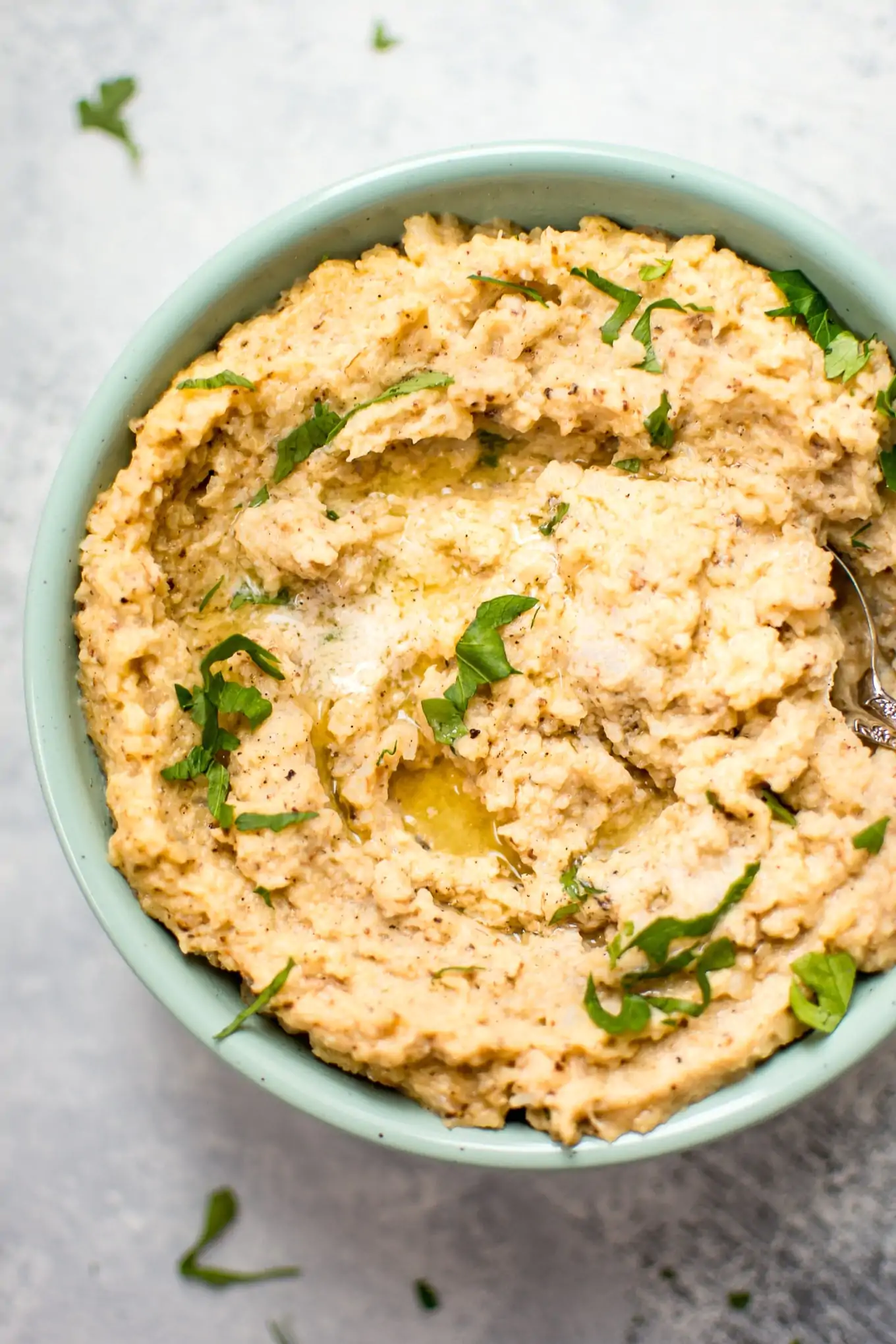
Roasted mashed cauliflower is a savory, creamy side dish with browned edges, garlic, herbs and a hint of smoky paprika. Roasting first concentrates the cauliflower’s flavor, while a quick blend with butter and cream turns it into a smooth mash.
It takes 5 minutes to prep and 25 minutes to cook, and the recipe serves 4. Make it for a weeknight dinner when you want a potato-style side with a lighter texture, or serve it alongside a roast or holiday main.
The mash is easy to adjust: blend it smooth or leave a little texture, and add cream gradually until it reaches the consistency you like.
Why This Roasted Mashed Cauliflower Recipe Works
Roasting and blending give cauliflower a fuller flavor and a soft, spoonable texture without boiling it in water.
- Roasting deepens the flavor. Dry oven heat browns the florets and brings out their natural sweetness. It also avoids the waterlogged texture that can happen when cauliflower is boiled.
- The florets roast with their seasoning. Olive oil helps the spices cling and encourages browning, while garlic powder, Italian seasoning and smoked paprika season the cauliflower throughout.
- An immersion blender makes a cohesive mash. Blending directly in the pan breaks down the florets and incorporates the butter and cream without transferring hot vegetables to another container.
- The seasoning is easy to correct at the end. Cauliflower varies in size and flavor, so a final taste lets you adjust the salt and pepper after the cream and butter are mixed in.
Ingredients You’ll Need
These simple ingredients season the cauliflower and make it creamy. Add the cream gradually so you can stop when the mash has the texture you want.
- Cauliflower: One head, broken into florets. Choose a firm head with compact, pale florets; smaller, evenly sized pieces roast more consistently.
- Olive oil: Three tablespoons coat the florets so the seasonings stick and the edges brown in the oven.
- Garlic powder: One teaspoon gives the cauliflower a steady savory flavor without fresh garlic pieces that could brown too quickly.
- Italian seasoning: Four dashes add a dried-herb note. Use the amount specified, then taste the finished mash before adding more.
- Smoked paprika: Half a teaspoon brings gentle smokiness and warm color to the roasted florets.
- Salt and pepper: Season to taste before roasting, then check the mash again after blending and adjust if needed.
- Butter: One tablespoon melts into the warm cauliflower; keep extra on hand for serving if desired.
- Heavy cream: One-quarter cup, or more to taste, loosens the mash and adds richness. Heavy or whipping cream works.
- Fresh parsley: Chopped parsley is optional and can be added to taste just before serving for a fresh, herbal finish.
Equipment You’ll Need
- Baking sheet: Spread the florets across a sheet so they roast rather than sit crowded together.
- Medium-sized pan: Use it to warm the butter and cream and to hold the cauliflower while you blend.
- Immersion blender: This blends the hot florets right in the pan; keep the blender head submerged to limit splashes.
How to Make Roasted Mashed Cauliflower
1. Heat the oven
Preheat the oven to 450°F and set the rack in the middle position.
A fully heated oven helps the cauliflower start browning as soon as it goes in.
2. Season the florets
Separate the cauliflower into florets and put them on a baking sheet. Toss with the olive oil, garlic powder, Italian seasoning, smoked paprika, salt and pepper.
Coat the pieces evenly, including the cut sides, so the oil and seasonings are distributed.
3. Roast the cauliflower
Roast for 20-25 minutes, until the florets are tender and browned in places.
Check a larger floret with a fork. It should yield easily, and the edges should show some golden color.
4. Warm the butter and cream
When the cauliflower is nearly done, add the butter and cream to a medium-sized pan over medium-high heat. Warm them until the butter melts; begin with 1/4 cup of cream and add more if necessary.
Keep the mixture warm rather than letting it boil hard. You can add more cream after blending if the mash feels too thick.
5. Blend the mash
Transfer the roasted florets to the pan with the cream and butter. Use an immersion blender to purée the cauliflower to your preferred texture.
Move the blender around the pan so larger pieces are caught. For a thicker mash, pause before adding more cream.
6. Taste and serve
Taste the mash and add salt or pepper if needed. Serve with extra butter and chopped parsley or other herbs, if desired.
The finished mash should be creamy and spoonable, with no firm chunks remaining if you want it fully smooth.
How to Tell When It’s Done
The florets are ready to blend when a fork slides into a thick piece without resistance and some edges have browned. If they are still firm, return the sheet to the oven and continue roasting until tender.
After blending, check the consistency before adding more cream. If the mash is too thick, blend in a little more; if it is looser than you want, stop adding liquid and let it stand briefly so it settles.
Tips and Common Mistakes
A few small choices help the cauliflower roast well and keep the finished mash from turning watery.
- Cut the florets evenly. Pieces close in size finish roasting at a similar pace. Very small pieces may brown before larger ones become tender.
- Give the florets room. Spread them out on the baking sheet instead of piling them up. Crowding traps moisture and makes browning less likely.
- Wait for tender centers. Brown edges alone do not mean the cauliflower is ready to purée. Check a larger piece with a fork before taking the sheet out.
- Start with the listed cream amount. You can blend in more if needed, but too much liquid at the start can make the mash loose.
- Keep the blender submerged. Hold the immersion blender head below the surface while it runs to reduce splashing from the hot mixture.
- Taste after blending. The butter and cream soften the seasoning, so check salt and pepper once the mash is smooth and adjust to taste.
Substitutions and Variations
The seasoning and dairy are flexible, but make changes gradually so the mash stays balanced and thick.
- Dairy-free: Use a plant-based butter and an unsweetened, plain cooking alternative in place of the dairy. The flavor and richness will vary by product.
- More herb flavor: Use chopped fresh herbs in place of the parsley garnish or add them at serving. Their flavor will be fresher than the dried Italian seasoning.
- Fresh garlic: Roast peeled garlic with the cauliflower and blend it in for a sweeter, rounder garlic taste. Avoid leaving loose minced garlic exposed on the baking sheet, where it can burn.
- Unsalted butter: Unsalted butter works; adjust the salt after blending to account for the difference.
- Lighter creaminess: Half-and-half can replace heavy cream, though the mash will be less rich. Add it cautiously because a thinner dairy option can loosen the texture quickly.
- Change the seasoning: Try a pinch of chili flakes or a little extra smoked paprika if you want more warmth. Add small amounts so the cauliflower remains the main flavor.
What to Serve with Roasted Mashed Cauliflower
Serve the mash with roast chicken, pork chops, meatloaf or a hearty vegetable main. Green beans, roasted carrots or a crisp salad add color and contrast to the creamy side.
For a comforting plate, spoon it beneath a savory main so it catches the juices. Find more ideas in our chicken recipes or browse dinner recipes for a complete meal.
Make-Ahead, Storage and Reheating
Make ahead: Roast the cauliflower ahead and refrigerate it in a covered container, then warm it with the butter and cream and blend shortly before serving. For the freshest texture, wait to add the cream and purée until serving time.
Storage: Transfer leftovers to an airtight container and refrigerate within 2 hours. Store for 3 to 4 days.
Freezing: Freezing is possible, but the mash may release water or become grainy after thawing. Freeze in an airtight container, thaw in the refrigerator, and stir well while reheating.
Reheating: Warm gently in a covered pan over low heat, stirring often; add a small splash of cream if it has thickened. You can also microwave portions in short bursts, stirring between each, until hot.
Roasted Mashed Cauliflower FAQs
Can I make roasted mashed cauliflower without an immersion blender?
Yes. Use a food processor or blender, working in batches if needed. Take care when blending hot cauliflower, and avoid sealing hot contents in a blender without a way for steam to escape.
Why is my cauliflower mash watery?
It may have been crowded on the baking sheet or blended with too much cream. Roast in a single layer when possible, and add cream gradually until the texture is right.
Can I leave the mash chunky?
Yes. Blend only until it reaches the texture you prefer, or mash some of the florets by hand for a more rustic side.
Can I double this recipe?
Yes. Use a second baking sheet if needed to keep the florets spread out, and blend in batches if your pan or blender cannot comfortably hold the full amount.
What can I use instead of smoked paprika?
Regular paprika is a good swap if you want the color without the smoky note. The finished cauliflower will taste a little less robust.
Printable Recipe
Recipe adapted from Salt & Lavender. Photos courtesy of Salt & Lavender, used with permission.

Roasted Mashed Cauliflower
Ingredients
- 1 head cauliflower separated into florets
- 3 tablespoons olive oil
- 1 teaspoon garlic powder
- 4 dashes Italian seasoning
- 1/2 teaspoon smoked paprika
- Salt & pepper to taste
- 1 tablespoon butter + extra for serving if desired
- 1/4 cup heavy/whipping cream or to taste
- Fresh parsley chopped, to taste (optional)
Instructions
- Preheat oven to 450F. Move the rack to the middle position.
- Prep the cauliflower and add it to a baking sheet. Toss it with the oil, garlic powder, Italian seasoning, smoked paprika, and salt & pepper. Roast the cauliflower for 20-25 minutes.
- When the cauliflower is about done, add the butter and cream to a medium-sized pan on medium-high heat, and warm it until the butter has melted. I recommend starting with 1/4 cup and adding more cream if necessary.
- Add the cauliflower florets to the pan with the cream and butter. Use an immersion blender to purée the cauliflower.
- Season with more salt & pepper if needed. Serve with extra butter and a sprinkling of parsley or other herbs if desired.
Notes
- This is the trusty immersion blender I used for this recipe.
- Serves 4-6.


