Sausage and Vegetable Pasta


Sausage and vegetable pasta brings browned Italian sausage together with tomatoes, bell pepper, spinach and basil in a light garlic-and-white-wine pan sauce. The tomatoes soften into the sauce while the peppers stay tender-crisp, giving each bite a mix of juicy, savory and fresh.
This version takes 30 minutes from start to finish, with 10 minutes of prep and 20 minutes of cooking, and serves four. It is quick enough for a weeknight but colorful enough to put on the table for casual guests.
The sauce comes together while the pasta cooks, so have your vegetables ready before you start. A splash of pasta water can help keep everything glossy if the pan starts to look dry.
Why This Sausage and Vegetable Pasta Recipe Works
The quick method builds a flavorful sauce in the same skillet used to brown the sausage.
- Browning builds the base. Cooking the sausage with onion first develops savory browned bits in the skillet. Those bits mingle with the wine and tomato juices to give the sauce depth without a long simmer.
- The vegetables keep their character. Tomatoes soften and release juice while the bell pepper cooks only until tender-crisp. That contrast keeps the finished pasta from feeling like one soft, overcooked mixture.
- Greens go in at the end. Spinach and basil need only a brief toss with the hot sausage mixture. Adding them late preserves their color and keeps the basil’s fresh aroma noticeable.
- Pasta water helps the sauce cling. Starchy cooking water can loosen the skillet mixture without making it watery. It helps the vegetables and sausage coat the pasta rather than settle at the bottom.
Ingredients You’ll Need
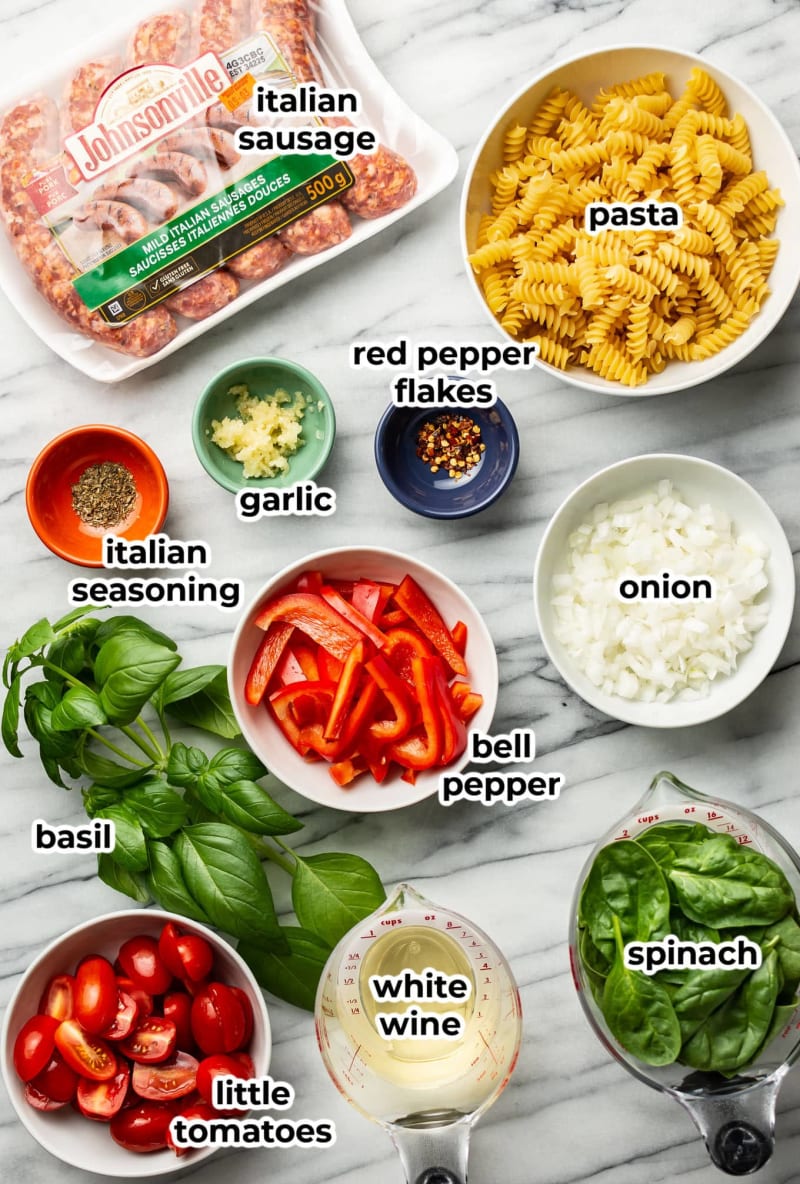
Set out the vegetables and seasonings before cooking so the skillet steps move quickly. The quantities below make four servings.
- Uncooked pasta: Eight ounces, any shape that holds sauce well. Cook it al dente according to its package directions.
- Italian sausage: Sixteen ounces of sausage meat; remove the casings from links if needed. Ground sausage is convenient, and spicy Italian sausage adds heat.
- Onion: Half a medium onion, chopped, for sweetness and a savory base alongside the sausage.
- Garlic: Four cloves, minced. Fresh garlic gives the skillet sauce a sharp, aromatic note.
- Italian seasoning: A quarter teaspoon adds dried-herb flavor without overpowering the fresh basil.
- Crushed red pepper flakes: A quarter teaspoon is optional; leave it out for a milder dish.
- Dry white wine: Half a cup loosens the browned bits and brings acidity. Choose a dry wine you would be comfortable serving.
- Little tomatoes: One cup of grape or cherry tomatoes, halved, softens into a light, juicy sauce.
- Red bell pepper: One medium pepper, sliced, adds sweetness, color and a tender-crisp bite.
- Fresh baby spinach: Two packed cups wilt quickly into the hot skillet. Check for any tough stems before adding.
- Fresh basil: One handful, torn just before use, adds a fresh herbal finish.
- Parmesan cheese: Freshly grated, to taste, for an optional salty finish at the table.
- Salt and pepper: Use to taste, including salt for the pasta water and final seasoning for the skillet.
Equipment You’ll Need
- Large pot: Use it to cook the pasta in plenty of salted water while the sauce comes together.
- Large skillet: A wide skillet gives the sausage room to brown and lets the pasta be tossed with the vegetables.
- Colander: Drain the pasta efficiently, but save a little hot cooking water before pouring it away.
- Cutting board and knife: Prepare the onion, garlic, tomatoes and pepper before heating the skillet.
How to Make Sausage and Vegetable Pasta
1. Cook the pasta
Bring a large pot of salted water to a boil. Cook the pasta al dente following the package directions while you prepare the sauce.
Taste a piece near the end of the package time; it should be tender with a slight firmness at the center.
2. Brown the sausage
Put the sausage and chopped onion in a skillet over medium-high heat. Break the meat into small pieces as it cooks, for about 8-10 minutes, then move the browned mixture to a paper towel-lined plate.
The sausage should have browned spots and no raw-looking centers. If it releases a lot of fat, let excess drain from the skillet before continuing.
3. Soften the vegetables
Turn the heat down to medium. Stir in the garlic, Italian seasoning, red pepper flakes if using, wine, halved tomatoes and sliced bell pepper; cook for about 5-6 minutes.
The tomatoes should be very soft and beginning to lose their shape, while the pepper remains tender-crisp. Keep some liquid in the pan; add a splash more wine or hot pasta water if it looks too dry.
4. Wilt the greens
Return the sausage and onion to the skillet. Add the spinach and torn basil, then toss until the spinach has wilted.
The spinach should collapse but remain green. Avoid cooking it longer than needed, since it will continue to soften when tossed with the hot pasta.
5. Toss and season
Drain the pasta and add it to the skillet. Toss until the sausage and vegetables are distributed throughout, then taste and add salt and pepper if needed.
If the mixture looks tight or dry, loosen it with a splash of reserved pasta water. Serve right away with freshly grated parmesan if desired.
How to Tell When It’s Done
The sausage should be browned and fully cooked, with no pink raw-looking pieces. If you are unsure, break open a larger piece and check its center before transferring it to the plate.
The vegetables are ready when the tomatoes have turned very soft and the peppers are tender-crisp. The spinach should be wilted but still green; cooking it until dull and limp can make the whole skillet seem heavy.
The finished pasta should look lightly coated, not dry or swimming in liquid. If the noodles seem dry, toss in a little hot pasta water; if the skillet is very loose, keep tossing briefly over the heat so the pasta absorbs some sauce.
Tips and Common Mistakes
A few small choices help the sausage brown well and keep the sauce from drying out.
- Break the sausage into small pieces. Smaller pieces brown more evenly and distribute throughout the pasta. Leave some texture rather than mashing the meat into a paste.
- Let the sausage brown. Frequent stirring can prevent color from forming. Give the meat time against the hot skillet, then break and turn it as it cooks.
- Save pasta water before draining. A small amount of starchy water is useful for adjusting the sauce at the end. Set it aside before the colander goes into the sink.
- Season after combining. Italian sausage and parmesan can both be salty, so taste the tossed pasta before adding more salt. Pepper can be adjusted at the same time.
- Add basil at the end. Tearing and tossing it into the hot skillet preserves its fresh aroma. Long cooking would mute that bright finish.
Substitutions and Variations
You can adjust the sausage, vegetables or finishing touches while keeping the quick skillet method.
- Spicy sausage: Use spicy Italian sausage for a more noticeable kick. If you choose it, consider leaving out the optional red pepper flakes.
- Mild sausage: Mild Italian sausage keeps the dish gentler for mixed tastes. Add red pepper flakes at the table for anyone who wants more heat.
- Different pasta shapes: Short shapes such as penne, rotini or shells work well because they catch pieces of sausage and vegetables. Follow the package directions for whichever shape you choose.
- Yellow or orange pepper: Either can stand in for the red bell pepper. The flavor stays sweet, though the finished dish will have a different color.
- More leafy greens: Tender kale can replace spinach, but it needs longer in the skillet to soften. Add it with the vegetables rather than waiting until the final toss.
- No wine: Use hot pasta water instead to loosen the skillet and lift the browned bits. The sauce will be less tangy and have a simpler flavor.
- Skip the cheese: Leave off the parmesan for a dairy-free serving. The sausage, herbs and vegetables still make a flavorful pasta, though it will lose the cheese’s salty finish.
What to Serve with Sausage and Vegetable Pasta
Serve the pasta hot with parmesan at the table and a simple green salad or crusty bread to catch the light pan sauce. For a larger spread, add roasted vegetables or a bowl of soup.
For another pasta night, browse dinner recipes or explore more chicken recipes for a different main.
Make-Ahead, Storage and Reheating
Make ahead: Chop the onion, garlic, tomatoes and bell pepper ahead and refrigerate them separately in covered containers. For the best texture, cook the pasta and combine everything just before serving.
Storage: Refrigerate leftovers promptly in an airtight container and eat within 3 to 4 days. Do not leave the cooked pasta at room temperature for more than 2 hours.
Freezing: Freezing is possible, but the spinach and peppers will soften further after thawing. Cool the pasta, pack it airtight and freeze; thaw overnight in the refrigerator for best results.
Reheating: Warm leftovers in a skillet over medium-low heat with a small splash of water, stirring until hot. A microwave also works; cover loosely and stir partway through so the pasta heats evenly.
Sausage and Vegetable Pasta FAQs
Can I use sausage links for this pasta?
Yes. Remove the casings and use the sausage meat in the skillet, breaking it into pieces as it browns.
What kind of white wine works best?
A dry white wine is the best fit because it adds acidity without making the sauce sweet. Avoid a very sweet wine, which can change the balance of the tomatoes and sausage.
Can I make this pasta without alcohol?
Yes. Replace the wine with hot pasta water to loosen the skillet mixture. The finished sauce will be less bright, but the sausage and tomatoes still provide plenty of flavor.
How can I make the dish spicier?
Use spicy Italian sausage, the optional crushed red pepper flakes, or both. Add heat gradually if you are serving people with different spice preferences.
Can I cook the pasta ahead of time?
Yes, but freshly cooked pasta is easiest to coat evenly in the skillet. If cooking ahead, drain it well and refrigerate it covered, then loosen it with a little hot water as you combine it with the sauce.
What should I do if my sauce tastes too salty?
Toss in a little more cooked pasta if you have extra, or add a splash of unsalted pasta water to soften the seasoning. Avoid adding parmesan until you taste it again, since the cheese adds more salt.
Printable Recipe
Recipe adapted from Salt & Lavender. Photos courtesy of Salt & Lavender, used with permission.

Sausage and Vegetable Pasta
Ingredients
- 8 ounces uncooked pasta
- 16 ounces Italian sausage
- 1/2 medium onion chopped
- 4 cloves garlic minced
- 1/4 teaspoon Italian seasoning
- 1/4 teaspoon crushed red pepper flakes optional
- 1/2 cup dry white wine
- 1 cup little tomatoes (grape, cherry, etc.) cut into halves
- 1 medium red bell pepper sliced
- 2 cups (packed) fresh baby spinach
- 1 handful fresh basil torn
- Freshly grated parmesan cheese optional, to taste
- Salt & pepper to taste
Instructions
- Boil a large salted pot of water and cook your pasta al dente according to package directions.
- Meanwhile, add the sausage and onion to a skillet and cook over medium-high heat until browned, breaking it up as you go along (about 8-10 minutes). Transfer to a paper towel lined plate.
- Reduce the heat to medium and stir in the garlic, Italian seasoning, crushed red pepper, wine, tomatoes, and bell peppers. Cook until the tomatoes start to lose their shape and go very soft and the peppers are tender-crisp (about 5-6 minutes). Don't let the pan go too dry. You can always add a splash more wine or some of the hot pasta water if needed.
- Add the sausage and onions back to the skillet, as well as the spinach and basil, and toss until the spinach has wilted.
- Drain the pasta and add it to the skillet and toss. Season with salt & pepper if needed, and serve immediately with freshly grated parmesan cheese if desired.
Notes
- Use ground sausage meat or buy sausage links and take the meat out of the casings. Use spicy Italian sausage for some kick.


