Sesame Chicken


Sesame chicken pairs juicy, browned chicken pieces with a glossy sweet-savory sauce scented with garlic and toasted sesame oil. A light cornstarch coating helps the chicken develop crisp edges in a skillet, while the sauce thickens around each bite.
The meal takes 30 minutes from start to finish, including 10 minutes of prep, and serves four. It is a practical weeknight dinner over rice or noodles, and the sauce can be mixed before the skillet heats.
Why This Sesame Chicken Recipe Works
This quick skillet method builds texture and flavor without deep-frying. A few details help the chicken brown and the sauce cling instead of turning watery.
- Cornstarch creates crisp edges. A light coating draws moisture from the chicken’s surface and helps it brown in the hot skillet. It also gives the sauce something to cling to later.
- Small pieces cook quickly. Cutting the chicken into roughly 1-inch pieces gives you more browned surface area and helps the centers cook through during the short skillet time.
- Cooking in batches prevents steaming. Crowding the pan traps moisture, which keeps chicken from browning. Two batches give the pieces enough room to sear.
- The sauce balances sweet, salty and tangy. Brown sugar and honey round out the soy sauce, while vinegar adds brightness. Garlic and toasted sesame oil make the finish savory and nutty.
- A brief simmer thickens the sauce. The sauce’s cornstarch activates as it bubbles, turning the liquid glossy. Adding it after the chicken is cooked keeps the coating from becoming soggy during a long simmer.
Ingredients You’ll Need
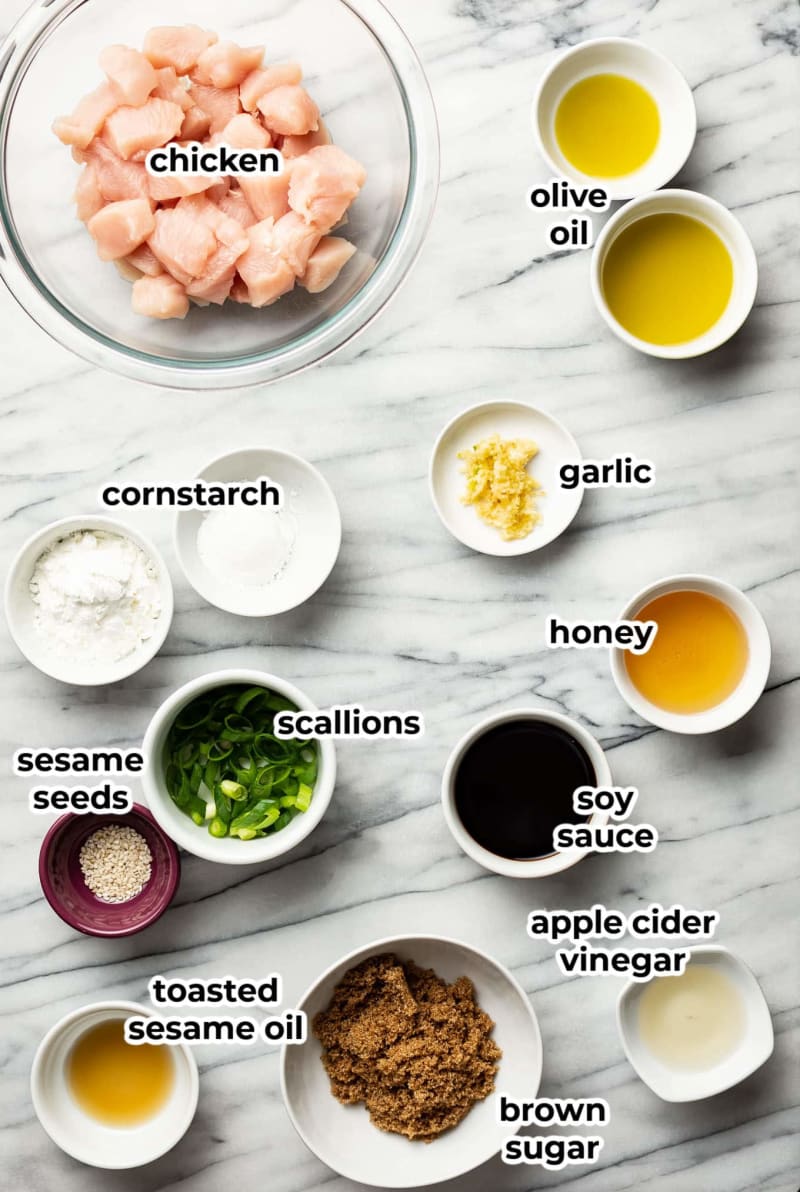
The ingredients are simple, but the sauce depends on balancing sweet, savory and tangy flavors. Measure the sauce components before cooking so they are ready when the chicken is browned.
- Boneless, skinless chicken breasts: Two large breasts, cut into small pieces. Choose evenly sized pieces so they cook at about the same rate.
- Cornstarch for coating: Three tablespoons coat the chicken for browned edges and a little crispness.
- Olive oil: Three tablespoons total, divided between the batches to help the chicken brown in the skillet.
- Sesame seeds and scallions: Use both to taste as a garnish. Sesame seeds add crunch; chopped scallions bring a fresh, mild onion flavor.
- For the sauce: Mix half a cup of water, a quarter cup packed brown sugar, three tablespoons low-sodium soy sauce, two tablespoons honey, one tablespoon apple cider or rice vinegar, one tablespoon cornstarch, one teaspoon toasted sesame oil and three minced garlic cloves.
Equipment You’ll Need
- Large skillet: A wide skillet gives the chicken room to brown in batches and holds the chicken and sauce at the end.
- Small mixing bowl: Use it to whisk the sauce ingredients together before the skillet is hot.
- Second bowl: A separate bowl makes it easy to toss the chicken evenly with its cornstarch coating.
- Tongs: They make it easier to turn the chicken pieces and transfer them without scraping off their coating.
- Instant-read thermometer: Check the thickest chicken pieces for a safe internal temperature of 165°F.
How to Make Sesame Chicken
1. Whisk the sauce
In a small bowl, whisk the water, brown sugar, soy sauce, honey, vinegar, sauce cornstarch, sesame oil and minced garlic until combined.
Give the mixture another stir just before adding it to the pan; cornstarch can settle at the bottom.
2. Cut and coat the chicken
Cut the chicken into approximately 1-inch pieces and put them in a separate bowl. Sprinkle over the coating cornstarch, then toss until the pieces have a light, even covering.
Separate pieces that stick together so the coating reaches the sides and the chicken cooks evenly.
3. Heat the skillet
Pour 2 tablespoons of olive oil into a skillet and heat it over medium-high for a few minutes. Plan to cook the chicken in two batches rather than filling the pan at once.
The oil should look fluid and shimmer slightly. If it smokes, lower the heat before adding the chicken.
4. Brown the first batch
Add half the chicken in a single layer. Cook for 4 minutes, turn the pieces with tongs, and cook for another 3 to 4 minutes, until browned and cooked through. Move the pieces to a plate.
Check the largest pieces with a thermometer; chicken is cooked through at 165°F. If they need more time, keep cooking and check again.
5. Cook the remaining chicken
Add the remaining tablespoon of olive oil to the skillet. Cook the second batch in the same way, for 4 minutes before turning and another 3 to 4 minutes, until browned and cooked through.
Keep the pieces in one layer as much as possible. If the skillet is crowded, work in smaller portions rather than letting the chicken steam.
6. Thicken and finish
Return the first batch of chicken to the skillet. Stir in the sauce and let it bubble for 30 seconds to a minute, until thickened, then take the skillet off the heat. Finish with sesame seeds and chopped scallions to taste, and serve immediately over rice or noodles.
The sauce should look glossy and coat the chicken. Remove the skillet from the heat once it thickens; continued cooking can make the coating soft.
How to Tell When It’s Done
Look for browned edges on the chicken and an opaque center when you cut into a larger piece. Since piece size and skillet heat can vary, color alone is not a reliable safety check.
For a dependable check, insert an instant-read thermometer into the thickest piece; it should register 165°F. If it is below that, continue cooking the chicken before adding the sauce, then check again.
The sauce is ready when it bubbles and thickens enough to cling to the chicken. If it still looks thin after a minute, let it bubble briefly longer, stirring so the bottom does not scorch.
Tips and Common Mistakes
A few small habits make the difference between browned chicken and a crowded, soft skillet.
- Cut the pieces evenly. Similar-sized pieces finish cooking together, so smaller ones are less likely to dry out while you wait for larger ones.
- Do not crowd the skillet. Cook in two batches as directed. Too much chicken at once releases moisture into the pan and prevents good browning.
- Let the first side brown. Give the chicken the full 4 minutes before turning. Moving it too early can tear the coating and interrupt browning.
- Whisk the sauce before pouring. Cornstarch settles as the mixture stands. Stirring it again helps the sauce thicken evenly rather than leaving a starchy layer in the bowl.
- Use medium-high heat. The skillet needs enough heat to brown the coating, but smoking oil is too hot. Reduce the heat if the oil begins to smoke.
- Serve as soon as the sauce thickens. The coating is at its crispest right after cooking. Letting the chicken sit in the sauce too long softens its browned exterior.
Substitutions and Variations
You can adjust the protein or sauce to suit what you have, while keeping the skillet method much the same.
- Chicken thighs: Boneless, skinless thighs can replace the breasts. Cut them into similar-sized pieces and check the thickest piece for 165°F; their richer texture may need a little longer.
- Tamari: Use tamari in place of soy sauce for a similar savory flavor. Choose a gluten-free version if that is important for your meal.
- Rice vinegar: The recipe already allows rice vinegar in place of apple cider vinegar. It gives the sauce a mild tang that works well with sesame oil.
- Honey or brown sugar: If you are short on one sweetener, you can use more of the other, though the sauce’s flavor will shift slightly. Keep the overall sweetness in mind before making a larger change.
- Less-sweet sauce: Reduce the brown sugar or honey slightly if you prefer a less sweet finish. The sauce may be less rounded, so taste it before serving.
- Add gentle heat: Stir a little chili sauce or red pepper flakes into the sauce for a spicy version. Add gradually so the heat does not overwhelm the sesame and garlic.
What to Serve with Sesame Chicken
Serve the chicken over steamed rice to catch the glossy sauce, or toss it with noodles for a quick one-bowl dinner. Add a simple vegetable side, such as steamed broccoli or sautéed green beans, to balance the sweet-savory glaze.
For another chicken dinner, browse our chicken recipes. If you are planning a full meal, find more ideas among our dinner recipes.
Make-Ahead, Storage and Reheating
Make ahead: Whisk the sauce earlier in the day and refrigerate it covered; stir it well before using. You can also cut the chicken ahead, but wait to coat and cook it until close to serving so the cornstarch does not become damp.
Storage: Refrigerate leftover chicken and sauce in an airtight container within 2 hours of cooking. Use within 3 to 4 days.
Freezing: Freeze cooled chicken and sauce in an airtight freezer-safe container for up to 3 months. Thaw overnight in the refrigerator; the coating will be softer after thawing.
Reheating: Warm leftovers gently in a skillet over medium-low heat, stirring until hot; add a small splash of water if the sauce has become very thick. The chicken will not be as crisp as when freshly cooked, but reheating in a skillet is better for the coating than prolonged microwaving.
Sesame Chicken FAQs
Can I make sesame chicken without a wok?
Yes. A large skillet works well for this recipe. Cook in two batches so the chicken has room to brown.
How do I keep the cornstarch coating from falling off?
Toss the chicken until it has a thin, even coating, then place the pieces in hot oil without crowding them. Let each side brown before turning.
Can I use chicken that is still frozen?
No, thaw it completely first. Frozen or partly frozen pieces release extra water and will not brown evenly in the skillet.
Can I make the sauce gluten-free?
Yes, use certified gluten-free tamari instead of soy sauce and check the labels on the other ingredients. The remaining sauce ingredients are commonly available in gluten-free versions.
What can I do if the sauce gets too thick?
Stir in a little water while the skillet is over low heat until the sauce loosens. Add it gradually so the glaze does not become thin.
Can I double the recipe?
Yes, but brown the chicken in additional batches rather than piling it into the skillet. Combine all the cooked chicken with the sauce at the end, using a pan large enough to stir everything comfortably.
Printable Recipe
Recipe adapted from Salt & Lavender. Photos courtesy of Salt & Lavender, used with permission.

Sesame Chicken
Ingredients
- 2 large boneless skinless chicken breasts
- 3 tablespoons cornstarch
- 3 tablespoons olive oil divided
- Garnish: sesame seeds and chopped scallions to taste
Sauce Ingredients:
- 1/2 cup water
- 1/4 cup (packed) brown sugar
- 3 tablespoons low sodium soy sauce
- 2 tablespoons honey
- 1 tablespoon apple cider vinegar or rice vinegar
- 1 tablespoon cornstarch
- 1 teaspoon toasted sesame oil
- 3 cloves garlic minced
Instructions
- Add the sauce ingredients to a small bowl and whisk them together.
- Cut the chicken into approx. 1" pieces and add it to another bowl. Sprinkle in the cornstarch and toss until coated.
- Add 2 tablespoons of oil to a skillet. Let it heat up for a few minutes over medium-high heat. I recommend cooking the chicken in two batches. Cook the chicken for 4 minutes and then flip (I use tongs to make it easy) and cook for another 3-4 minutes or so. Chicken should be browned and cooked through (165F). Transfer the chicken to a plate. For the second batch, add another tablespoon of olive oil to the pan.
- Once the second batch of chicken is done, add the chicken that's on the plate back to the skillet. Stir in the sauce and let it bubble for 30 seconds to a minute or so until thickened, then take the skillet off the heat. Sprinkle the sesame seeds and scallions over top. Serve immediately over rice or noodles.


