Simple Filet Mignon

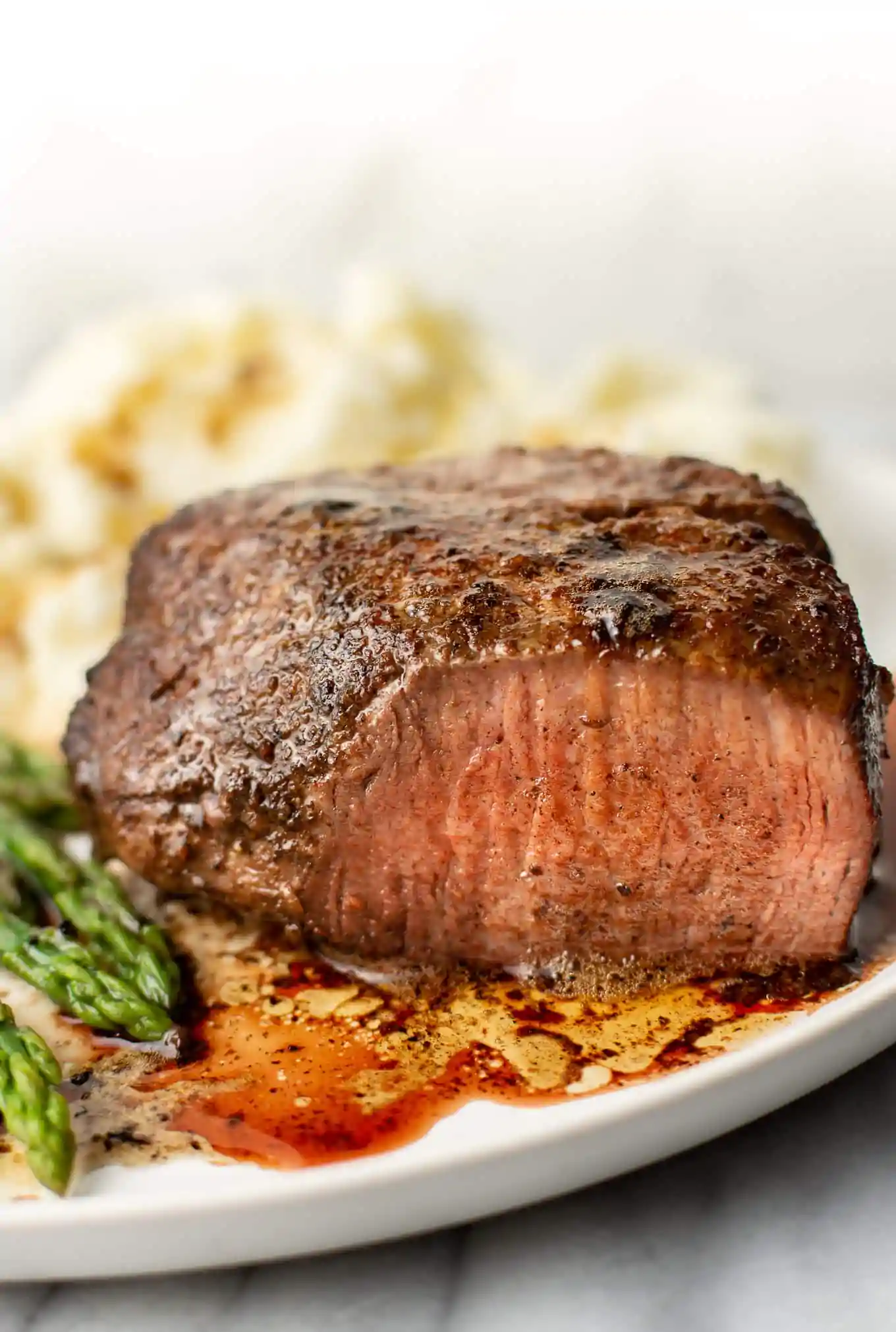
Simple filet mignon gets a deep brown sear in a hot skillet, then finishes in the oven with butter spooned over the steaks. The result is a tender center, a savory browned exterior and buttery pan juices to serve at the table.
Prep takes 5 minutes, cooking takes 15 minutes, and the recipe serves two. It makes a special dinner feel manageable, with a short ingredient list and a thermometer to guide the finish.
Why This Simple Filet Mignon Recipe Works
This method uses the skillet and oven for different jobs, so you can build flavor without guessing at doneness.
- A dry surface sears better. Patting the steaks dry removes surface moisture that would otherwise steam before the meat can brown. Generous seasoning gives the exterior a simple, savory finish.
- Butter adds flavor as it cooks. Spoon the melted butter over the steaks while keeping it moving around the pan. This bastes the meat and helps prevent the butter from burning.
- The oven cooks the center gently. After the steaks are seared on both sides, oven heat brings the middle toward the target temperature without requiring a long stovetop cook.
- A thermometer takes the guesswork out. Steak thickness, cookware and stoves all affect cooking time. Checking the center lets you pull the meat at the temperature that matches your preferred doneness.
- Resting keeps the steaks juicy. The steaks continue cooking as they rest, and their juices settle before slicing. The resting time is part of the cooking process, not a step to skip.
Ingredients You’ll Need
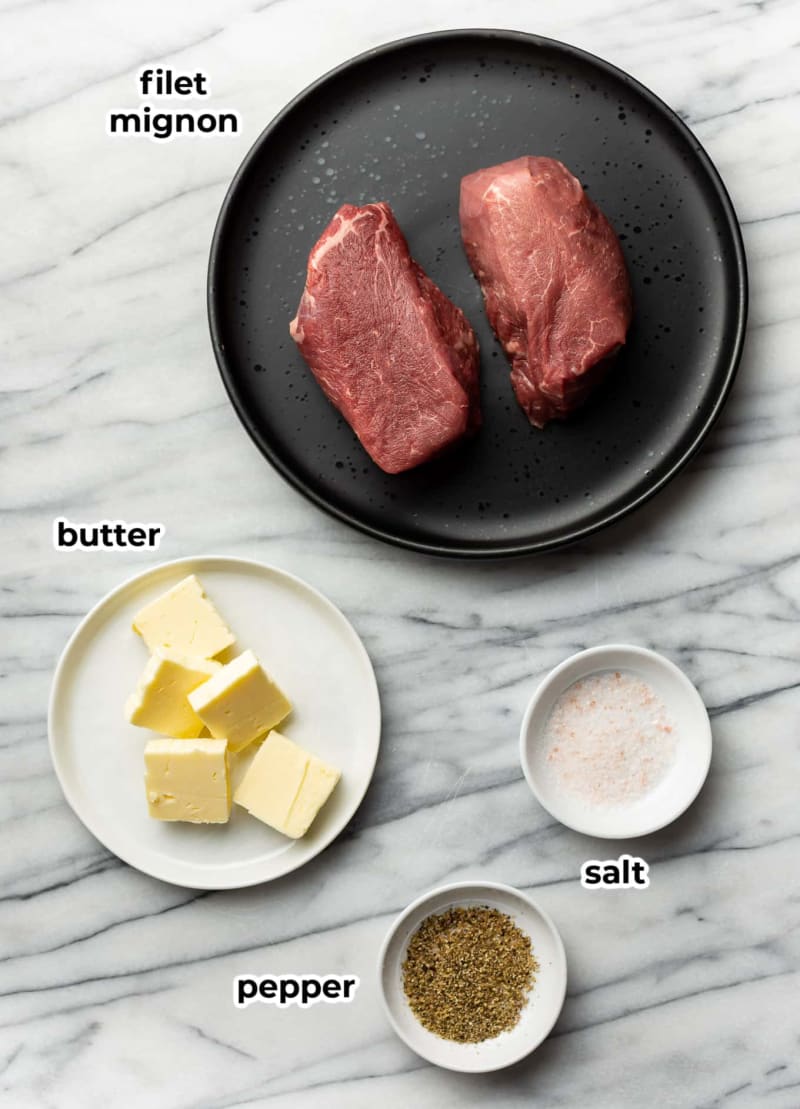
You only need three ingredients for the steaks and their buttery pan sauce. Choose evenly thick cuts so they cook at a similar pace.
- Filet mignon steaks: Two steaks, each 2 inches thick. Ask for evenly sized cuts; consistent thickness makes it easier to reach the same doneness in both.
- Salt and pepper: Season both sides to taste. Use enough to cover the surface evenly, since this is the only seasoning for the beef.
- Unsalted butter: One-quarter cup, or half a stick. Unsalted butter lets you control the seasoning, and it becomes a rich spoon-over sauce.
Equipment You’ll Need
- Heavy oven-safe skillet: Use a sturdy skillet that can go from the stovetop into a 400°F oven; cast iron works well.
- Instant-read thermometer: A thermometer, especially one with an external probe, helps you monitor the center and avoid overcooking.
- Tongs and a spoon: Tongs make flipping easier, while a spoon lets you baste the steaks with the hot butter.
How to Make Simple Filet Mignon
1. Take the chill off
Remove the steaks from the refrigerator 30-60 minutes before cooking so they can come up to room temperature.
Keep them on a plate while they sit; this gives the centers a chance to warm slightly before searing.
2. Heat the oven
Set the oven to 400°F and position a rack in the middle.
Have the oven ready before the steaks go into the skillet so you can transfer the pan promptly after searing.
3. Dry and season
Blot both sides of the steaks with paper towels, then season generously with salt and pepper.
The surfaces should feel dry rather than damp; moisture can interfere with browning.
4. Warm the butter and skillet
Put the butter in a heavy oven-safe skillet over medium-high to high heat. Once it melts, stir it every 20-30 seconds as the pan heats, about 4-5 minutes with cast iron over medium-high heat.
Keep the butter moving and watch closely so it does not burn. The pan should be very hot before the steaks go in.
5. Sear and baste
Lay the steaks in the skillet and continuously spoon butter over them, keeping the butter moving in the pan. Cook the first side for 2 minutes, flip with tongs, then cook the second side for another 2 minutes while continuing to baste.
The steak should develop a browned crust. Some smoke is normal; turn on the stove fan or open a window.
6. Finish in the oven
Move the skillet to the oven and cook until the steaks reach 125-130°F for medium after resting. For medium-rare, remove the pan when they reach 120°F. A 2-inch steak takes about 10 minutes in the oven for medium, but use temperature rather than time as your guide.
If using an external-probe thermometer, insert it into a steak before the skillet goes into the oven. Check the center of the meat.
7. Rest before serving
Take the skillet out and leave the steaks in it for 5 minutes before cutting. Spoon the remaining butter over the steaks or your side dishes.
The temperature will continue to rise during the rest, and the meat will be juicier when sliced afterward.
How to Tell When It’s Done
Use the temperature at the center of the steak as your main guide: remove the pan at 125-130°F for medium after resting, or 120°F for medium-rare. The recipe’s oven timing is only an estimate because steak thickness and cookware affect how quickly the centers heat.
If the steaks are below your target, return the skillet to the oven and check again shortly. Take care not to leave them in based only on the clock; filet mignon can move past your preferred doneness quickly.
Tips and Common Mistakes
A few small details help you get a browned outside and a tender center.
- Keep the butter moving. Stir as the skillet heats, then continue moving the butter while you baste. This helps keep it from scorching over the high heat.
- Expect some smoke. The hot skillet and butter can produce smoke during searing. Turn on the stove’s extraction fan or open a window before you begin.
- Use a heavy skillet. A heavy pan holds heat when the steaks go in and can transfer directly to the oven. Confirm that the handle and pan are oven-safe.
- Rest before slicing. Cutting immediately releases juices onto the plate. Leave the steaks in the skillet for the full 5 minutes, then serve with the butter.
- Adjust for thinner steaks. Steaks thinner than 2 inches need less oven time. A 1.5-inch steak may need about 5 minutes, but check the center temperature rather than relying on the estimate.
Substitutions and Variations
The straightforward seasoning leaves room for a few practical changes without altering the basic sear-and-roast method.
- Filet thickness: A thinner filet can work, but it will cook through sooner in the oven. Begin checking early and use the temperature targets rather than the timing for a 2-inch steak.
- Olive oil for searing: Use a little neutral, high-heat oil to sear, then add butter for basting. This can reduce the chance of butter scorching, though it changes the simple all-butter flavor.
- Garlic and herbs: Add a lightly crushed garlic clove or a sturdy herb sprig to the butter while basting, then remove it before serving. Keep additions from sitting in the pan long enough to burn.
- Salt choice: Kosher salt or fine salt both work. Their grain sizes differ, so season by covering the steak evenly rather than substituting a fixed volume.
- More servings: You can cook four steaks and double the butter. Avoid crowding the skillet; if they will not fit comfortably, sear in batches and finish them in an oven-safe pan.
What to Serve with Simple Filet Mignon
Serve the steaks with mashed potatoes, roasted potatoes or a simple green vegetable such as asparagus or green beans. The leftover butter is especially good spooned over potatoes.
For a fuller dinner, add a crisp salad or a vegetable side and let the steak be the centerpiece. Browse more dinner recipes or find other beef recipes for special-occasion meals.
Make-Ahead, Storage and Reheating
Make ahead: For the best sear, cook the steaks just before serving. You can measure the butter and set out the skillet and thermometer ahead, but season the meat close to cooking so the surface stays dry.
Storage: Refrigerate leftover steak in a covered, airtight container within 2 hours of cooking and use it within 3 to 4 days.
Freezing: Freeze cooled steak in a tightly sealed freezer-safe container. Thaw it in the refrigerator; the texture may be less tender after freezing.
Reheating: For the juiciest leftovers, warm slices gently in a covered skillet with a splash of water or broth, just until heated through. Avoid high heat, which can make filet mignon tough.
Simple Filet Mignon FAQs
Can I cook filet mignon in a stainless-steel skillet?
Yes. Use a heavy stainless-steel skillet that is safe for the oven, preheat it well, and keep the butter moving during the sear.
Can I double this filet mignon recipe?
Yes. Use four steaks and double the butter, as long as the skillet has enough room to sear without crowding. Otherwise, brown the steaks in batches.
What if I do not have an external-probe thermometer?
An instant-read thermometer still works; briefly check the center of each steak during the oven step. Avoid cutting into the steaks to judge doneness, since that lets juices escape.
Can I cook the steaks straight from the refrigerator?
You can, but the centers may take longer to reach the target temperature while the outsides cook. The recipe’s 30-60 minute counter rest helps reduce that temperature difference.
Why is my filet mignon smoking so much?
A very hot skillet can create smoke as the steaks sear and the butter heats. Use the stove fan or open a window, and keep stirring the butter so it does not burn.
Printable Recipe
Recipe adapted from Salt & Lavender. Photos courtesy of Salt & Lavender, used with permission.
Simple Filet Mignon
Ingredients
- 2 filet mignon steaks 2" thick
- Salt & pepper to taste
- 1/4 cup unsalted butter (1/2 stick)
Instructions
- Take the steaks out of the fridge 30-60 minutes prior to cooking them so they come up to room temperature.
- Preheat your oven to 400F and move the rack to the middle position.
- Pat the steaks dry with paper towels and season them generously (both sides) with salt & pepper.
- Add the butter to a heavy oven-safe skillet over medium-high to high heat. The pan needs to get HOT, but be sure not to let the butter burn, so once it melts, stir it every 20-30 seconds until the pan is heated (about 4-5 minutes with cast iron over medium-high heat on my gas stove. Gas runs hotter than electric).
- Place the steaks in the pan and then continuously spoon the butter over each steak, ensuring that you're keeping the butter moving around the pan so it doesn't burn. Cook the first side for 2 minutes, and then flip (tongs make it easy) and cook the second side for another 2 minutes. Keep spooning the butter over the steaks for this entire time.
- Transfer the skillet to the oven and cook until the steaks reach 125-130F (this will yield medium steaks once they're done resting). For medium-rare, take the skillet out of the oven at 120F. A 2" thick steak will need about 10 minutes in the oven for medium doneness, but oven time will vary depending on the thickness of the steak and other factors. For best results, use an instant read thermometer with an external probe as it's very easy to overcook steak. If you have one with an external probe, insert it into one of the steaks before transferring the skillet to the oven. See blog post for more tips if you're unfamiliar with this tool.
- After you take the skillet out of the oven, let the steaks rest in the skillet for 5 minutes before cutting into them so they finish cooking and the juices redistribute (very important so the steaks will remain juicy and tender). The leftover butter can be spooned over the steaks and mashed potatoes or whatever you're serving them with.
Notes
- Cooking steak can produce a bit of smoke – this is perfectly normal! Turn on the over the stove extraction fan and/or open a window.
- You could double the recipe by using 4 steaks. I’d double the butter too!
- Cooking times are only guidelines as every skillet/stove/steak will vary. For steaks thinner than 2″, they will need less time in the oven (about 5 minutes for a 1.5″ thick steak). Use an instant read meat thermometer with an external probe for perfect results every time.
- Nutritional information is based on 6 oz steaks.
- This recipe is also in the Salt & Lavender: Everyday Essentials hardcover cookbook.


