Simple Mongolian Beef

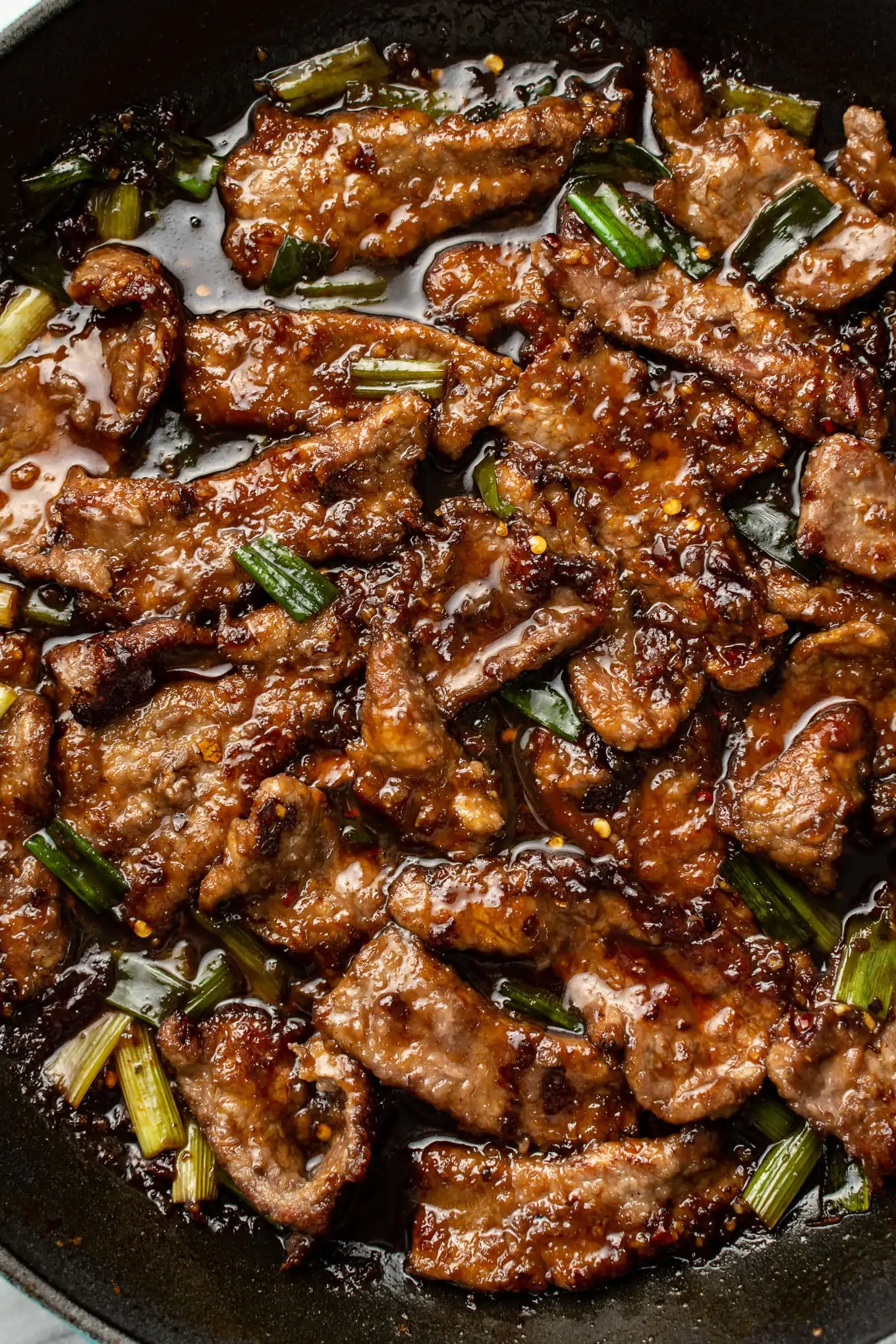
Simple Mongolian beef pairs thin, quickly seared strips of flank steak with a glossy sauce that balances brown sugar, soy, garlic and ginger. Cornstarch helps the beef brown while giving the sauce a clingy finish.
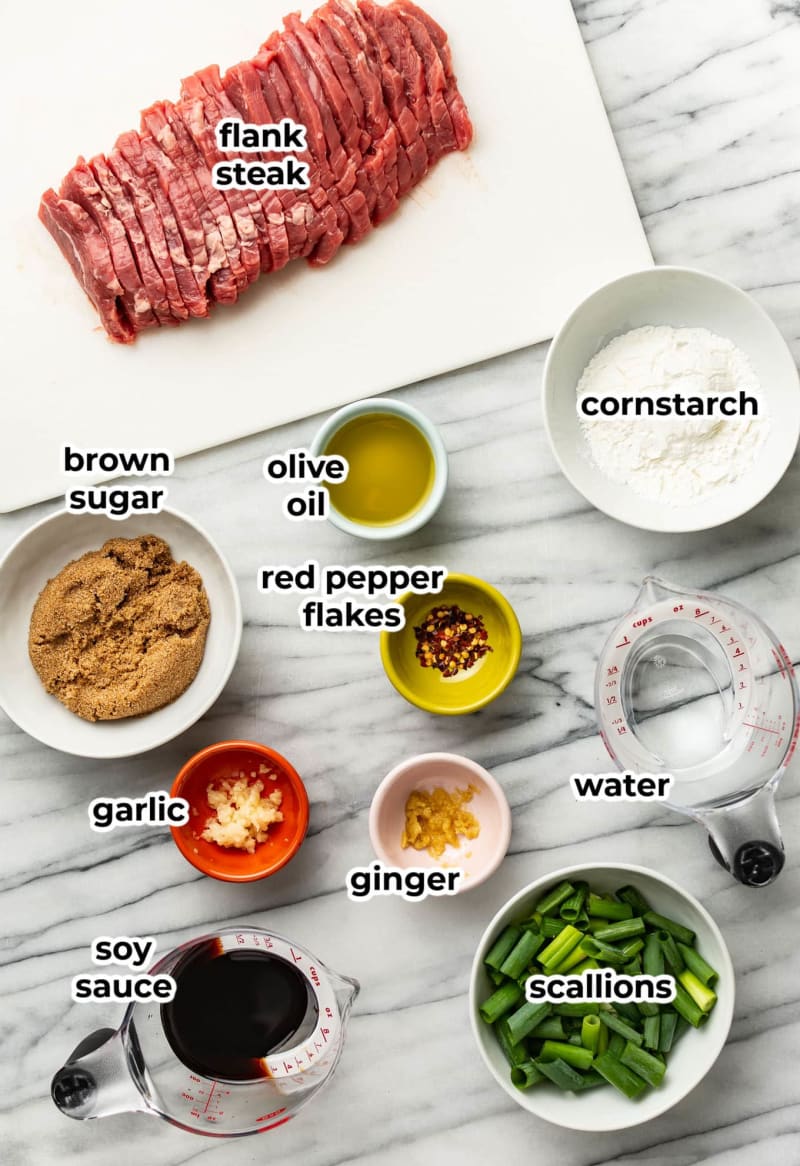
Prep takes 15 minutes and cooking takes 15 minutes, for 30 minutes total. The recipe serves four and suits a weeknight dinner; have your ingredients ready before heating the skillet because the cooking moves quickly.
Why This Simple Mongolian Beef Recipe Works
A hot skillet and a short ingredient list give this dish its savory-sweet flavor without a long simmer.
- Thin slices cook fast. Cutting the steak across its grain shortens the muscle fibers, making each bite easier to chew. Even slices also help the batches cook at a similar pace.
- Cornstarch helps the beef brown. A light coating absorbs surface moisture and creates a browned exterior in the hot skillet. It also helps the sauce cling when everything is tossed together.
- Two batches leave room to sear. Crowding the pan traps steam and makes the beef harder to brown. Cooking half at a time gives each piece contact with the hot skillet.
- The sauce reduces in the pan. A brief simmer thickens the soy, water and sugar mixture while loosening flavorful browned bits. Returning the beef at the end keeps the cooking time short.
- Scallions add freshness. They warm in the sauce without losing all their bite, providing a mild onion flavor that balances the rich beef.
Ingredients You’ll Need
Measure and prepare everything before the skillet heats; the beef cooks in a few quick stages.
- Flank steak: One pound, sliced thinly across the grain. Look for a fairly even piece so the strips cook consistently.
- Cornstarch: A quarter cup coats the steak and helps the pan sauce thicken. Toss until the strips are lightly covered.
- Olive oil: Three tablespoons total, divided between the batches. The oil helps the beef sear rather than stick.
- Scallions: One small bunch, using only the green parts and cutting them into 1-inch pieces. They bring a fresh, mild onion note.
- Brown sugar: A third cup, packed, creates the sauce’s sweetness and glossy body. Pack it into the measuring cup for the stated amount.
- Garlic: Three cloves, minced, add a savory aromatic base. Mince it before you start cooking.
- Crushed red pepper flakes: A quarter teaspoon, optional, gives the sauce gentle heat. Leave it out for a milder family-style version.
- Fresh ginger: One teaspoon, grated, brings warm, bright flavor. Peel it before grating if the skin is tough.
- Low-sodium soy sauce: A third cup seasons the sauce without making it overly salty. Use low-sodium soy sauce as written.
- Water: A third cup loosens the soy and sugar into a pourable sauce that can reduce in the skillet.
Equipment You’ll Need
- Large skillet: A wide skillet gives the steak room to brown in batches; a 12-inch pan is used for this method.
- Tongs: Use them to turn the strips and transfer the browned beef without crowding or tearing it.
- Two mixing bowls: One holds the cornstarch-coated steak and the other lets you whisk the sauce before cooking.
How to Make Simple Mongolian Beef
1. Slice and coat the steak
Cut the flank steak across the grain into 1/4-inch-thick strips. Put them in a bowl, add the cornstarch and toss to coat.
Prepare all ingredients first. The steak should have a light, even coating rather than thick clumps of cornstarch.
2. Whisk the sauce
In a separate bowl, combine the brown sugar, minced garlic, optional red pepper flakes, grated ginger, low-sodium soy sauce and water. Whisk until blended.
Keep the sauce near the stove so it is ready to pour in once the beef is seared.
3. Heat the skillet
Pour 2 tablespoons of the olive oil into a large skillet. Set it over medium-high heat on your largest burner and let it heat until hot, about 4-5 minutes on a gas stove.
A properly hot pan is important for browning. If the oil is not hot, the coated steak can turn soft instead of searing.
4. Brown the beef in batches
Arrange half the steak in a single layer and leave it undisturbed for 1 minute. Turn the strips with tongs and cook for another minute, then move them to a plate. Add the remaining tablespoon of oil and repeat with the rest of the beef.
The first side should release from the skillet once browned. If it sticks, give it a little more time before turning.
5. Finish in the sauce
Pour the sauce into the skillet and let it bubble for about 30 seconds, scraping up the browned bits. Add the scallions and return the beef, then toss and cook for another 1-3 minutes, until the steak is done to your liking and the sauce has thickened. Remove the skillet from the heat and serve immediately.
The sauce should look glossy and coat the beef rather than pooling thinly in the pan. Avoid extending the final cook longer than needed, or the thin strips can become tough.
Tips and Common Mistakes
A few small choices make the difference between browned beef and a crowded, saucy skillet.
- Get every ingredient ready first. Once the skillet is hot, there is little time to measure or chop. Whisk the sauce and cut the scallions before searing.
- Slice across the grain. Look for the direction of the long muscle fibers and cut across them. This shortens the fibers and makes the steak more tender to eat.
- Don’t skip the batches. Putting all the steak in at once cools the skillet and crowds the strips. Two rounds give the beef space to brown.
- Wait before turning the beef. Let each side sear undisturbed for the stated minute. The strips should release more readily after browning.
- Keep the final cook short. The beef is already partly cooked before it returns to the sauce. Check it as the sauce thickens so the thin strips do not overcook.
- Adjust seasoning at the end. Low-sodium soy sauce usually seasons the dish sufficiently. If you want more salt or pepper, add it after tasting the finished sauce.
Substitutions and Variations
Keep the sauce proportions intact for the closest result, and make changes to the beef or heat level as needed.
- Flank steak: Skirt steak can work when sliced thinly across the grain. It has a more pronounced beef flavor and can cook quickly, so watch it closely.
- Milder sauce: Omit the crushed red pepper flakes for a sweeter, gentler sauce; they are optional in the ingredient list.
- More ginger: Double the ginger for a sharper, warmer flavor. The extra ginger makes the sauce more aromatic without changing its basic method.
- More heat: Double the crushed red pepper flakes if you want a stronger kick. Add them to the sauce so their heat spreads evenly.
- Neutral cooking oil: A neutral oil with a high smoke point can replace the olive oil. The flavor will be less fruity, while the searing method remains the same.
- Add vegetables: Thinly sliced bell pepper or broccoli can be cooked separately and tossed in at the end. The skillet will be less crowded, and the extra vegetables will soften the sauce’s balance.
What to Serve with Simple Mongolian Beef
Serve the beef over rice so it catches the glossy sauce; steamed rice is an easy match. For a more complete plate, add broccoli, snap peas or a simple cucumber salad.
Keep other sides light and fresh to balance the sweet-savory sauce. For more dinner ideas, browse our beef recipes and dinner recipes.
Make-Ahead, Storage and Reheating
Make ahead: Slice the steak, prepare the sauce and cut the scallions ahead, storing them separately in the refrigerator. For best browning, coat the steak with cornstarch just before it goes into the skillet.
Storage: Refrigerate leftovers promptly in an airtight container for 3 to 4 days. Do not leave the cooked beef at room temperature for more than 2 hours.
Freezing: The cooked beef can be frozen in an airtight freezer-safe container, though the sauce may loosen and the beef may lose some tenderness after thawing. Thaw in the refrigerator before reheating.
Reheating: Warm leftovers gently in a skillet over medium-low heat with a small splash of water, stirring just until heated through. Avoid prolonged high heat, which can make the thin beef strips tough.
Simple Mongolian Beef FAQs
Can I make Mongolian beef without cornstarch?
Yes, but the beef will not have the same lightly crisp coating and the sauce may be thinner. A small amount of arrowroot can help thicken the sauce, though its texture may differ.
Why is my Mongolian beef tough?
The steak may have been sliced with the grain or cooked too long. Cut across the visible muscle fibers and stop cooking once the beef is done to your liking.
Can I make this dish less sweet?
Yes. Reduce the brown sugar to suit your taste, but expect a less glossy, less thick sauce because the sugar contributes to its body.
Can I cook Mongolian beef in a nonstick skillet?
Yes. Use a large nonstick skillet and still cook the steak in batches, since space in the pan matters more than the surface material.
How much rice should I serve with it?
One cup of uncooked rice is suggested for four servings. You can make more or less depending on how much rice you usually serve.
Printable Recipe
Recipe adapted from Salt & Lavender. Photos courtesy of Salt & Lavender, used with permission.
Simple Mongolian Beef
Ingredients
- 1 pound flank steak
- 1/4 cup cornstarch
- 3 tablespoons olive oil divided
- 1 small bunch scallions (green parts only) cut into 1" pieces
Sauce ingredients:
- 1/3 cup (packed) brown sugar
- 3 cloves garlic minced
- 1/4 teaspoon crushed red pepper flakes optional
- 1 teaspoon grated fresh ginger
- 1/3 cup low sodium soy sauce
- 1/3 cup water
Instructions
- I recommend prepping all ingredients before starting this recipe as it goes fast. Slice the steak against the grain into 1/4" thick pieces, then add it to a bowl and toss it with the cornstarch.
- Add the sauce ingredients to another bowl and whisk together.
- Add 2 tablespoons of the olive oil to a large skillet (I use a 12" one) and let it heat up on your largest burner over medium-high heat until HOT (4-5 minutes on my gas stove).
- You will cook the beef in two batches to get the best browning. Add half the steak to the skillet in a single layer and let it cook undisturbed for 1 minute, then flip, using tongs, and cook for another minute. It should release easily once it's browned. Transfer to a plate. Repeat for the second batch, adding the third tablespoon of olive oil to the skillet.
- Add the sauce to the skillet and let it bubble for about 30 seconds, scraping up any browned bits from the bottom, then add in the scallions and also return the beef to the pan. Toss with the sauce and let it cook for another 1-3 minutes or until the steak is cooked to your liking and the sauce thickens up. Take the skillet off the heat and serve immediately.
Notes
- This recipe is quite family-friendly as written. If you prefer a little more zing, double the ginger and crushed red pepper flakes.
- The low sodium soy sauce should add enough salt to the recipe, but if you find it needs extra salt & pepper, simply add some at the end.
- I typically serve this recipe with rice, but that’s optional! I measure out 1 cup of uncooked rice to serve 4, but feel free to make as much rice as you normally do. Start the rice before the beef so that it’s ready at the same time.


