Tarragon Chicken

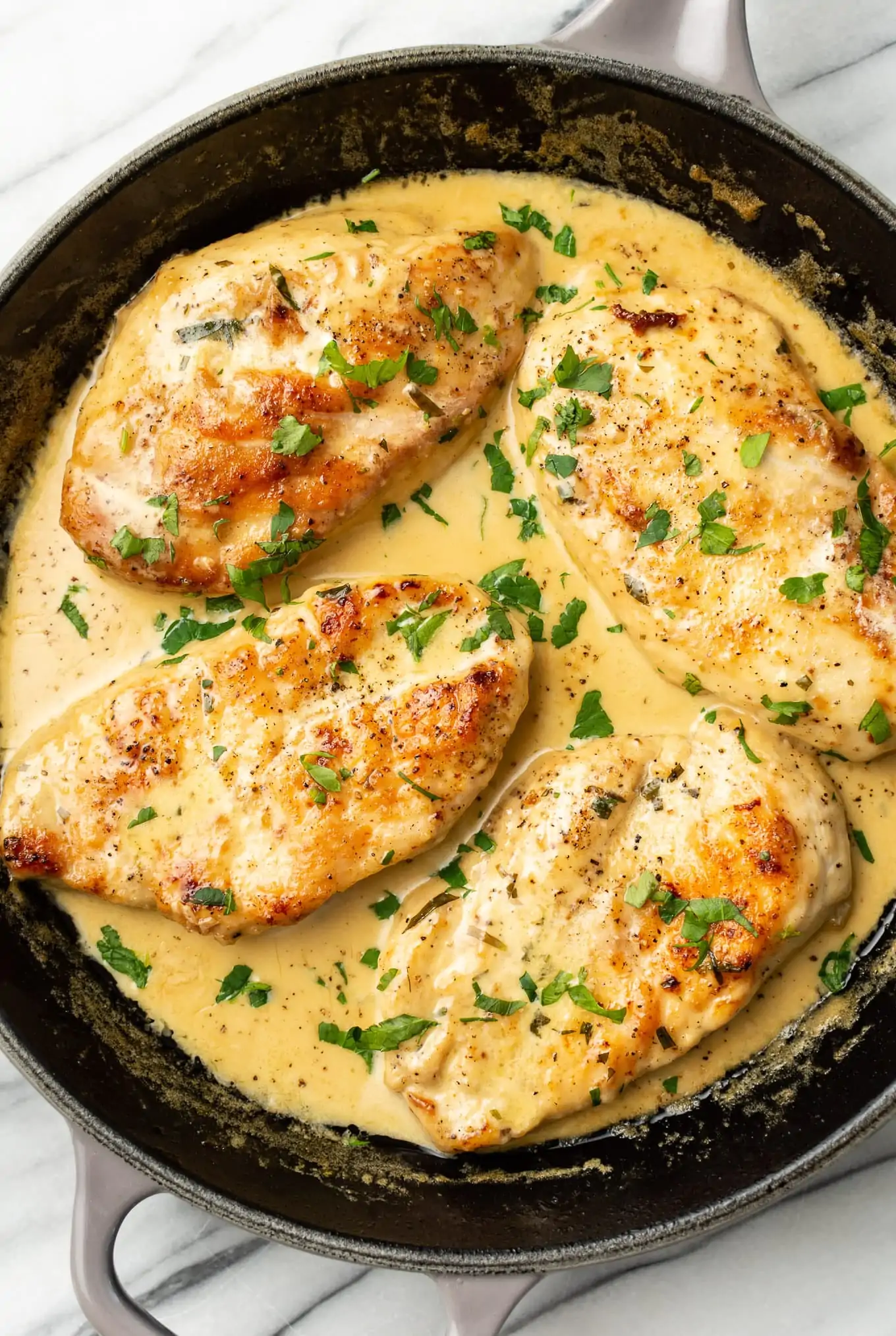
Tarragon chicken pairs golden, flour-dusted cutlets with a creamy pan sauce scented with fresh tarragon. White wine lifts the browned bits from the skillet, while butter and cream make the sauce smooth and savory.
The recipe serves four and takes 30 minutes, including 10 minutes of prep and 20 minutes of cooking. It suits a weeknight dinner that feels a little special, especially with a simple side ready to catch the sauce.
Why This Tarragon Chicken Recipe Works
The quick skillet method builds flavor in stages, without making the sauce complicated.
- Thin cutlets cook quickly. Halving the chicken lengthwise creates four thinner pieces that brown evenly and finish cooking in the sauce without a long simmer.
- Flour helps the chicken brown. A light coating encourages a golden surface and releases a little starch into the pan sauce, helping it thicken.
- Wine lifts the browned bits. Adding wine after searing loosens the savory residue from the skillet, carrying that concentrated flavor into the sauce.
- Tarragon brings a fresh anise note. The herb’s gentle licorice-like flavor stands up to cream and butter without overwhelming the chicken.
- The chicken finishes in the sauce. Returning the cutlets to the skillet lets them cook through while their juices mingle with the cream and wine.
Ingredients You’ll Need
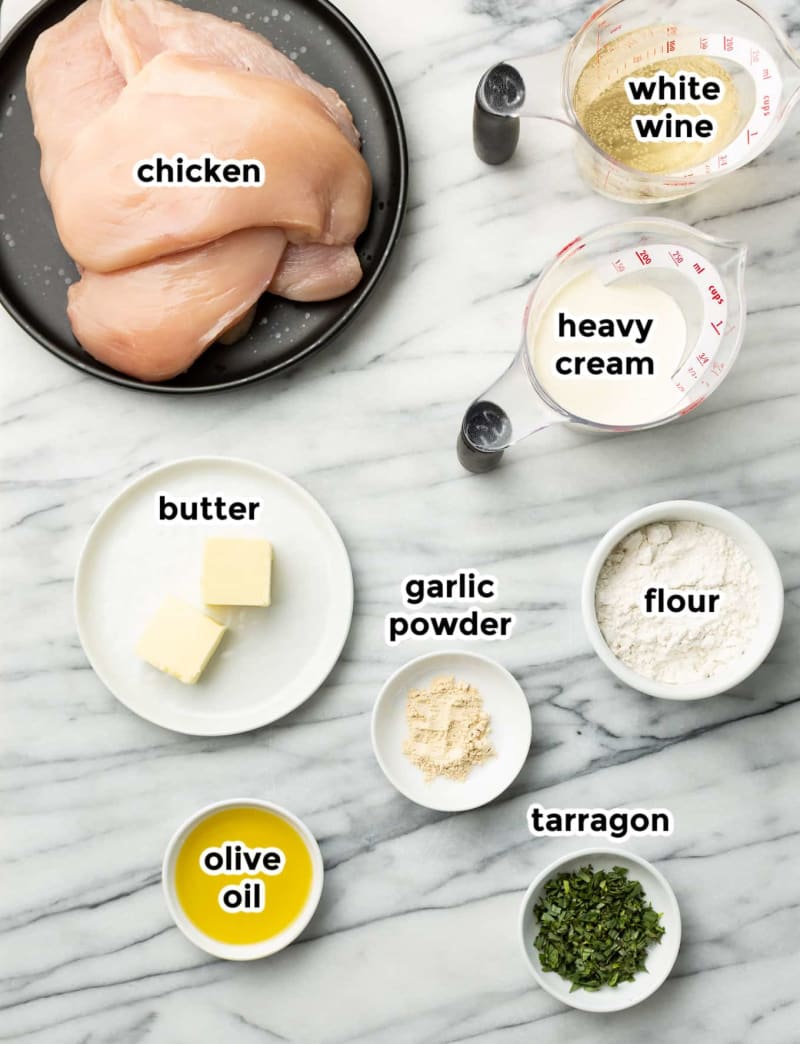
A short ingredient list builds a rich, herb-scented sauce. Fresh tarragon gives this dish its signature flavor.
- Chicken breasts: Two large breasts, sliced lengthwise into four cutlets. Choose evenly sized pieces so they cook at a similar pace.
- Salt and pepper: Season to taste; use some on the chicken before dredging and adjust the finished sauce as needed.
- Garlic powder: Half a teaspoon seasons the chicken evenly without adding moisture that could interfere with browning.
- Flour: Use enough for dredging the cutlets in a thin coat; shake off excess so the sauce does not turn pasty.
- Olive oil: One tablespoon helps the chicken sear in the skillet before the butter is added.
- Butter: Three tablespoons total, divided between searing and the sauce, add richness and help the sauce turn silky.
- Dry white wine: Two-thirds cup deglazes the pan. Choose a dry wine you would drink, not a sweet cooking wine.
- Fresh tarragon: One tablespoon, chopped, gives the cream sauce its distinctive herbal, lightly anise-like flavor.
- Heavy cream: Half a cup creates a rich sauce that coats the chicken. Whipping cream works as well.
- Fresh parsley: Chopped parsley is optional for serving; it adds a fresh finish and a little color.
How to Make Tarragon Chicken
1. Slice and season the chicken
Cut each chicken breast lengthwise to make four thinner cutlets. Season them with salt, pepper and garlic powder, then coat each piece in flour, shaking off any excess.
Aim for a light, even dusting rather than a thick layer; excess flour can make the sauce heavy.
2. Brown the cutlets
Warm the olive oil and 1 tablespoon of butter in a skillet over medium-high heat. When the pan is hot, add the chicken and cook for 4-5 minutes per side, until golden. Move the cutlets to a plate.
Give the pieces room to sear. If they stick, wait for the browned surface to release instead of pulling them up early.
3. Deglaze with wine
Pour the wine into the skillet and let it bubble for about a minute. Scrape the bottom of the pan as it simmers to loosen the browned bits.
The liquid should pick up the golden residue and smell less sharply of raw wine.
4. Add butter and tarragon
Stir in the remaining butter and chopped tarragon. Keep the sauce simmering for another 2 minutes so the herb flavors the pan juices.
Keep the simmer steady rather than vigorous; the butter should melt smoothly into the wine.
5. Finish the chicken in sauce
Pour in the cream and slide the chicken back into the pan. Turn the burner down to medium and give it 5 more minutes, until the chicken is fully cooked and the sauce has thickened slightly. Season with salt and pepper and finish with parsley if using.
The sauce should lightly coat a spoon. Check the thickest cutlet for doneness before serving.
Tips and Common Mistakes
A few small details help the cutlets brown well and keep the cream sauce smooth.
- Cut the breasts evenly. Similar thickness helps all four pieces cook at about the same rate. If one cutlet is much thicker, gently flatten it before seasoning.
- Shake off loose flour. A thin coating helps with browning, but excess flour can scorch in the skillet or make the sauce overly thick.
- Wait for the skillet to heat. Adding chicken to a hot pan encourages a golden sear. If the pan is crowded, cook in batches rather than letting the cutlets steam.
- Scrape up the browned bits. Those bits are concentrated seared flavor. Use the wine to loosen them before adding the cream.
- Keep the sauce at a gentle simmer. A hard boil can make a cream sauce reduce too quickly or look separated. Lower the heat if it bubbles aggressively.
- Use fresh tarragon if possible. Fresh leaves have a brighter, more delicate flavor than dried. Chop them just before adding so their aroma stays lively.
Substitutions and Variations
A few practical swaps work well, though fresh tarragon is what gives the sauce its distinctive character.
- Chicken thighs: Boneless, skinless thighs can replace the breasts. They are less lean and may need extra cooking time; check the thickest piece for doneness.
- Dried tarragon: Use a smaller amount than fresh, since dried herbs are more concentrated. Add it with the wine so it has time to soften.
- Chicken broth: Use broth in place of the wine for a milder, alcohol-free sauce. The result will be less tangy and may need a little extra seasoning.
- Half-and-half: It can stand in for heavy cream, but the sauce will be thinner and less rich. Keep the heat gentle to reduce the chance of curdling.
- Shallot: For extra savory depth, finely chop a small shallot and soften it in the pan after removing the chicken, before adding the wine.
- Gluten-free flour: A cup-for-cup gluten-free blend can be used for dredging. Shake off excess as usual, since some blends thicken pan sauce more than wheat flour.
What to Serve with Tarragon Chicken
Spoon the sauce over mashed potatoes, buttered noodles or rice so none of the creamy pan juices go to waste. Green beans, peas or a crisp salad bring freshness alongside the rich sauce.
For another chicken dinner, browse our chicken recipes or find more weeknight inspiration in dinner recipes.
Make-Ahead, Storage and Reheating
Make ahead: You can slice and season the chicken a few hours ahead; cover and refrigerate it until ready to cook. Chop the tarragon and parsley in advance, but make the cream sauce just before serving for the smoothest texture.
Storage: Refrigerate leftovers in a covered airtight container within 2 hours. Keep for 3 to 4 days, storing the chicken with its sauce to help it stay moist.
Freezing: Freezing is possible, but cream sauces can separate when thawed, and the chicken may lose some tenderness. If you do freeze it, use an airtight container and thaw overnight in the refrigerator.
Reheating: Warm gently in a covered skillet over low heat, stirring the sauce and turning the chicken until heated through. Add a small splash of cream or broth if the sauce has thickened in the fridge; avoid boiling it.
Tarragon Chicken FAQs
Can I make tarragon chicken without wine?
Yes. Replace the wine with chicken broth for a milder sauce, then taste and adjust the seasoning before serving.
What does tarragon taste like?
Tarragon has a gentle anise or licorice-like flavor with a fresh herbal quality. It pairs especially well with cream and chicken.
How can I tell if the chicken is cooked through?
Use an instant-read thermometer in the thickest part of a cutlet; chicken is safely cooked at 165°F. The meat should also be opaque throughout.
Can I use chicken thighs instead of breasts?
Yes. Boneless, skinless thighs work, though their shape and thickness may change the cooking time. Check the thickest piece for safe doneness.
Can I prepare the sauce ahead of time?
It is better to make the sauce just before serving. Cream sauces can thicken or separate as they cool and are reheated, so the skillet method gives the best texture.
Printable Recipe
Recipe adapted from Salt & Lavender. Photos courtesy of Salt & Lavender, used with permission.

Tarragon Chicken
Ingredients
- 2 large chicken breasts cut in half lengthwise
- Salt & pepper to taste
- 1/2 teaspoon garlic powder
- Flour for dredging
- 1 tablespoon olive oil
- 3 tablespoons butter divided
- 2/3 cup dry white wine
- 1 tablespoon fresh tarragon chopped
- 1/2 cup heavy/whipping cream
- Fresh chopped parsley, for serving optional
Instructions
- Cut your chicken breasts in half lengthwise to make 4 thinner cutlets. Sprinkle them with salt and pepper and garlic powder, then coat them in the flour.
- Add the olive oil and 1 tablespoon of the butter to a skillet over medium-high heat. Once the pan is hot, add the chicken and cook for 4-5 minutes/side until golden. Transfer the chicken to a plate.
- Add the wine to the pan and let it bubble for about a minute. Stir to scrape up any browned bits from the bottom of the pan.
- Add the remaining butter and the tarragon to the pan, and continue simmering for another 2 minutes.
- Add the cream and chicken back into the pan. Reduce the heat to medium and cook for another 5 minutes or until the chicken is cooked through and the sauce has thickened up a bit. Season with extra salt & pepper as needed and sprinkle with fresh parsley if using.


